*This post may contain affiliate links for which I earn commissions.*
An oversized fabric envelope makes an interesting change from a round Christmas wreath. In this inspiration, ivory quilted fabric sits against a powder blue door, with stitched evergreen sprigs across the front and loose greenery rising from the opening. A champagne velvet bow finishes one corner without hiding the crossed envelope flaps.
The appeal is in that combination of a familiar shape and unexpected materials. You can borrow the idea with a textile door pocket, a few carefully chosen stems, and ribbon that feels soft rather than shiny. The door itself can stay exactly as it is.
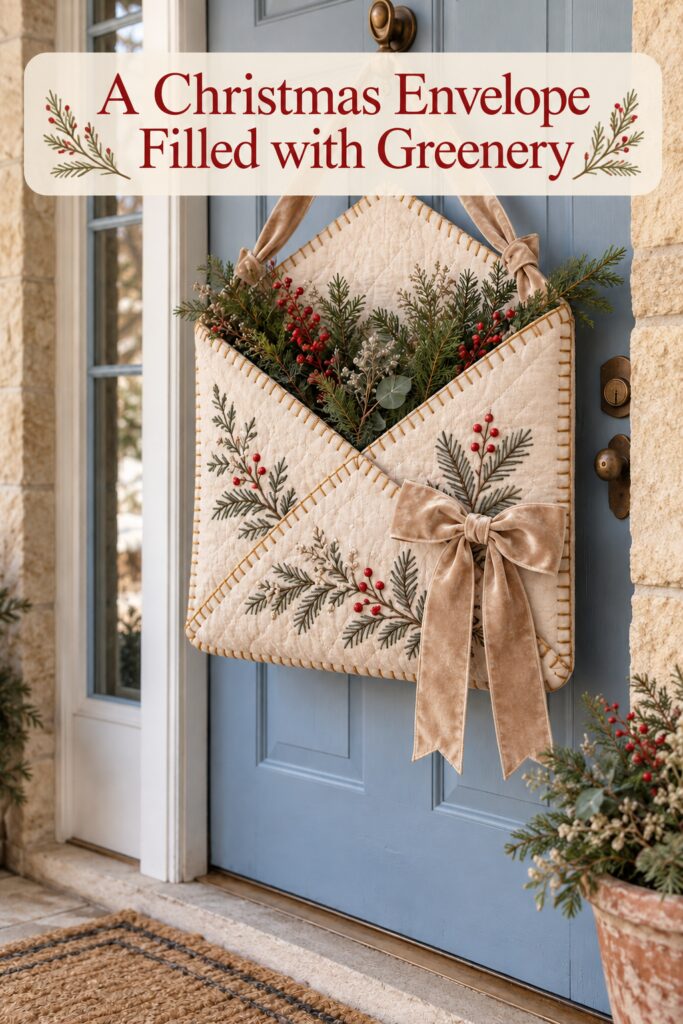
The inspiration image was created with AI and illustrates a decorating idea rather than specific products available to purchase.
What Makes This Envelope Display Work
The diagonal seams do an important job. They make the hanging piece read as an open envelope even before you notice its embroidery. Keep that outline visible when choosing a substitute. A rectangular bag with greenery may be pretty, but it won’t communicate quite the same idea if the front has no overlapping flaps.
Ivory is also doing more than providing a neutral background. It separates the small green stitches from the blue door and connects with the pale stone around it. Against a white door, look for oatmeal fabric or slightly deeper edging so the pocket doesn’t disappear. Against dark wood, a plain cream pocket would already have plenty of contrast.
The greenery follows the upper opening instead of spilling over the entire front. That leaves room for both the textile work and the envelope shape to show. A little red appears in the embroidered berries and in the loose stems, tying the two parts together without making either one feel crowded.
Key Pieces to Recreate the Look
A Structured Fabric Door Pocket
Start with an envelope-style fabric wall pocket if you can find one, or consider a plain hanging pocket as a similar substitute. Look for enough body to keep the front upright with stems inside. Soft unlined fabric can sag at the center, which changes the shape and makes the arrangement look heavier than intended.
You don’t need identical embroidery. A pocket with simple botanical stitching, quilted texture, or visible blanket stitches can carry the same feeling. If you already sew, an envelope-shaped cover over a lightweight stiffened insert is another possibility. Treat that as a separate craft project rather than assuming the illustrated pocket has an obvious ready-made equivalent.
Fine Evergreen Stems and Small Berries
Choose foliage with narrow tips so the branches make an airy outline. Cedar-like sprays and other fine evergreen stems suit the scale better than a dense ball of broad leaves. Mix only a few textures. When every stem is different, the opening starts to look like a mixed bouquet instead of greenery tucked into a textile envelope.
Red berry sprigs should sit among the green rather than form a separate upright bundle. Cut or bend artificial stems gradually, keeping the clipped ends inside the pocket. A small removable stem holder can help prevent shifting, but its weight and dimensions need to suit the pocket and hanger.
Champagne Velvet Ribbon
The ribbon connects the suspension straps with the bow at the lower right. A muted champagne shade adds contrast without competing with the embroidery. If your fabric is oatmeal, try a slightly paler ribbon; if it is bright ivory, a warmer beige can give the bow a clearer edge.
For a similar effect, choose ribbon that folds into rounded loops. Very stiff ribbon can look oversized beside the fabric, while very narrow ribbon loses the substantial, soft appearance. Make a loose trial bow before cutting the tails. That gives you a chance to judge the proportions against the pocket rather than guessing from the ribbon spool.
A Suitable Door Hanger
The inspiration shows ribbon rising to a brass-colored fitting. For your own door, use a hanger rated for the assembled weight and appropriate for its surface. The ribbon should connect securely to the pocket, not simply disappear behind a fold. Check those attachment points before adding the greenery.
An over-door hook is one option when there is sufficient clearance. Test the door gently through its full movement before leaving the arrangement in place. The hook and hanging pocket should clear weather seals, handles, glazing, and the door frame without rubbing or preventing the door from closing.
How to Style It at Home
Lay the empty pocket flat first and arrange the greenery beside it. Choose one longer spray for each upper side, then fill the middle with shorter stems. This creates a shallow fan that follows the opening. Move the pieces into the pocket a few at a time, checking that you can still see the triangular flap behind them.
Keep the bottom of the greenery above the most distinctive embroidered area. If the front includes a large stitched sprig, let that remain the quiet lower half of the arrangement. A single ribbon bow off to one side balances the greenery without creating a second center. Tails can hang below the pocket, provided they stay clear of the lock and handle.
Stand far enough back to see the whole door, then look again from the path approaching it. A pocket that seems generously filled close up may read as a dark clump from a distance. Removing one bulky stem often makes the shape clearer. Turn the stems outward slightly rather than adding more to make them visible.
The nearby pot repeats the greenery, but a second arrangement isn’t essential. If you already have a planter beside the door, a few similar sprigs can connect it to the hanging pocket. Leave the threshold and walking route open. The woven doormat and warm stone in the inspiration provide enough additional texture without extra signs or decorations.
Use textile pieces in a sheltered location, and follow their care instructions. A covered porch can still receive windblown rain, so bring delicate fabric and ribbon inside when conditions require it. Artificial foliage also varies in outdoor suitability. Choose materials for the actual exposure rather than assuming a fabric Christmas decoration will tolerate the entire season outdoors.
Shop Similar Pieces
Look for Envelope Style Wall Pockets
Compare the silhouette, lining, and hanging method before choosing the decoration on the front. A plain structured pocket is a useful base because you can repeat the image’s greenery and ribbon without needing an exact embroidered match.
Shop Similar Evergreen and Berry Sprays
Look for stems with flexible branches and fine tips. Separate small sprays are easier to arrange around an envelope opening than a tightly bound bundle, especially when you want to keep the front seams visible.
Add Soft Velvet Ribbon
Match the ribbon to the fabric in daylight if possible. Champagne, warm ivory, and pale taupe can all support this palette, but the best choice is the one you can still distinguish from the pocket at the distance your visitors will see it.
Final Styling Tip
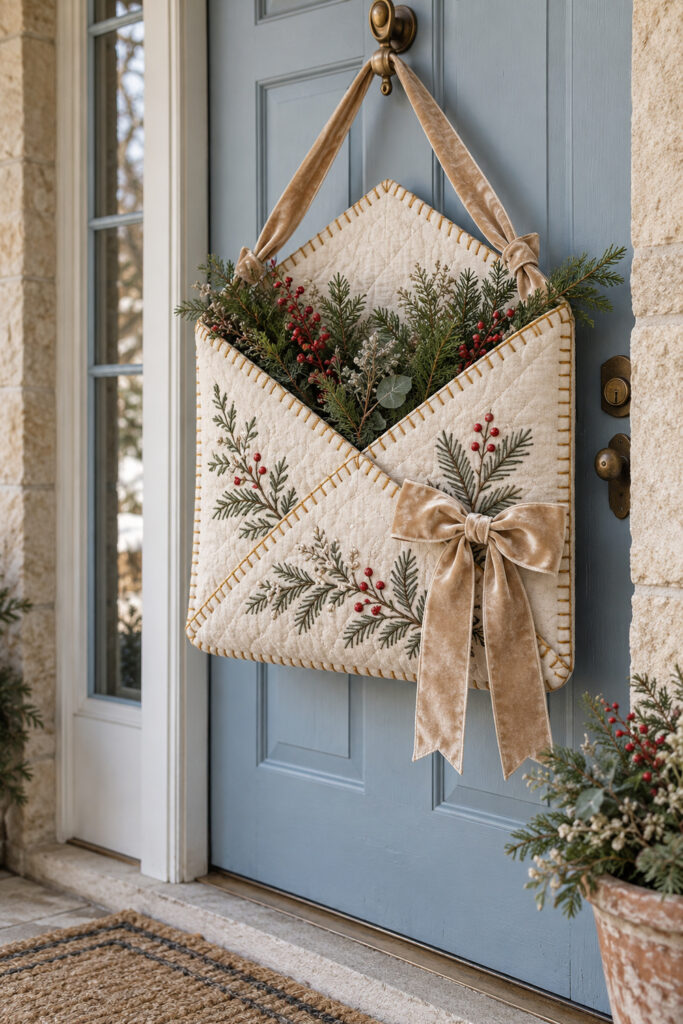
Fill the opening lightly enough that the envelope remains the first thing you recognize. The crossed flaps, a little greenery, and one soft bow carry this idea further than a pocket packed to overflowing.