*This post may contain affiliate links for which I earn commissions.*
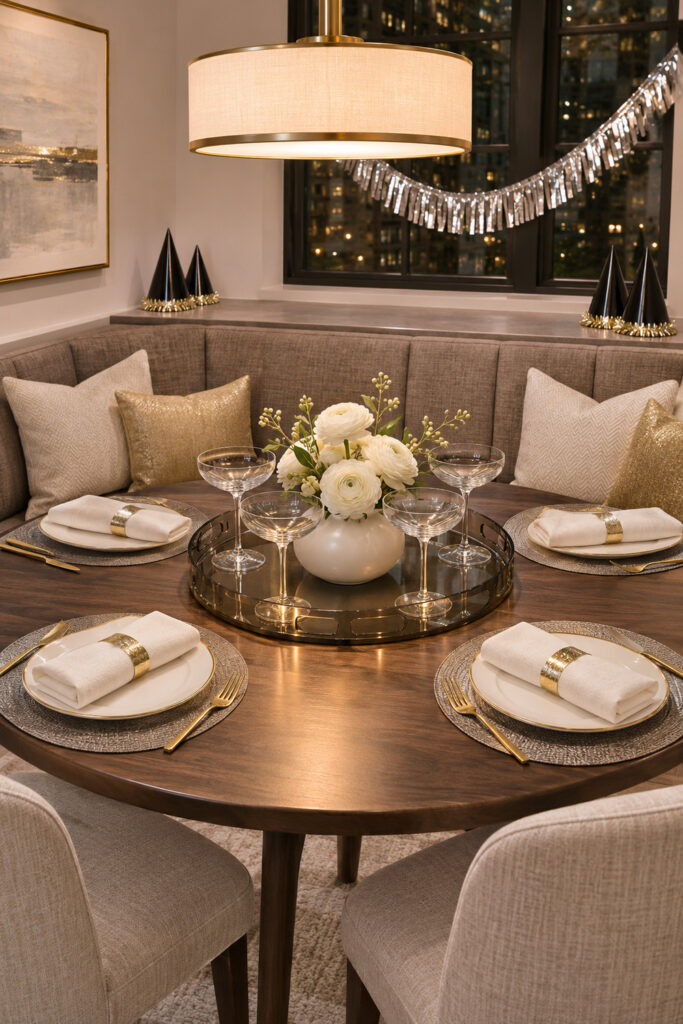
There’s a little vase of white flowers in the middle of this New Year’s Eve table, and the four coupes around it are all standing on the same tray. The tray is what makes the setting useful. It can look like a proper centerpiece while people arrive, then move as a group when you need that space for serving.
The black hats and silver fringe in the background carry the party color away from the dishes. If your dining table is also where you’ll serve the meal, try planning around one removable piece. You’ll have a place for the toast and somewhere to put dinner.
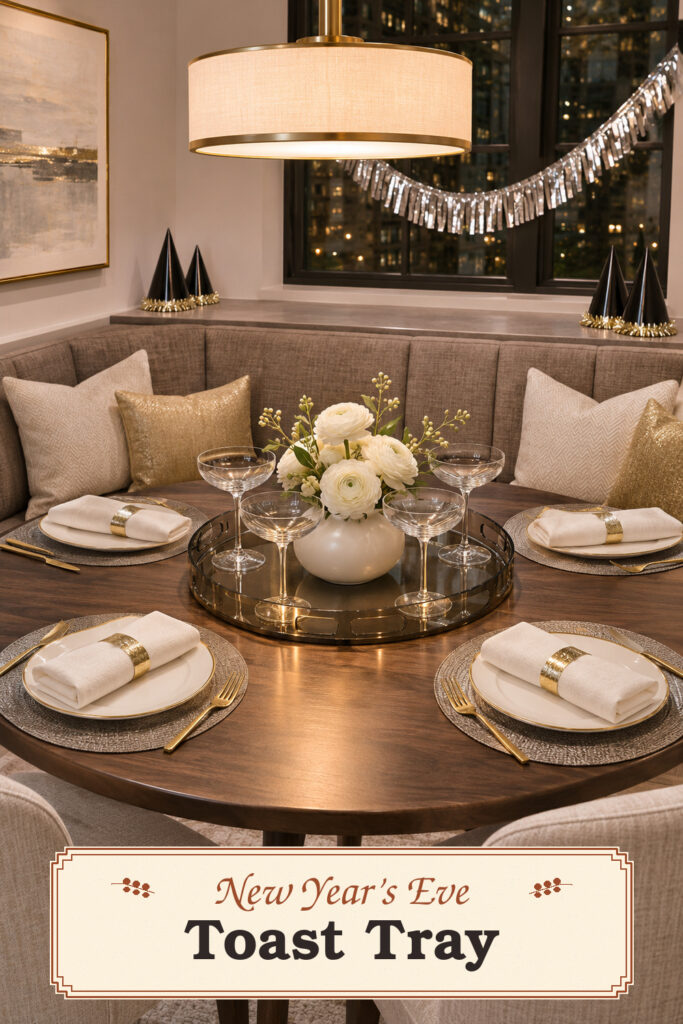
This image was created with AI as decorating inspiration. Similar pieces can help you recreate the look.
Give the whole centerpiece one base
The dark round tray echoes the shape of the walnut table and gives the clear glasses a visible edge. The vase is low enough for the stems to be seen around it, and the openings in the sides make it obvious that the group can be picked up. A pale vase and light flowers also help the center stand out from the dark tray. Those three simple relationships are worth keeping if you use different colors.
Set out the tray empty and decide how much table space it can reasonably take. Put a plate and your usual glass at each seat before testing it. There should be enough room for someone to lift a plate without bumping the tray.
A tray that looks modest in the store can feel quite different once there are four settings around it. If you’re using a round table, the curve can help leave a little more room by each place. On a rectangular table, a compact oval or rectangle might fit better between opposite plates.
Try the tray on its second surface before adding the flowers or glasses. That might be a sturdy side table, buffet or a clear counter. The ledge in the inspiration gives the nook some staging room, but you’ll want to measure your own surface to make sure it can hold the entire tray. Put it where you can set it down in one easy motion. If your only spare surface is a shallow sill, a small table nearby will be more useful.
Make a small bouquet look full
The arrangement is pale and rounded at the base, with a few slender stems rising above the white flowers. It’s fuller than a single bloom, but it still leaves the coupe rims visible. A squat vase with a compact opening will gather the stems so you can use fewer of them. Put the largest flower low and slightly forward, then fill around it with smaller blooms or greenery.
Test the vase among the empty glasses before you add water. Leave space around the vase so no one needs to grasp a stem between two blossoms. If the flowers are high enough to hide the person opposite you when seated, trim the longest stems or use a shorter vase.
A tight cluster of carnations or small roses would work here if ranunculus aren’t convenient. Aim for a gentle cream or white that picks up the napkins. A little green between the blossoms keeps the bouquet from looking like a solid white mound.
When you’re ready for dinner, move the arrangement with the glasses empty if possible and pour the toast at the table or side surface later. Keep the weight centered and use both hands. If the tray flexes or has awkward handles, leave the vase behind while you move the glasses or use a sturdier base. The arrangement should make the switch easier rather than giving you one precarious thing to carry.
Let the seats do some of the decorating
The napkins are folded into pale rectangles with gold bands. That repeated shape gives the table a dressed-up edge while leaving room for the centerpiece. Fold one napkin and lay it on the plate to check the proportion. The band should sit far enough in to hold it, and there’s no need for another decorative piece at every setting. If you already have simple white dishes, the same fold and a little metal or metallic paper are plenty.
The banquette is softened by taupe cushions and a few gold ones, with the black party hats placed in pairs at the back. You could borrow the idea with existing chairs. Put the hats on a small side surface so guests can take one before sitting. Leave the seats clear and pick up the metallic color with a cushion on the far end of a bench or a streamer near the window. One silver swag against dark glass gives the nook a festive shape with almost no tabletop space.
A shaded pendant adds a warm pool over the center. Set up the glasses and look at them with the pendant on at night. If there’s a sharp reflection on the tray, a small lamp off to the side may help balance it. A little light across the surface can show the grain of the table and the shape of the glass at the same time. The idea works with warmer wood and cooler silver in the same view because the light connects them.
Set it up for a smaller group
For two people, use a petite tray, two coupes and a short bud vase. Shift the tray slightly off-center if you’re sitting on one side or if it gives you a better place to put a shared plate. Keep the napkins and hats in the same colors so the arrangement still feels tied together. If you’re hosting more people in a small room, set a couple of extra glasses on the landing surface before the meal. Just leave enough space there for the tray when it comes off the table.
You can also keep the palette and use a lower group if you’re worried about reaching across. Try a tiny vase surrounded by glasses rather than a bowl with a wide bouquet. The scale of the centerpiece should follow the table and the way the food will be served. I’d keep the ability to move it even if you decide to change almost everything else.
Select pieces that can work together
A round handled serving tray
Look for a flat bottom and grips you can reach with the tray loaded. Set one plate on the table while you measure the remaining space.
Clear coupes with a steady base
A broad enough foot helps each glass sit comfortably beside the others. Look at how the stems read against the tray and check that the bowls don’t touch.
A small round vase for white blooms
Choose a low vessel with enough weight to sit steadily and a narrow enough opening to hold a few stems together. Keep the flower height below the seated sightline.
Rehearse the changeover once
Sit down and check the view across the centerpiece. Then stand, lift the empty arrangement and set it on its landing surface. Check that there’s room to put it down without shifting decorations or leaning around someone’s chair. Return it to the table and decide where the first shared dish should go when the tray moves.
Final Styling Tip
Leave one side of each handle completely clear of flowers and glass stems so you can get a firm grip when it’s time to move the tray.