*This post may contain affiliate links for which I earn commissions.*
A hardworking boot room can become one of the most inviting places to decorate for fall. Its benches, baskets, hooks, boots, and sturdy finishes already provide the kinds of natural textures that make autumn accents feel at home.
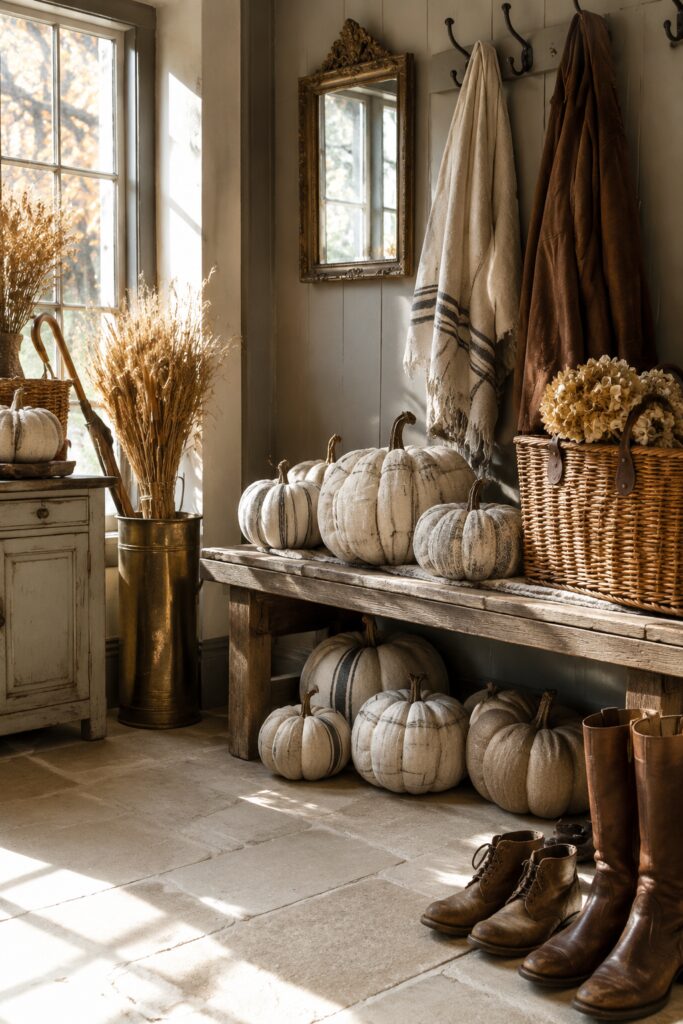
In this sunlit room, a generous collection of grain-sack pumpkins transforms a weathered wooden bench into a relaxed seasonal display. Faded stripes, rough woven fabric, dried grasses, worn leather, and warm wicker create a neutral fall palette that feels comfortable rather than overly coordinated.
The pumpkins are plentiful, but their subdued colors allow the room to remain peaceful. They look as though they were made from old textiles gathered over many years, giving the arrangement a sense of history and handmade charm.
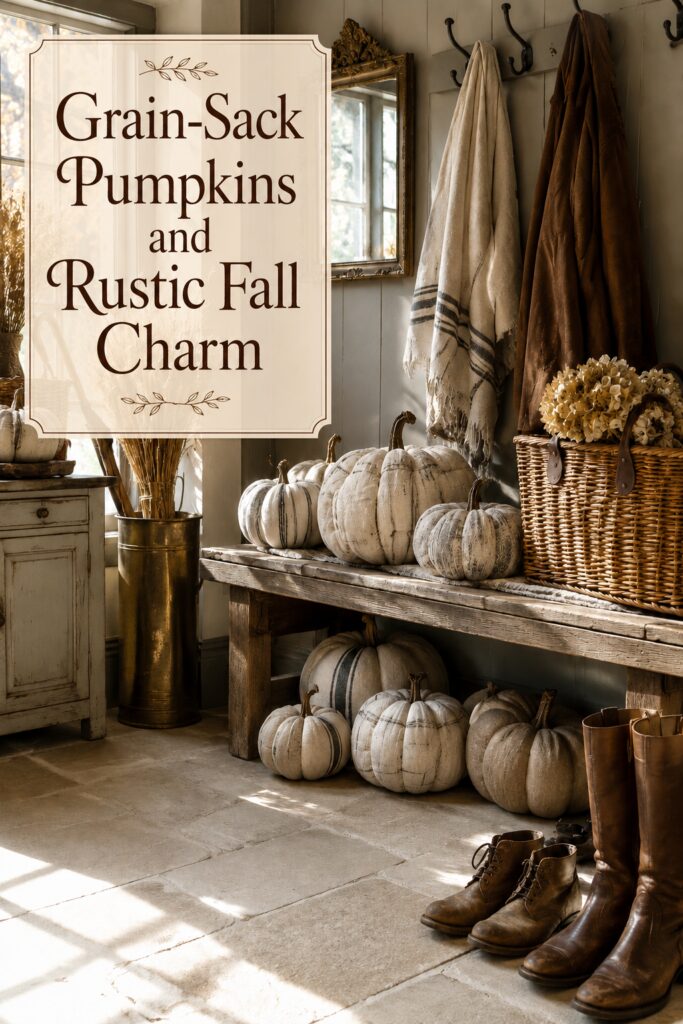
The inspiration image featured in this post was created with AI.
What Makes the Grain-Sack Pumpkin Display Distinctive
The fabric pumpkins are unquestionably the focal point. Some are cream with narrow charcoal stripes, while others feature irregular checks, mottled markings, or plain woven surfaces.
These variations make the collection more interesting than a group of identical neutral pumpkins. The fabric patterns shift from one piece to another, yet their shared flax and gray palette keeps the display unified.
Their dried, curved stems provide an earthy finishing detail. The stems rise above the pale fabric and echo the twisted shapes of natural vines, dried grasses, and basket handles elsewhere in the room.
The quantity of pumpkins also contributes to the effect. Several sit across the bench, while another group fills the open space below. Repeating them at two levels gives the display presence without cluttering the floor throughout the entire room.
A Warm Neutral Palette with Plenty of Texture
Although the room contains very little traditional orange, it still feels unmistakably autumnal. Tobacco-colored leather, golden wheat, wicker, dark wood, and late-afternoon sunlight supply the warmth.
Cream grain-sack fabric keeps the pumpkin collection light. Faded charcoal stripes connect it to the black wall hooks and darker shadows, while the aged brass container introduces a subtle metallic note.
Texture is more important here than strong color. Rough wood, woven baskets, rumpled fabric, dry stems, worn leather, and stone flooring each respond to light differently. That variety prevents the restrained palette from looking flat.
Key Pieces for Recreating the Boot Room
Grain-Sack Fabric Pumpkins
Look for fabric pumpkins made with linen, canvas, cotton, or grain-sack-inspired material. Faded stripes and irregular woven patterns will feel more authentic than crisp printed designs.
Mix several sizes and shapes. Some can be tall and rounded, while others should appear lower and wider. Slightly uneven forms contribute to their handmade appearance.
If exact grain-sack pumpkins are difficult to find, similar results can be achieved by covering lightweight pumpkin forms or making stuffed fabric versions from striped linen and neutral utility cloth.
A Rustic Wooden Bench
The long weathered bench gives the pumpkins a practical place to gather. It also creates two distinct display levels.
A farmhouse bench, reclaimed-wood seat, or simple unfinished bench can provide a similar foundation. The piece does not need to be heavily distressed, but visible wood grain and a matte finish will suit the look better than a glossy surface.
Woven Storage Baskets
A substantial wicker basket adds warm color and useful storage to one end of the bench. Leather handles make it feel especially compatible with the boots and hanging coat.
Fill the basket with dried hydrangeas, folded textiles, scarves, or everyday items. Leaving part of the basket visible helps its texture remain an important part of the arrangement.
Dried Wheat and Meadow Grasses
Tall bundles of wheat and fine dried grasses bring movement to the straight lines of the bench, window, and wall paneling.
Place the largest arrangement near the window, where sunlight can pass through the delicate stems. A second, smaller bundle can appear on a cabinet or ledge to repeat the material without creating another major focal point.
Leather Boots and a Workwear Coat
Practical items help the display feel like part of a real boot room. Brown leather boots and a weathered coat provide deep, warm tones that balance the pale pumpkins.
Arrange boots neatly, but avoid making them look too staged. A tall pair beside a shorter lace-up pair creates natural variation and reinforces the room’s everyday purpose.
Grain-Sack Textiles and Black Wall Hooks
A cream textile with faded dark stripes repeats the pattern found on the pumpkins. Draped loosely from a substantial hook, it connects the upper wall with the bench display below.
Matte black hooks add a simple utilitarian detail. They work especially well against pale wood paneling and offer enough contrast to remain visible.
Arranging Pumpkins Across the Bench
Begin with the largest pumpkin and position it slightly away from the exact center. Add two medium pumpkins beside it, turning each one so its stripe or fabric pattern is clearly visible.
Place smaller pumpkins toward the outer edges. Their lower height creates a gradual visual transition between the large centerpiece and the other objects on the bench.
Avoid arranging the pumpkins in a perfectly straight row. Pull one slightly forward and let another sit farther back. Overlapping their silhouettes will make the collection look more relaxed.
Reserve one end of the bench for a basket or another functional item. This keeps the display from feeling like a pumpkin shelf and preserves the identity of the space as an entry or boot room.
Using the Space Beneath the Bench
The open area below the seat is ideal for a second group of pumpkins. Start with a large striped piece toward the back, then place several medium and small pumpkins in front.
Allow the bench legs to frame the arrangement. Keeping the pumpkins within those boundaries gives the lower grouping a contained, purposeful appearance.
Leave some empty space between the lower pumpkins and the boots. That break helps the eye distinguish the decorative display from the practical footwear nearby.
If the room needs to function for a busy household, place the pumpkins in a wide low basket or shallow wooden crate. They can then be moved as a group when the storage area is needed.
Adding Height Without Overcrowding the Bench
Tall dried stems provide height without taking up much surface space. A narrow floor vessel can sit beside the bench, while the woven basket adds a lower floral arrangement at the opposite end.
An antique-style mirror above the bench reflects sunlight and makes a narrow room feel more open. Its aged gold frame introduces just enough ornament to soften the utilitarian hooks and paneling.
Keep the wall simple around the mirror. A hanging striped textile and one brown coat provide color and movement without competing with the pumpkin collection.
Shop Similar Pieces for This Fall Look
Look for Grain-Sack Fabric Pumpkins
Choose a mixed group featuring stripes, checks, faded markings, and plain neutral fabrics.
Shop Similar Rustic Wooden Benches
Look for a narrow bench with a natural or lightly weathered finish and open storage beneath it.
Add a Woven Storage Basket
Select a sturdy rectangular basket with enough presence to balance several pumpkins.
Look for Dried Wheat and Meadow Stems
Combine upright wheat with finer grasses for a loose, sunlit arrangement.
Shop Similar Black Wall Hooks
Simple substantial hooks will support coats and textiles while adding dark contrast.
Add Grain-Sack-Inspired Textiles
Striped linen throws, towels, or fabric remnants can repeat the pumpkin patterns elsewhere in the room.
A Final Styling Thought
The character of this boot room comes from materials that look better with age. Choose faded fabric, worn wood, natural stems, wicker, and leather, then let the pumpkins vary in shape and pattern. The display will feel thoughtfully collected while remaining relaxed enough for an everyday entry.