*This post may contain affiliate links for which I earn commissions.*
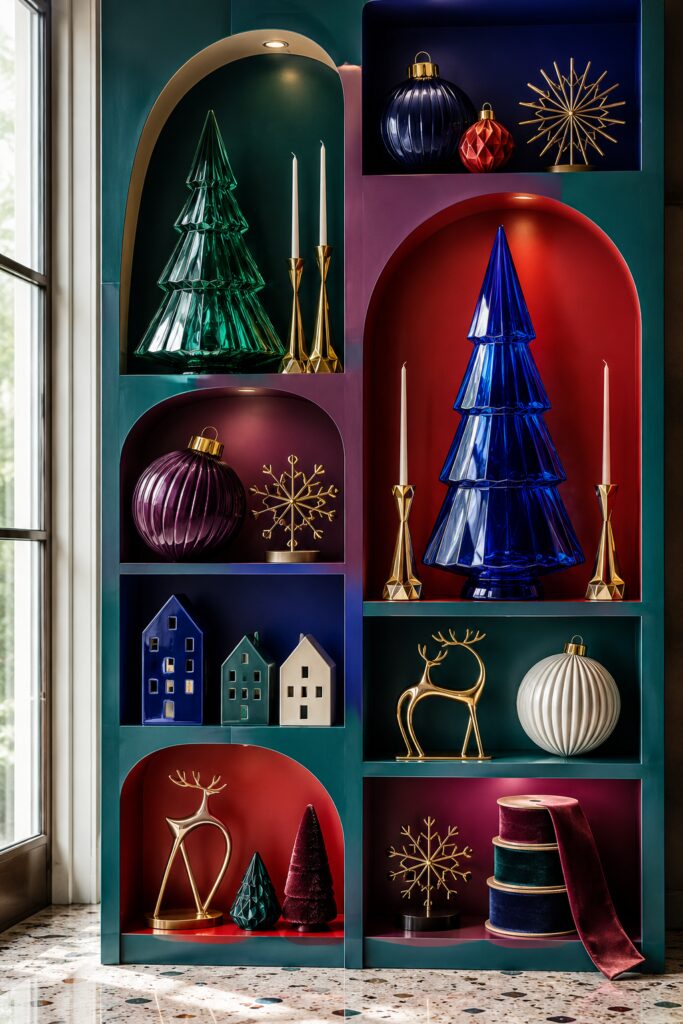
A cobalt tree set against a red arch makes an immediate impression in this Christmas cabinet. Nearby, an emerald tree shares its compartment with slender gold candlesticks, while ribbed baubles and delicate metal snowflakes fill smaller spaces. Every shelf offers something different to notice.
The display feels collected because the objects have distinct silhouettes. Smooth ceramic houses, reflective tree forms, and soft velvet ribbon sit together without blending into one another. Deeply colored backgrounds give each grouping its own setting.
You can recreate this approach on an ordinary bookcase, in a display cabinet, or across a few open shelves. Start with pieces you enjoy seeing individually, then use color and spacing to make them feel connected.
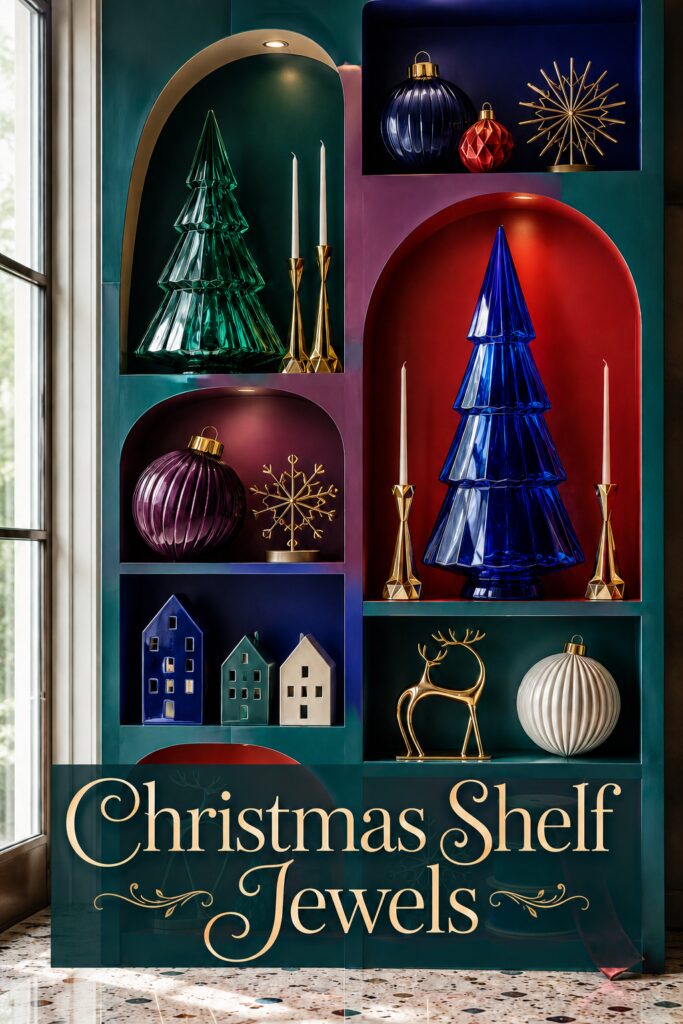
The inspiration image is AI generated. The objects and cabinet are visual concepts, and similar decorations can recreate the overall effect without matching every detail.
Make the Shelf Background Part of the Display
The cabinet’s colored compartments do more than hold decorations. They change how each object reads.
The cobalt tree stands sharply against red, while gold snowflakes remain easy to see against plum and navy. The emerald tree has a quieter relationship with its deep green background, relying on reflected light to define its edges.
Try adding removable backing panels to a few shelves. Sturdy card or thin board covered in colored paper can introduce navy, wine, or red without repainting the furniture. Fit the panels securely without forcing them into place or attaching anything that could damage the finish.
Choose two or three background colors for a smaller display. Leaving some shelves in their original finish will keep the project manageable and help the decorated areas stand out.
Start with the Largest Tree Forms
Faceted Trees in Emerald and Cobalt
The two tall trees establish the cabinet’s main visual structure. Their stacked, pointed tiers feel almost architectural, and their transparent-looking surfaces catch both daylight and the small lights above.
Look for glass or translucent decorative trees with a clear outline and an interesting surface. Ribbed, angular, or tiered forms can suggest the same effect even if their proportions differ from the inspiration.
Find Glass Christmas Trees
Browse current Amazon options that can help you recreate this look.
Browse Decorative Glass Christmas Trees on Amazon →As an Amazon Associate I earn from qualifying purchases.
Measure the shelf opening before choosing a tree. Leave visible space above its tip and around its widest branches. A slightly smaller piece often looks more intentional than one squeezed into a compartment.
If you already own a clear or green tree, use that as your starting point. The colored backing can supply much of the drama.
Oversized Baubles with Defined Ribs
Large ornament shapes appear as standalone objects rather than decorations hanging from a tree. Navy, plum, red, and ivory versions repeat the rounded form across several compartments.
Their ribs and facets give them enough detail to hold a shelf without lots of accessories. Pair one substantial bauble with a finer metal piece, allowing both outlines to remain visible.
For round ornaments that are not designed to stand, use a discreet ornament cradle or a shallow supporting dish. Avoid balancing a fragile sphere loosely near a shelf edge.
Use Gold to Connect Different Shapes
Slender Reindeer and Open Snowflakes
Gold reindeer introduce curves, while the snowflakes and starburst shapes extend thin lines outward. These open forms balance the visual weight of the solid trees and baubles.
Choose a few metal accents with a related finish. They do not need to match exactly, but a consistent warmth will help separate shelves feel like parts of one collection.
Place a reindeer beside a rounded ornament or a short tree. Give its antlers enough room to remain distinct against the background.
A freestanding snowflake can fill a smaller compartment without making it feel crowded. Its open center and fine branches let the backing color remain visible.
Sculptural Candleholders with Ivory Tapers
The gold candleholders echo the angular surfaces of the trees, while ivory tapers add narrow vertical lines. That pale color is useful in a display dominated by deep tones.
On one shelf, try two holders of slightly different heights beside a tree. Elsewhere, a balanced pair can frame a central object. Mixing these arrangements keeps the cabinet from feeling mechanically repeated.
Within shelving, keep conventional candles unlit or choose flameless tapers. The decorative shape supplies the effect without needing a flame beneath another shelf.
Add a Few Quieter Materials
Simple Ceramic Houses
The small houses provide a calm change of texture. Their flat walls and cutout windows contrast with the more elaborate surfaces around them.
Arrange a short row with varied roof heights. A navy house, a green one, and an ivory one can connect the palette while introducing a lighter note.
You can also use houses already in your holiday collection. Their simple silhouettes matter more than finding the exact colors shown.
Velvet Ribbon on Display
The stacked ribbon spools are an unexpected finishing detail. Burgundy, teal, and navy velvet repeat the cabinet colors, while one loose length creates a soft line against the rigid compartments.
If you have attractive ribbon rolls, arrange two or three neatly on a lower shelf. Turn labels away and let a short ribbon end drape within the display area.
This is an easy way to use decorating supplies you already own. Keep the loose end clear of drawers, doors, and walking paths.
Arrange Each Compartment as a Small Composition
Empty the shelves you plan to decorate before placing the largest objects. Start with one tree, then position the second substantial piece elsewhere so the visual weight is distributed.
Build around those anchors with smaller pairings. A bauble and snowflake need little else. A reindeer might share a shelf with two compact trees. A row of houses can occupy its own space.
Leave a visible border of background around each grouping. That breathing room is what makes the individual objects feel worth noticing.
Step back and check where the colors repeat. If all the blue pieces sit together, move one to another shelf. Repeat gold throughout, but vary its form so the connection feels natural.
Use available daylight where possible. If adding shelf lighting, choose fixtures intended for that setting and position them so they reveal the objects without creating distracting glare.
Similar Pieces for a Collected Christmas Cabinet
Look for Jewel-Tone Tabletop Trees
Prioritize a distinct silhouette, an appealing surface, and dimensions that suit your shelves.
Shop Similar Gold Figures and Ribbed Ornaments
Choose contrasting shapes within a related palette. One open metal form beside one rounded piece can make a complete grouping.
Add Colored Backings and Velvet Ribbon
These adaptable details help existing decorations feel like part of the same display without requiring a whole new collection.
Give Your Favorite Object the Best Spot
Begin with the piece you most want to see, then choose its background and companions. When each shelf has a clear focal point and a little space around it, even a modest collection can feel thoughtfully arranged for Christmas.