*This post may contain affiliate links for which I earn commissions.*
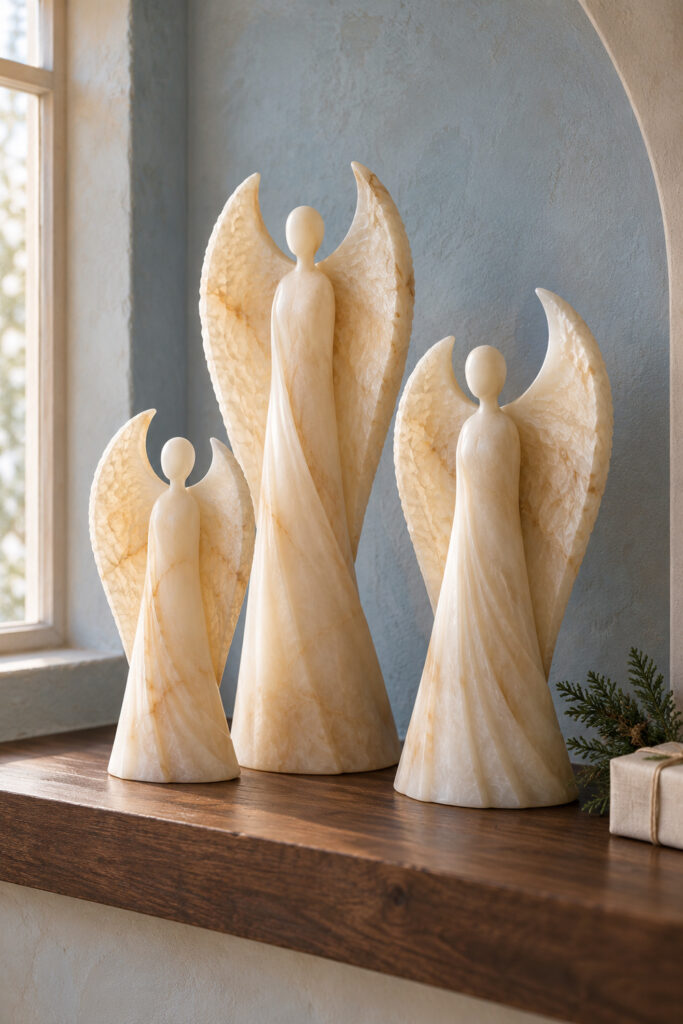
Three ivory angels fill this Christmas alcove with shape and texture rather than a large assortment of decorations. Their broad wings rise around plain oval heads, while tapered robes settle onto the dark wooden ledge. A dusty blue background makes the pale figures easy to see.
What stands out is the difference between the smooth robe surfaces and the roughly carved looking wings. Similar figures can suggest that contrast even when they are made from another material. The useful idea is a small, related collection with enough room for each wing outline to remain clear.
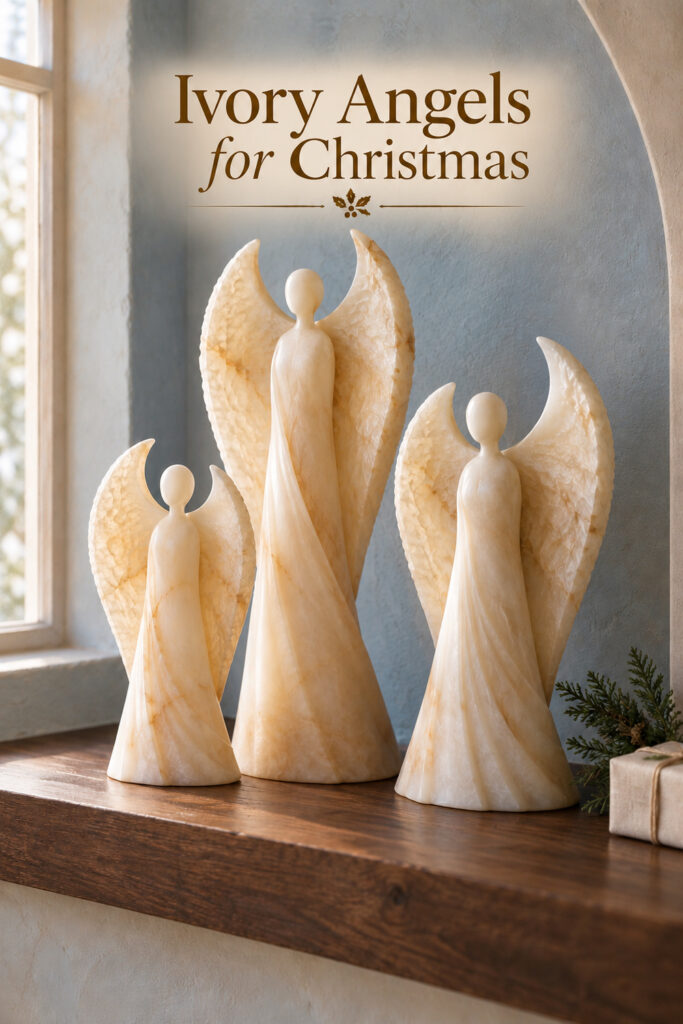
The inspiration image was created with AI.
What Makes the Angel Display Work
The tallest angel sits toward the center, with a smaller figure at the left and a medium figure on the right. Their heads form a gentle rise and fall. Because the robes share a simple tapered shape, that change in height is easy to notice without any additional stands.
Find Ivory Angel Figurines
Browse current Amazon options that can help you recreate this look.
Browse Ivory Angel Figurines on Amazon →As an Amazon Associate I earn from qualifying purchases.
The wings vary slightly in curve and spread. Those differences prevent the trio from feeling mechanical, but the repeated ivory color keeps it connected. You can follow the same approach with figures gathered separately, choosing one shared feature and allowing a few small differences elsewhere.
The alcove is mostly empty above the angels. That open blue space makes the tallest wing tips part of the composition rather than something squeezed beneath a shelf. The little parcel and cedar at the far right stay low, giving the collection a Christmas context without covering the bases.
Key Pieces for a Similar Christmas Alcove
Ivory Angel Figures
Begin with recognizable wings and a stable body shape. Featureless faces suit this image’s quiet style, but your figures don’t need to be identical to achieve a similar arrangement. Look for simple forms rather than elaborate details that will disappear when seen from across the room.
The image suggests carved alabaster, with honey colored veining and light passing through thin edges. Similar ceramic or resin figures can preserve the pale silhouettes while changing that material effect. Read descriptions carefully and don’t assume a stone look finish is actual stone or has the same care needs.
A Noticeable Change in Height
A tall, medium, and small figure create the stepped rhythm. Compare their full height, including wing tips, rather than measuring the robe alone. A short body with very high wings may take up more visual room than a taller figure with a narrower outline.
If your angels are close in height, try grouping only two or moving one slightly forward. Avoid balancing a heavy sculpture on an improvised stack simply to copy the image’s proportions. The collection should rest securely before you consider how neatly its heads line up.
A Contrasting Backdrop
Dusty blue separates the warm ivory from the wall without making the nook feel dark. A muted gray blue, soft taupe, or another quiet midtone could serve the same purpose. Test a color sample beside the actual figures before deciding a wall needs repainting.
You can also use a freestanding painted panel if it rests securely and suits the space. Keep the backdrop plain enough that the wing texture stays visible. A busy pattern might be attractive on its own, but it would tell a different story behind these broad carved shapes.
A Dark Wooden Ledge
The dark wood gives the pale robes a clear stopping point. A mantel, deep shelf, or cabinet top can provide a similar base if it supports the figures safely. Measure the available depth against the entire footprint of each sculpture, including any backward spread of the wings.
Keep the ledge mostly bare. The wood grain provides enough texture beneath the angels, and a thick fabric runner could make their bases less stable. If you want to protect the surface, use a suitable thin pad beneath an individual figure rather than a folded cloth under the whole group.
Arranging Your Angel Collection
Place the tallest figure first, a little behind the intended front line of the display. Add the smaller one to the left and the medium one to the right. This gives you a starting arrangement, but let the actual direction of the wings guide the final spacing.
Look closely at the gaps around the heads. When one wing sits directly behind another angel’s face, the forms can merge from a distance. Move a figure sideways or turn it slightly so each head remains framed by its own wings instead of disappearing into the neighboring sculpture.
Leave enough space above the tallest tips for the collection to feel comfortable. If the nook is too short, choose smaller figures rather than letting the wings nearly touch the top. That bit of open wall helps the carved shapes look deliberate and makes dusting easier as well.
Stand at the main entrance to the room and check the group from there. A figure that looks separate when you’re close may disappear behind the tallest robe from the doorway. Small adjustments in depth can improve the view without requiring a wider shelf or another accessory.
Add the low Christmas detail last. A small wrapped parcel and a short evergreen sprig can sit beside the collection, provided neither presses against delicate edges. Keep loose foliage from covering the carved surfaces; the wings are the reason this arrangement is interesting in the first place.
Use available side light if it shows the different textures well. You don’t need to add internal lighting or place candles behind the figures. Real materials behave differently, and ordinary reflected light can reveal a carved edge without turning the display into a lighting project.
Choose the location with weight and fragility in mind. A narrow shelf above a busy seat may be less suitable than a deeper cabinet away from passing hands. Follow the care instructions for the actual material, and lift figures by their main bodies rather than by wings or decorative tips.
Compare the wing texture at a little distance before adding other carved pieces nearby. The rough looking edges already supply a lot of surface detail, particularly beside the polished robes. A similarly busy frame or heavily patterned parcel could make that contrast less apparent. If the alcove includes a permanent decorative feature, simplify the temporary Christmas additions around it so the angels still have a clear place to stand.
Shop Similar Pieces
Look for Simple Angel Figurines
Prioritize a readable silhouette and sound base. Compare several pieces together before deciding they form a collection. Shared color and related robe shapes can do more to connect them than matching every tiny carved detail or accessory.
Shop Similar Muted Backdrop Colors
A painted sample board lets you judge contrast without committing to a full alcove repaint. Check it in the room’s usual light beside the figures. Warm ivory can look quite different against a cold blue than it does against a softer gray blue.
Add Plain Gift Wrapping
An understated parcel provides a seasonal cue near the ledge edge. Reuse neutral paper and a small piece of ribbon if you have them. Keep its size below the smaller angel’s visual importance, so the figures remain the focus rather than becoming a backdrop to gifts.
Final Styling Tip
Give each angel a visible patch of background around its head and wings. Once those outlines are clear, the collection can feel complete with very little else on the ledge.