*This post may contain affiliate links for which I earn commissions.*
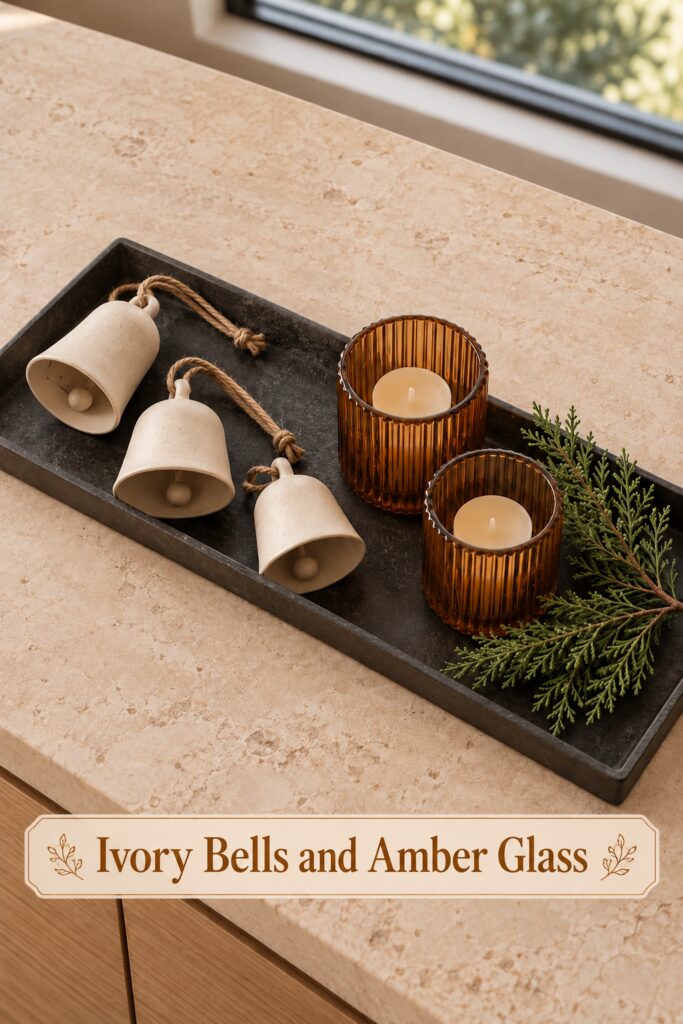
Three ivory bells, two ribbed amber candleholders, and a cedar sprig make a small Christmas collection on this charcoal tray. The bells lie on their sides with their cord loops visible, so their shape feels more casual than a row of hanging ornaments.
The contrast is the interesting part: pale matte surfaces beside shiny amber glass, all held together by one dark rectangle. A tray gives the arrangement a boundary and makes it easier to move when the space is needed for something else.
The inspiration image was created with AI and shows imagined accessories rather than identified products available for purchase.
What Makes This Small Collection Work
The charcoal tray separates the accessories from the pale countertop. Its shallow edge is enough to frame the objects without hiding them. Because the tray is long, the bells and glass can sit beside one another rather than being piled into a central cluster.
The ivory bells repeat one rounded shape at slightly different angles. Their cord loops add a rougher texture, which keeps the pale surfaces from feeling too formal. You can see the bell openings and clappers, so the holiday reference remains clear even without additional ornaments.
The amber holders provide the strongest color and a second kind of surface. Their ribs catch the light differently from the bells’ matte finish. The cedar at the end breaks up the straight tray outline and supplies just enough green to connect the collection with Christmas.
Find Ivory Bell Ornaments
Browse current Amazon options that can help you recreate this look.
Browse Ivory Bell Ornaments on Amazon →As an Amazon Associate I earn from qualifying purchases.
Key Pieces for the Bell and Amber Tray
A Shallow Charcoal Tray
Look for a rectangular tray with a modest rim and enough usable space for the accessories. A matte or softly textured finish is a good companion to the glass. The tray doesn’t need to match the inspiration’s material exactly, but it should feel visually quieter than the objects inside it.
Check the base before setting it on a stone, wood, or painted surface. Use protective pads if appropriate for the tray and your countertop. If you plan to move the display often, choose a tray you can lift comfortably while keeping fragile pieces secure.
Ivory Decorative Bells
Simple bell ornaments with natural cord loops are the closest visual starting point. Matte ivory is more useful here than polished metallic gold because it preserves the pale contrast with the amber. Ceramic style bells are suggested by the image, but lightweight versions may be easier to arrange and store.
Compare the shape and opening as well as the color. A bell that looks attractive hanging may roll awkwardly when laid on its side. Try a stable angle, or choose a flatter decorative version if the surface and household activity make rolling objects impractical.
Ribbed Amber Candleholders
Two holders of related shape give the arrangement a repeated glass texture. They don’t have to be identical in height, although keeping them within a similar scale helps them read as companions. Their amber color should be clear enough to provide warmth against the dark tray.
Choose holders intended for the candles you want to use. The inspiration shows the candles unlit, which is a perfectly workable decorating choice. If you want a glow beside cord and cedar, flameless candles are a practical substitute for open flames.
Natural Cord Loops
The cord is a small detail with a noticeable effect. It brings a plain, slightly rough texture to the bell group and links it to the cedar. If your bells come with bright ribbon, you could replace it with a neutral cord if their attachment design allows that safely.
Let the loops fall naturally inside the tray instead of stretching them into identical shapes. A little variation suits bells resting on their sides. Keep the cord away from any real candle flame, and don’t use it to prop up an object that needs a proper stable base.
A Small Cedar Sprig
The cedar works because it stays at one end and leaves most of the tray visible. Choose a short, fairly flat spray that can lie beside the glass without pushing it out of place. A full wreath or thick garland would change the balance considerably.
Faux cedar is easy to reuse, while fresh greenery may need more frequent checking and cleanup. Either can suggest the same shape. Keep the sprig away from flames and from surfaces where sap or moisture could leave a mark.
Arrange the Collection on Your Surface
Set the empty tray in place first and check how much counter space remains around it. Leave room for normal kitchen tasks, especially if the island is used for preparing meals. The display should be easy to enjoy without becoming something you repeatedly work around.
Put the bells toward one end and turn their openings partly toward the main viewing position. Their rounded bodies can follow a loose diagonal across the tray. Leave enough room between them that each bell’s shape is visible rather than creating one pale heap.
If a bell rolls, change its angle or remove it from the arrangement. Don’t tuck a loose scrap underneath and assume it will stay put on a frequently used kitchen surface. A flatter ornament or a different tray position is a better adjustment than a precarious balance.
Place the candleholders beside the bells, with a slight offset front to back. This shows the ribbed sides and stops the holders from blocking each other. Check the arrangement from both sides of the island if people usually approach it from more than one direction.
Tuck the cedar along the far end, allowing a few tips to soften the tray’s edge while keeping them off active work areas. The greenery should support the collection, not cover the bells or wrap around the candleholders. When in doubt, trim the visible spread rather than adding more.
On a smaller tray, use two bells and one holder. Keep the same ivory, amber, charcoal, and green relationship, with visible space between the pieces. You can retain the idea at a smaller scale without finding miniature versions of everything in the image.
For a wooden countertop, the dark tray still supplies a useful boundary, while the ivory bells become the clearest contrast. On a dark counter, consider a medium charcoal tray with a slightly lighter texture so its edges remain visible. The important point is that the objects don’t disappear into the surface beneath them.
If the tray sits near food preparation, move it before working rather than decorating around flour, splashes, or hot dishes. A compact grouping makes that easier. Lift the fragile pieces separately whenever carrying the loaded tray would risk them shifting or falling.
At night, ordinary room lighting may be enough to show the amber glass. Add flameless candles only if you want that extra warmth. The unlit version still has plenty of texture, and it keeps the small accessory collection useful throughout the day.
Shop Similar Pieces
Look for Matte Ivory Bell Ornaments
Compare their shape, weight, and suitability for resting on a tray. Natural hanging loops are a helpful detail, but they are secondary to a stable arrangement and a clear bell silhouette.
Shop Similar Amber Votive Holders
Choose a related pair with ribbed or lightly textured glass. Check candle compatibility and usable dimensions rather than assuming every small glass vessel is designed to hold a candle.
Add a Dark Tray and Cedar Accent
Start with a tray you already own if it gives the collection enough room. A short cedar spray can finish the arrangement without requiring a larger garland or another seasonal accessory.
Final Styling Tip
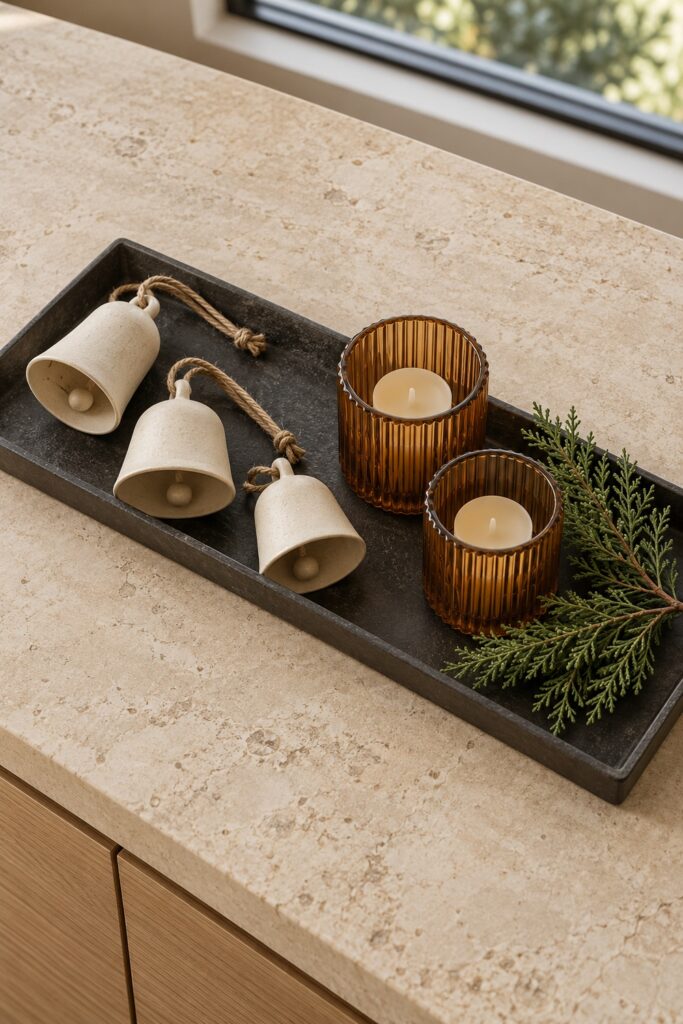
Keep a visible strip of tray around the collection. That dark outline makes the ivory and amber easier to appreciate and reminds you when the display has enough pieces.