*This post may contain affiliate links for which I earn commissions.*
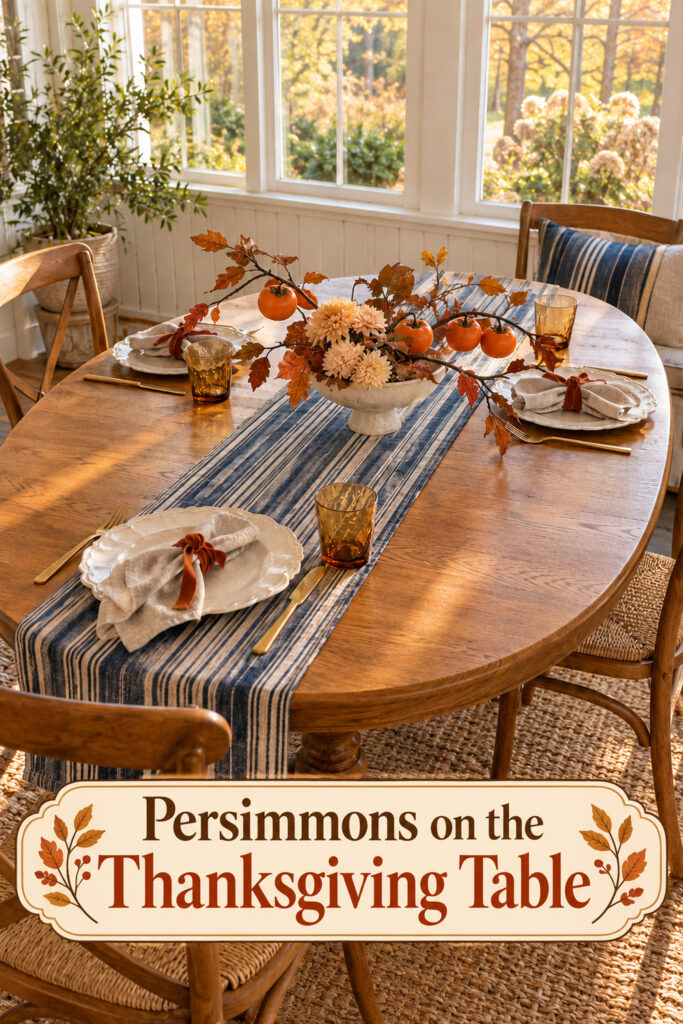
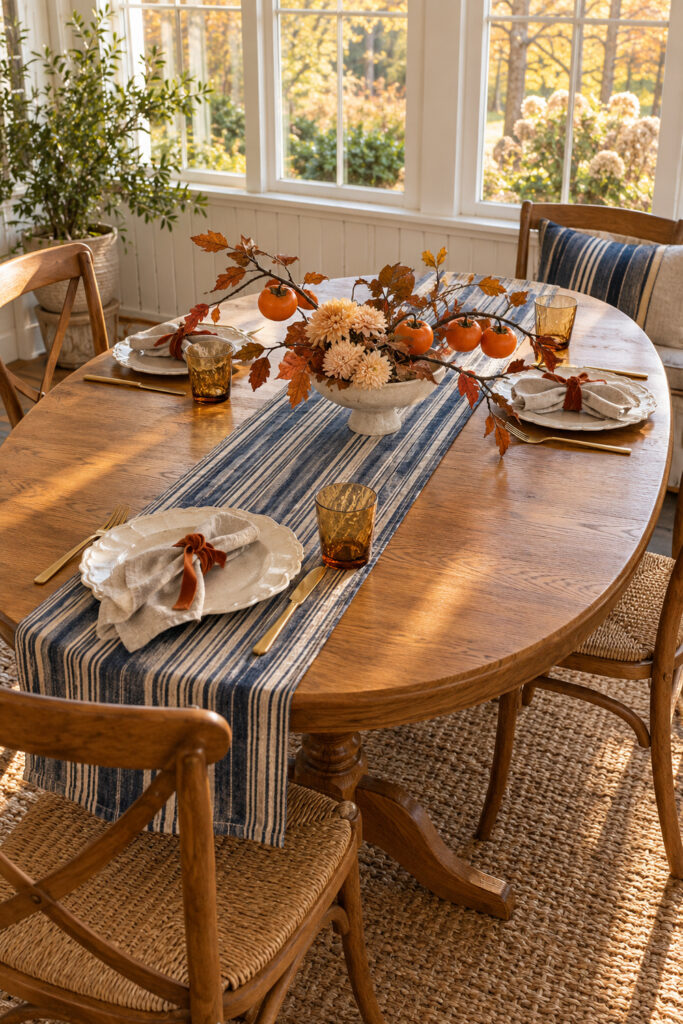
Orange persimmons stretch sideways from a cream compote on this Thanksgiving table. Pale peach flowers gather lower in the bowl, with autumn leaves following the branching stems. An indigo ticking runner runs beneath the arrangement, while scalloped plates, linen napkins, and amber glasses make the individual settings feel connected.
The branches give the centerpiece its character. You can borrow that spreading shape without filling the table with a large upright bouquet. Keep the flowers lower, let the fruit provide the color, and leave room for the meal you plan to serve.
What Makes This Thanksgiving Table Work
The long stems echo the oval tabletop. Their sideways movement directs attention along the runner rather than straight upward, so the centerpiece belongs to the shape of the table. A tall narrow arrangement would create a different emphasis even with the same fruit and flowers.
Blue stripes provide a cool contrast to the orange persimmons and warm wood. They also organize the table, making the low arrangement feel deliberate. The runner’s pale ground repeats the cream plates and napkins, preventing the strong stripes from becoming a separate color scheme.
Amber glasses repeat the warmth of the fruit in smaller, useful pieces. Rust ribbon around the napkins gives another small connection. There are several materials here, but the colors have clear jobs: blue anchors the center, cream lightens the settings, and orange-brown accents supply the seasonal warmth.
Key Pieces for the Branching Centerpiece
A Low Cream Compote
The raised bowl gives the stems room to extend beyond its rim while keeping the flower heads relatively low. Look for a broad, stable foot and a bowl large enough to hold the necessary stem support. A narrow top-heavy stand is less useful once branches begin reaching sideways.
Use a low bowl if that is what you own. You may lose a little height, but the spreading silhouette can remain. Protect the tabletop and runner according to the container’s material, and use an appropriate liner if the arrangement includes water.
Find low cream compote bowls
Browse current Amazon options that can help you recreate this look.
Browse low cream compote bowls on Amazon →As an Amazon Associate I earn from qualifying purchases.
Persimmon Branches or Fruit Stems
The orange fruit is the distinctive detail, so choose stems where the persimmon shapes are clearly visible. Faux branches provide a practical decorating option without depending on the weight and condition of fresh fruit. Look at how the fruit attaches and how well the branches can hold their position.
The image is an imaginative reference, not evidence that a real branch can support that exact arrangement. Test any stems with the bowl before dressing the whole table. Shorten or reposition branches if the container tips, and keep heavy pieces low enough to remain securely supported.
Pale Peach Flowers
The flowers sit closer to the compote than the fruit does. Their soft rounded heads fill the central area and make the bare stems look connected to the bowl. A few cream flowers could work, although peach provides a gentler transition between the orange fruit and pale container.
Choose flower heads that remain distinct from one another. If they fill the bowl to a uniform dome, the centerpiece may look more like a conventional bouquet with fruit added. Leave some visible branching lines so the persimmons continue to lead the design.
Autumn Leaf Sprays
Copper-brown leaves continue the branch shapes between the fruit. Some reach beyond the bowl, and others sit closer to the flowers. This variation keeps the arrangement from ending abruptly at the rim.
Keep loose decorative leaves away from plates and food. If a stem droops into a place setting, bend it back into the centerpiece or shorten it. A branch that looks graceful in a photograph can become awkward when someone is trying to set down a glass beside it.
An Indigo Ticking Runner
Ticking stripes give the table a familiar fabric pattern without needing a large printed design. The narrow blue lines suit the simple cream dishes and natural wood. Place the runner along the table’s length so its direction supports the branching centerpiece.
Check the runner’s width against your place settings. The plates should sit comfortably without an unstable ridge under one edge. If your runner is wider than the available center space, try it with the plates before adding the arrangement and adjust the settings together.
Cream Plates, Linen Napkins, and Amber Glasses
Scalloped plate edges add a little detail around the quieter cream centers. Use plain plates if those are already in your cupboard; the runner and fruit have enough character to carry the idea. A soft linen or linen-look napkin gives the place setting another tactile layer.
The rust ribbon repeats the fruit’s warmth in a small amount. Tie it loosely enough that guests can remove it easily. Amber glasses bring that color above the table surface, but clear glasses can also work if the fruit and ribbon already supply enough warm accents.
How to Arrange the Table for a Real Meal
Set out the place settings first, including the glasses and cutlery you will actually use. This establishes the available center space. A centerpiece that fits on an empty table may feel much larger once every guest has a complete setting.
Place the empty compote on the runner and check its stability. Add the longest stems in opposing directions, balancing their weight without making the arrangement perfectly symmetrical. Keep their ends within the space that remains between settings rather than extending toward someone’s face or chair.
Add the shorter fruit stems, then place the flowers around the bowl’s center. Use foliage to bridge the gaps while preserving a few clear branch lines. Step away from the table to see the silhouette, then sit down to check the view across it.
The fruit and leaves should stay out of the conversation space. Ask someone to sit opposite you or use a chair-back as a rough sightline reference. If you have to lean around the arrangement, lower or shorten the stems. This matters more than copying its apparent width in the image.
Reserve space for the food. You can serve from a sideboard and keep the centerpiece in place, or move the arrangement before bringing shared dishes to the table. Decide that ahead of time so the table isn’t fully decorated with nowhere to put a serving bowl.
For a smaller gathering, keep one strong branching line and fewer flower heads. Use the same cream bowl, striped runner, and warm fruit color, then omit extra accents. The recognizable relationship between orange fruit and blue ticking will survive a simpler arrangement.
Shop Similar Pieces
Look for Low Cream Compote Bowls
Check the base width and bowl capacity before focusing on decorative edges. The container needs to support a spreading arrangement on the table you intend to use.
Shop Similar Faux Persimmon Stems
Compare fruit size, branch flexibility, and attachment quality. Choose stems that can be shortened or positioned securely rather than relying on a dramatic product photograph alone.
Add Indigo Ticking and Amber Glassware
Start with the runner if you want the strongest color contrast. Amber glasses are a supporting detail, so reuse your existing tableware when it already works with the fruit and cream tones.
Final Styling Tip
Check the centerpiece from every occupied chair. A small turn of the compote can preserve the spreading branch shape while moving an awkward stem away from someone’s place setting.