*This post may contain affiliate links for which I earn commissions.*
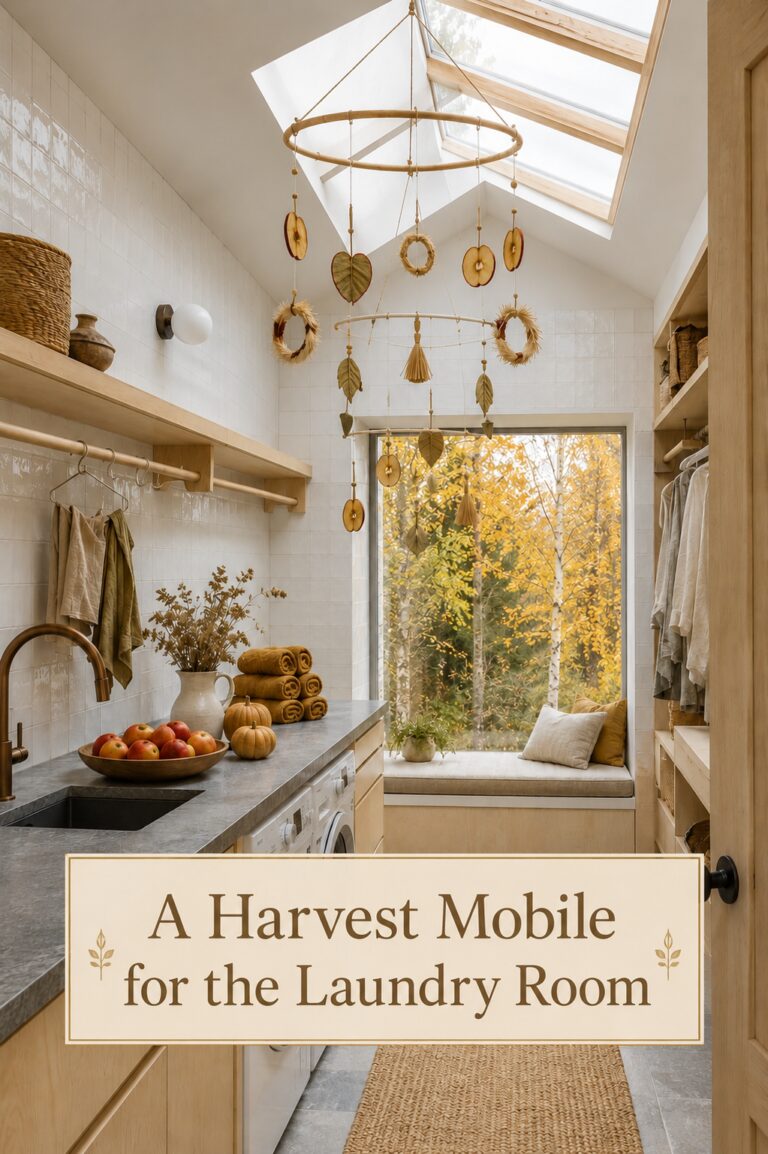
Fall decorating often centers on living rooms, dining tables, and front porches, but a hardworking room can be just as inviting. This sunlit laundry room uses a collection of ivory pumpkins decorated with fern and woodland leaf motifs to turn an ordinary peg rail into a graceful seasonal gallery.
The pumpkins hang at varied heights along the paneled wall, creating a display that feels playful without interfering with the room’s calm, organized character. A pale botanical wreath, champagne ribbon, woven baskets, dried stems, and fern-detailed linens continue the natural theme.
The palette remains soft and earthy. Cream pumpkins and cabinetry reflect the daylight, mossy fern patterns introduce subdued green, and aged brass adds warmth. A dark soapstone sink anchors the pale room and prevents the neutral colors from blending together.
This decorating idea can be adapted to a laundry room, mudroom, kitchen, entryway, or covered porch. The full effect comes from repeating a botanical motif across several simple fall pieces rather than filling the room with unrelated decorations.
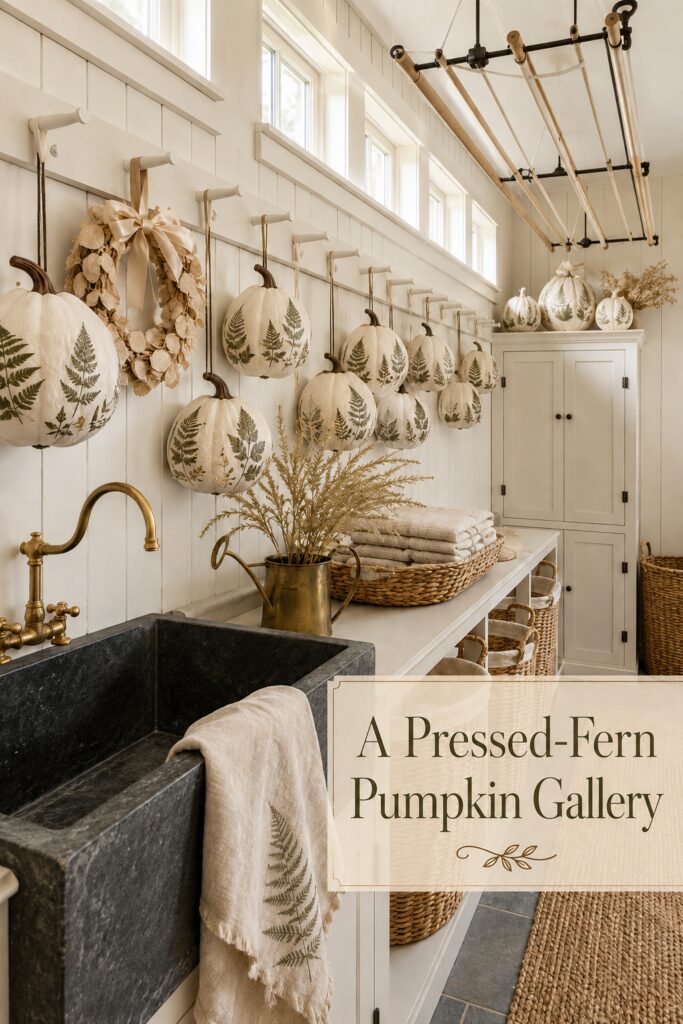
The featured inspiration image was created with AI.
Why the Hanging Pumpkin Gallery Works
Repetition Turns Simple Pumpkins Into an Installation
One fern-covered pumpkin would make an attractive fall accent. A collection of them becomes something much more memorable.
The pumpkins run almost the entire length of the peg rail, giving the eye a clear path through the narrow room. Their repeated ivory color and botanical pattern make the grouping feel unified, even though the pumpkins differ in size and hang at varied heights.
This approach works particularly well in a utility space because it takes advantage of an existing architectural feature. The wall becomes seasonal without sacrificing the countertop, sink, or storage areas.
If a room does not have a peg rail, individual wall hooks or a sturdy decorative rail can produce a similar arrangement. A smaller group of three to five pumpkins could also fill the space above a bench, console, or folding counter.
Fern Motifs Give Fall Decor a Botanical Direction
The olive-green fern patterns are the defining detail. They introduce autumn in a quieter way than orange leaves or bold plaid.
Ferns also complement the laundry room’s natural materials. Their fine shapes echo the dried stems in the brass watering can and the loose weave of the baskets, towels, and rug.
Actual pressed ferns may be used on some craft surfaces, but they can become brittle, fade, or change color. Botanical decoupage paper, leaf-patterned napkins, flexible faux fern pieces, stamps, or stencils may provide a more durable alternative for seasonal decorations.
The goal is to recreate the appearance of preserved woodland botanicals. The exact method can be chosen based on how long the pumpkins will be displayed and whether they need to be stored for future seasons.
Varied Heights Keep the Display Relaxed
Although the pumpkins follow a straight rail, their bodies do not form a straight line. Some hang high against the wall, while others fall lower and overlap visually.
This variation keeps the gallery from looking like a row of identical ornaments. The larger pumpkins are spaced throughout the arrangement, with smaller ones filling the gaps and creating a gentle rhythm.
Before hanging the pumpkins, lay them on the floor in the intended order. Alternate their sizes and botanical patterns, then cut the hanging cords at different lengths. Leave enough room around each pumpkin for its silhouette and fern details to remain visible.
The Wreath Creates a Pause in the Pattern
A pale wreath sits among the pumpkins rather than in a separate part of the room. Its round shape relates to the pumpkin forms, but the layered leaves and satin bow give it a different texture.
This creates a visual pause in the gallery. Without the wreath, the wall could feel too repetitive. The bow also introduces a touch of softness and polish that suits the cream cabinetry and warm neutral palette.
A dried-leaf wreath, preserved-look wreath, or simple twig form covered with fabric leaves could work here. Keeping it close to the pumpkin color allows it to vary the arrangement without becoming a competing focal point.
Key Pieces for Recreating the Botanical Fall Look
Lightweight Ivory Pumpkins
Lightweight faux pumpkins are the most practical starting point for a hanging installation. Foam, papier-mâché, or hollow plastic forms place less strain on the hooks and are easier to prepare for hanging.
Choose several sizes but keep the finish consistent. Matte ivory, warm white, or lightly textured cream will provide a soft background for the fern designs.
Fern and Woodland Leaf Designs
Botanical motifs can be added with decoupage paper, decorative napkins, transfers, stamps, stencils, or thin faux leaves. Combining two or three related fern shapes will create variety while preserving a coordinated appearance.
Use muted olive, moss, or dried herb green. Very dark green could create harsher contrast than the gentle pattern seen in the inspiration image.
Natural Hanging Cord
Thin jute, waxed cotton cord, narrow linen ribbon, or soft brown twine can support lightweight pumpkins. The hanging material should be strong enough for the decoration but visually quiet against the wall.
Secure each attachment carefully and test it before placing the pumpkin above a sink, counter, or walkway.
A Pale Botanical Wreath
Choose a wreath made with parchment-colored leaves, dried-look foliage, or soft fabric botanicals. A cream or champagne bow can connect it to the hanging ribbons and warm cabinetry.
The wreath should be similar in scale to the larger pumpkins so it feels like part of the gallery.
Woven Storage Baskets
Baskets reinforce the natural palette while keeping laundry supplies out of sight. Their honey and wheat tones also provide warmth below the predominantly cream display.
A row of similar baskets looks orderly, but subtle differences in weave and shape can prevent the room from feeling overly staged.
Fern-Detailed Kitchen or Hand Towels
A towel with a small fern motif carries the botanical idea down toward the sink. This repetition is effective because it is subtle and functional.
One patterned towel is enough. Surrounding it with solid oatmeal or cream linens will allow the design to stand out.
Making Botanical Pumpkins for the Display
Begin with clean, lightweight faux pumpkins. If their surface is glossy or vividly colored, apply a matte cream finish suited to the material and allow it to dry completely.
Plan the fern placement before applying adhesive or paint. Position the largest botanical shape on one side of the pumpkin, then add smaller fronds around it. Let the design follow the pumpkin’s curved surface rather than forcing it into a perfectly straight arrangement.
For decoupage, work with small or narrow botanical sections that can conform to the ribs. Apply them gradually and smooth the edges carefully. A final clear matte sealer can help protect the surface.
If using stamps or stencils, rotate the pumpkin while working so the pattern appears to wrap naturally around it. Slight differences between the finished pieces will enhance the handmade botanical effect.
Attach the hanging cord around the stem or through a securely installed loop. Test every pumpkin at a low height before placing it on the wall.
Arranging the Pumpkin Gallery Safely
Use only lightweight decorations on a peg rail unless it is designed to carry more substantial weight. Confirm that the rail and hooks are securely attached to the wall.
Start with the largest pumpkin near one end, then distribute the remaining large pieces across the rail. Fill the spaces with medium and small pumpkins. Place the wreath slightly off center to keep the arrangement relaxed.
Keep decorations clear of water, appliance doors, hot surfaces, and areas where people routinely reach or walk. In a busy laundry room, hanging the pumpkins against the wall rather than allowing them to project into the room will make the display more practical.
Styling the Counter and Cabinet Top
The wall already contains plenty of seasonal detail, so the counter can remain mostly functional. A brass watering can filled with dried stems adds height and repeats the muted botanical colors. A tray or low basket keeps folded linens contained.
On top of the tall cabinet, group three decorated pumpkins with varied heights. This smaller display acts as a finishing point at the end of the wall gallery.
Avoid placing fern pumpkins on every available surface. The hanging arrangement should remain the primary feature, while the cabinet grouping and towel serve as quieter echoes.
Shop Similar Lightweight Ivory Pumpkins
Look for hollow or foam pumpkin forms that can be safely suspended. A mixture of sizes will make the wall arrangement feel more organic.
Add Botanical Designs to Recreate the Look
Fern-patterned decoupage materials, stencils, stamps, or decorative transfers can turn plain pumpkins into coordinated botanical pieces.
Look for Natural Hanging Cord
Choose jute, waxed cotton, or linen-look cord in a soft neutral shade. Test the attachment carefully before installing each decoration.
Shop Pale Botanical Wreaths
A cream or parchment-colored leaf wreath will vary the pumpkin gallery while maintaining its quiet palette. Add a champagne ribbon if it needs a more finished appearance.
Add Woven Laundry Baskets
Natural fiber baskets provide concealed storage and bring warm texture to the cabinetry and open shelving.
Look for Fern-Patterned Towels
A botanical hand towel offers an easy way to repeat the fern motif near the sink without adding another purely decorative object.
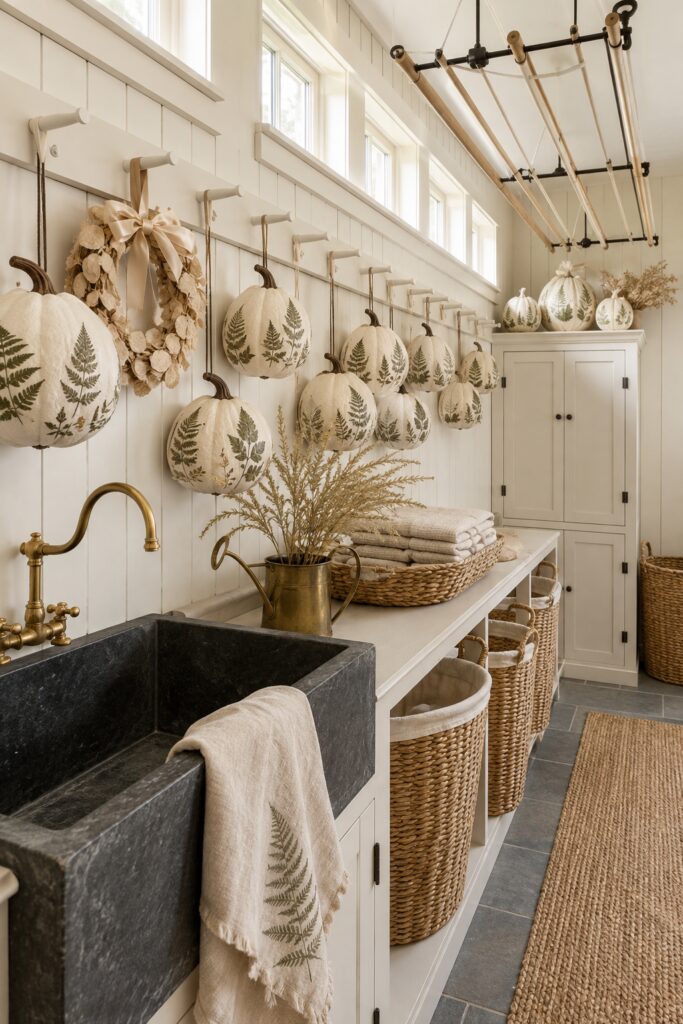
One Final Styling Tip
Repeat the fern motif enough to make it intentional, then give the pattern room to breathe. A coordinated pumpkin gallery, one wreath, and a single botanical towel can establish the entire fall theme.