*This post may contain affiliate links for which I earn commissions.*
The leaf shape is doing the decorating in this autumn studio corner. Rust, ochre, orange, and dusty pink fill a broad maple outline, with cream veins branching from the stem. Against pale floorboards, the raised loops and uneven color fields are easy to see.
A rug like this gives a small room a seasonal focal point without adding another object to the desk or shelves. The inspiration pairs it with a wood stool, a pale blue cabinet, plants, and botanical artwork. Those supporting pieces leave the leaf plenty of room to be noticed.
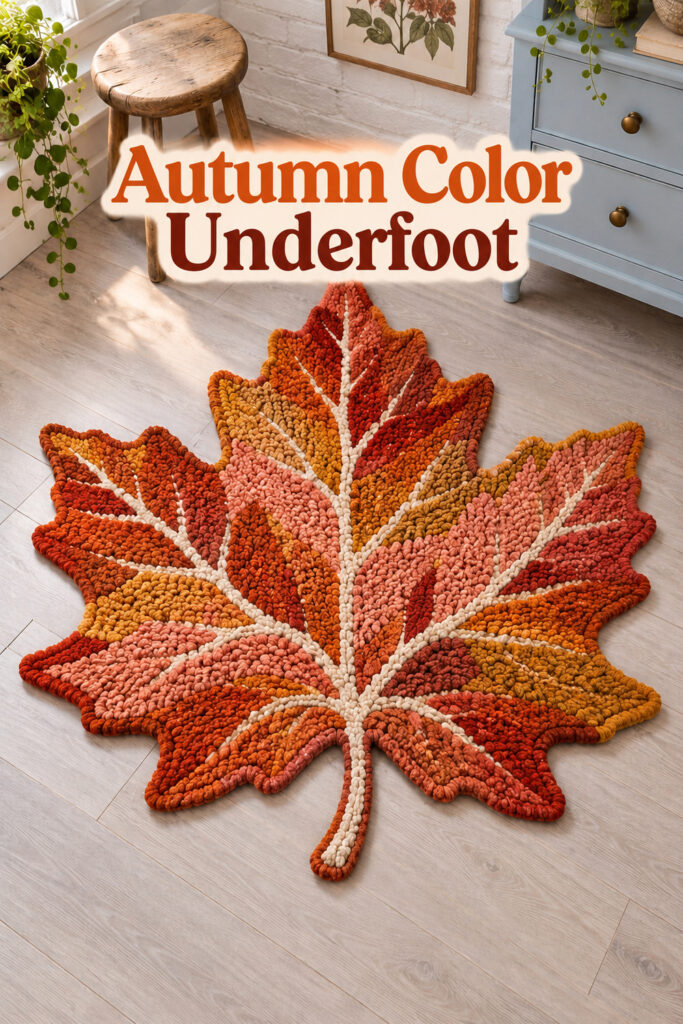
This image was created with AI and presents a decorating concept rather than a verified photograph of a manufactured rug.
What Makes This Autumn Rug Stand Out
The outline is the first thing you recognize. Pointed lobes and a narrow stem make the rug read as one oversized maple leaf, even before you notice the colors inside it. That clear silhouette is important. A rectangular rug printed with leaves would carry the season, but it wouldn’t have quite the same playful effect.
Cream veins divide the warm color sections and make the shape easier to follow. They also connect to the pale floor, so the rug doesn’t look like a heavy dark patch in the middle of the room. The dusty pink areas soften the stronger burnt orange, giving the palette more variety than a simple red and yellow combination.
Texture finishes the idea. The image suggests dense yarn loops with visible changes in direction and height. A similarly textured floor piece can feel more closely related to handmade decor than a smooth printed mat. For actual use, though, you’ll want to choose construction and care requirements that suit where you’re placing it.
Find Maple Leaf Accent Rugs
Browse current Amazon options that can help you recreate this look.
Browse Maple Leaf Accent Rugs on Amazon →As an Amazon Associate I earn from qualifying purchases.
Key Pieces to Recreate the Look
A Leaf-Shaped Accent Rug
Search by shape first. Look for a maple leaf outline with distinct lobes and a stem, then compare colors and pile texture. Since the pictured piece is AI-generated, an exact version may not exist. A related shaped rug in warm autumn colors can provide the same basic focal point.
Pay attention to whether a listing describes a floor rug, a decorative mat, or a wall hanging. Similar photographs can hide very different constructions. Check dimensions, backing, edge finishing, and care information. A delicate textile intended for display won’t automatically perform well underneath a stool or in a busy walkway.
Warm Yarn Texture and Cream Veins
If you’re choosing among several options, prioritize visible texture and a light vein pattern. Those two qualities preserve more of the image’s character than matching every pink or orange section. A flatter woven leaf with clear cream divisions could be a more useful substitute than a very fluffy rug with a vague outline.
For a commissioned or handmade interpretation, share the palette and shape as inspiration while using a suitable rug-making pattern and method. This styling article doesn’t include a tested hooking pattern. The detailed leaf outline needs secure finishing, particularly at the narrow stem and points where wear can concentrate.
A Pale Blue Storage Cabinet
The cabinet introduces a cool color beside the rug’s warm tones. It also gives the scene a practical studio feeling. A small drawer unit, painted cupboard, or existing piece of pale furniture could fill that supporting role without matching the image’s hardware or leg shape.
Keep the rug’s points clear of the cabinet feet. If a shaped textile disappears beneath heavy furniture, you lose the outline that made it interesting. Position the cabinet first, then leave enough floor around the leaf to see its edges. This will also make cleaning and straightening the rug less awkward.
Natural Wood and Botanical Details
The wood stool repeats the warm tones in a quieter way. Plants and the framed botanical print connect the room to the leaf subject without adding more leaf-shaped objects at floor level. They’re useful companions because they vary the materials and the heights in the corner.
One plant may be enough in a compact room. Keep trailing stems out of the walking path, and use a protective saucer under any nearby pot. The rug can supply most of the seasonal detail, while the stool, cabinet, and artwork remain useful throughout the rest of the year.
How to Style It at Home
Begin by choosing a patch of floor outside the main traffic route. The inspiration shows the rug in an open studio corner, where the shape is visible. In a real room, the pointed edges and narrow stem need particular attention. Avoid placing them where someone regularly turns, steps backward, or rolls a chair.
Measure the full outline rather than only the broad center. When a shaped rug includes a projecting stem, that extra length can change where it fits. Use paper or a sheet to map out the approximate area before buying. You should still be able to move between the stool, storage, and doorway comfortably.
Choose a rug pad compatible with both the rug and your flooring, following the makers’ guidance. Trim it so it stays beneath the textile rather than protruding around the lobes. If the points still curl or the rug shifts during normal use, choose another position or another type of rug. Appearance alone isn’t enough for a floor piece.
Orient the stem toward a quiet edge of the corner if the room allows. That keeps the distinctive feature visible without pointing it into the busiest path. Step back and check the whole leaf from the doorway. You want to recognize its shape without needing to walk around furniture to understand it.
Keep the surrounding floor fairly clear. A basket, second small mat, and several plant stands could crowd the outline, even if their colors match. Try the rug with the furniture you already have before adding anything. In a studio with lots of supplies, closing a drawer or moving a storage bin may improve the display more than another decoration.
The color palette can carry into one small object above floor level, perhaps an ochre pot or a rust-toned print. Keep that repetition modest. The rug already includes several strong colors, and repeating all of them throughout the room would reduce the impact of the leaf itself.
Shop Similar Pieces
Look for Maple Leaf Rugs and Textured Autumn Mats
Compare clear outline photographs with the listed dimensions. If the exact shape is unavailable, choose a well-finished autumn accent rug with a similarly strong central motif.
Find Floor-Compatible Rug Pads
Check suitability for your flooring and the type of rug backing. A pad should support the practical use of the piece while staying hidden beneath its irregular outline.
Shop Small Blue Cabinets and Botanical Accents
These are supporting categories, not requirements for recreating the idea. A plain storage unit and an existing plant can give the leaf the same uncluttered setting.
Final Styling Tip
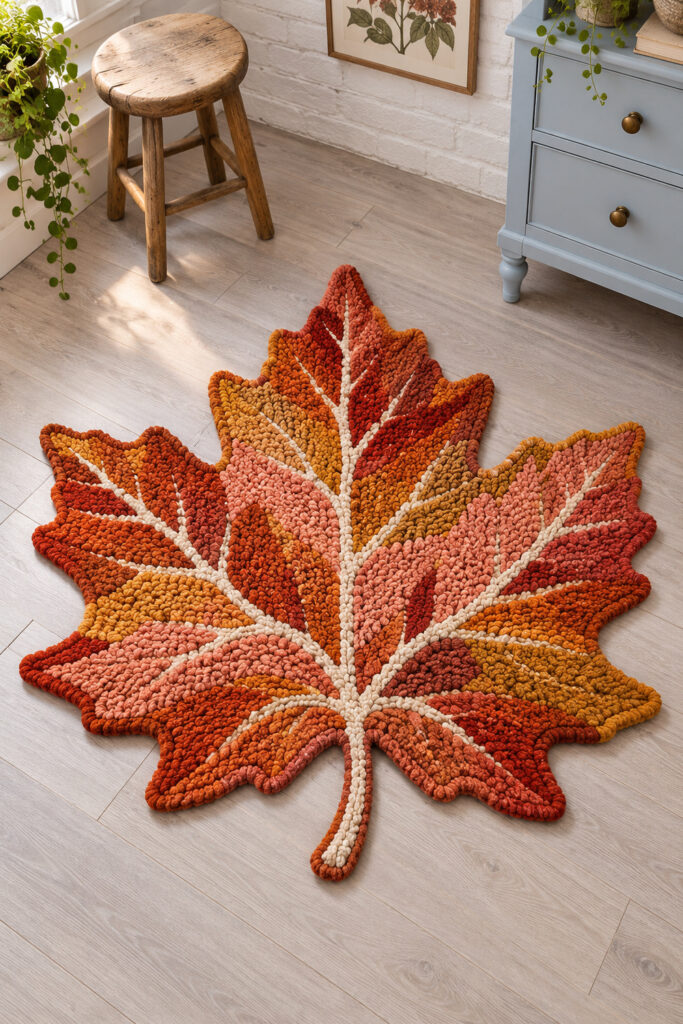
Leave a visible strip of pale floor around the leaf. That simple gap makes the shaped edge more noticeable and helps you judge whether the corner still feels easy to move through.