*This post may contain affiliate links for which I earn commissions.*
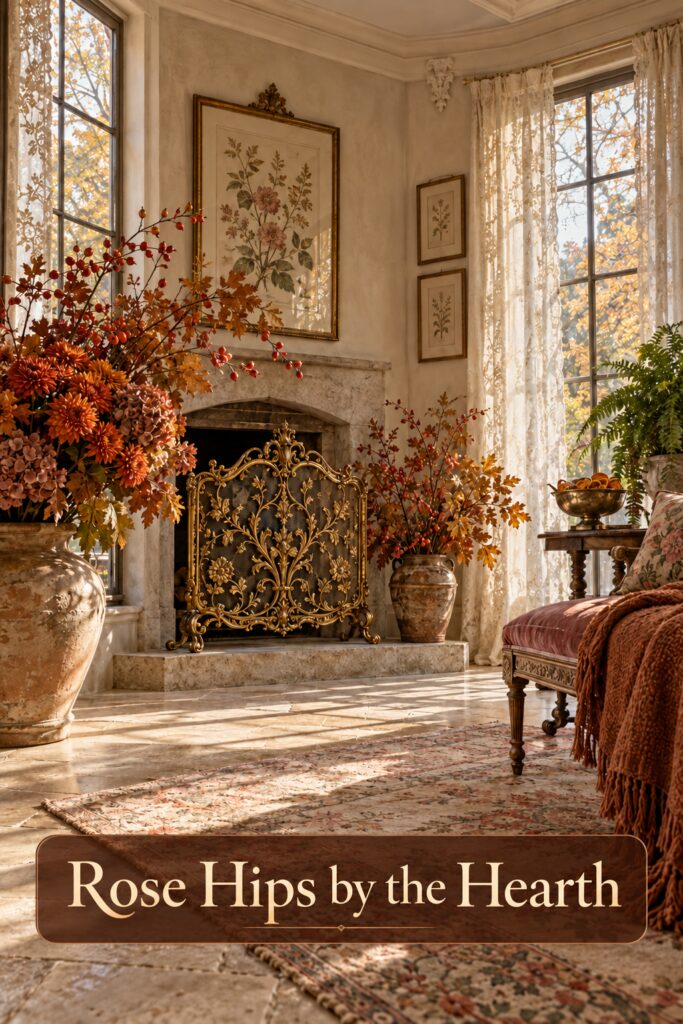
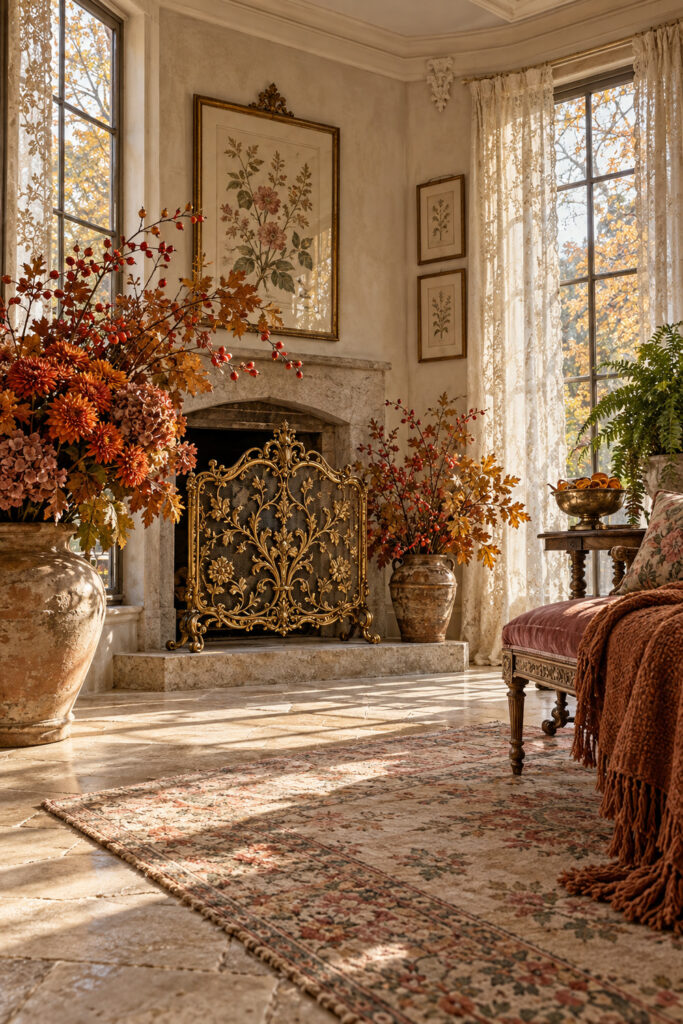
An ornate gold toned firescreen gives this fall room a clear focal point, with rose hip branches and copper flowers arranged on either side. Pale stone, lace curtains, and warm daylight keep the metalwork visible. A rose upholstered seat and a rust colored throw carry the autumn colors farther into the room.
The arrangement is especially useful inspiration for a fireplace that isn’t in use. You can combine a decorative screen with generous branches while keeping the surrounding furniture and walls fairly quiet.
This inspiration image was created with AI and does not identify a verified collection of purchasable products.
What Makes This Look Work
The screen has a dark backing that makes its curling botanical pattern easy to see. Its gold surface relates to the frames above the hearth, but the flowers and leaves have softer outlines. This difference lets the metalwork remain the center even though the branches take up considerable space.
The two floral arrangements are different sizes. A large vessel at the left fills the foreground, while a smaller one sits near the right side of the hearth. Their shared colors connect them without creating an identical pair. The uneven heights also leave more of the screen’s upper edge visible.
Rose hips bring small red points among the rust leaves and flowers. Those spots are useful because they break up large areas of similar autumn color. Lace curtains filter the background into a light texture, so the branches can spread without disappearing against a strongly colored wall.
Find Botanical Firescreens
Browse current Amazon options that can help you recreate this look.
Browse Botanical Firescreens on Amazon →As an Amazon Associate I earn from qualifying purchases.
Key Pieces to Recreate the Look
An Ornate Decorative Firescreen
Look for a screen with botanical scrolls, a clear outline, and a stable base. A darker mesh or backing can help a pale metal pattern show. Measure the fireplace opening and hearth before choosing a size so the screen relates to the opening rather than looking lost in front of it.
A decorative screen isn’t necessarily suitable for use with a working fire. Check its intended purpose and follow your fireplace instructions. Treat this particular arrangement as a cold hearth display. If you plan to light the fire, remove nearby decorations and use appropriate, properly rated fireplace equipment with the required clearances.
Rose Hip Style Branches
Choose branches with smaller berry like clusters and an open shape. You want some stems to extend above the flowers, with visible space between the tips. A dense berry bush would create a different effect and could hide the thin lines that make this arrangement feel airy.
Faux branches make it easier to control the outline and avoid fallen fruit. If you use fresh cut material, identify it correctly and consider household safety, shedding, and vase requirements. Keep any small loose berries or decorative pieces away from children and pets who may investigate them.
Copper Flowers and Muted Hydrangeas
The larger arrangement combines rounded flower heads with smaller, looser textures. Copper and rust blooms provide the strongest fall color, while faded pink and beige heads soften the transition to the pale walls. Use varied shapes within a narrow color range instead of choosing every stem in the same orange.
Compare the flower heads with your vessel opening. A few larger blooms can give a broad arrangement structure, while finer stems fill the transitions. Keep stems grouped enough that the colors read clearly from across the room, rather than mixing every shade into one uniform mass.
Substantial Ceramic Vessels
The vessels have warm, worn looking surfaces that sit comfortably against the stone. Their rounded bodies provide visual weight below the spreading branches. A plain cream or brown vase can work if it has the right scale and stability; the finish needn’t imitate age exactly.
Test the vase with the intended stems before placing it near furniture or a window. Long branches increase leverage and may make a narrow or light vessel unsteady. Choose a secure insert or appropriate support, and use furniture safe protection beneath the vase to keep moisture or grit off the surface.
Rust and Rose Textiles
The rust throw connects to the stronger flower colors, while the rose seat repeats the softer blooms. You can make that connection with a cushion or a folded blanket instead of replacing furniture.
Keep textiles clear of the fireplace, even when the arrangement is intended for an unused hearth. A throw should sit securely on the chair rather than trail toward the opening. Before using the fireplace again, remove the decorative setup and check the full area according to the appliance’s instructions.
How to Style It at Home
Decide first whether the fireplace will remain unused during the display. That decision controls where branches and vessels can go. For a working hearth, arrange seasonal flowers elsewhere in the room and let a suitable screen carry the focal point without foliage beside the heat source.
Position the screen on level footing and make sure it stands securely. View it from the main seat, not just from directly in front. Its decorative crest should be visible, and its sides should relate to the fireplace opening. Adjust that central element before choosing the flower arrangement sizes.
Set out the empty vessels with a clear gap around the screen. Keep the larger one toward one side and the smaller one on the other, adapting the picture to your available floor space. Never place a heavy vase on a narrow hearth edge where it could tip or obstruct the room’s walking route.
Build the larger arrangement with the strongest flower shapes near the vessel opening. Add the finer foliage around them, then extend the rose hip branches higher and outward. Turn the branches so their small red clusters show against the pale wall or window rather than becoming hidden inside the flowers.
For the smaller arrangement, repeat the branch material and rust tones but reduce the overall spread. It should feel related to the larger group while leaving a view of the hearth. Avoid making the smaller arrangement so tall that it competes with the screen’s center crest.
Look for an open line across the front of the fireplace. The screen’s scrolling details should remain readable between the vessels. If a branch crosses the center and makes the pattern hard to follow, turn or shorten it before adding another stem elsewhere.
Bring the seating colors into the picture last. Fold a rust throw so it shows a generous patch of color without covering the entire chair. If you use a floral cushion, let it repeat one or two shades from the branches rather than introducing another strong palette.
Shop Similar Pieces
Look for Botanical Firescreens
Check stability, dimensions, and whether the screen is decorative or suitable for your intended fireplace use. A scrolling pattern with enough open space will show more clearly beside foliage. Choose a finish that works with your frames or hardware rather than trying to match every gold tone exactly.
Shop Similar Rose Hip and Rust Floral Stems
Look for slender branches and several flower head shapes. A small selection of well chosen stems will give you more control than a large mixed bundle with unrelated colors. Check stem lengths against the vessels so the finished arrangement has support below the rim.
Add Ceramic Vases and Autumn Throws
Use vessels with enough weight and width for the branches, then repeat their warm tones through an existing textile. If your room already has warm upholstery, you may only need the flowers. The goal is to connect the hearth to the room you have.
Final Styling Tip
Keep the screen’s top crest and central pattern visible from your favorite seat. A branch moved a few inches can make the whole arrangement easier to read, without adding another decoration.