*This post may contain affiliate links for which I earn commissions.*
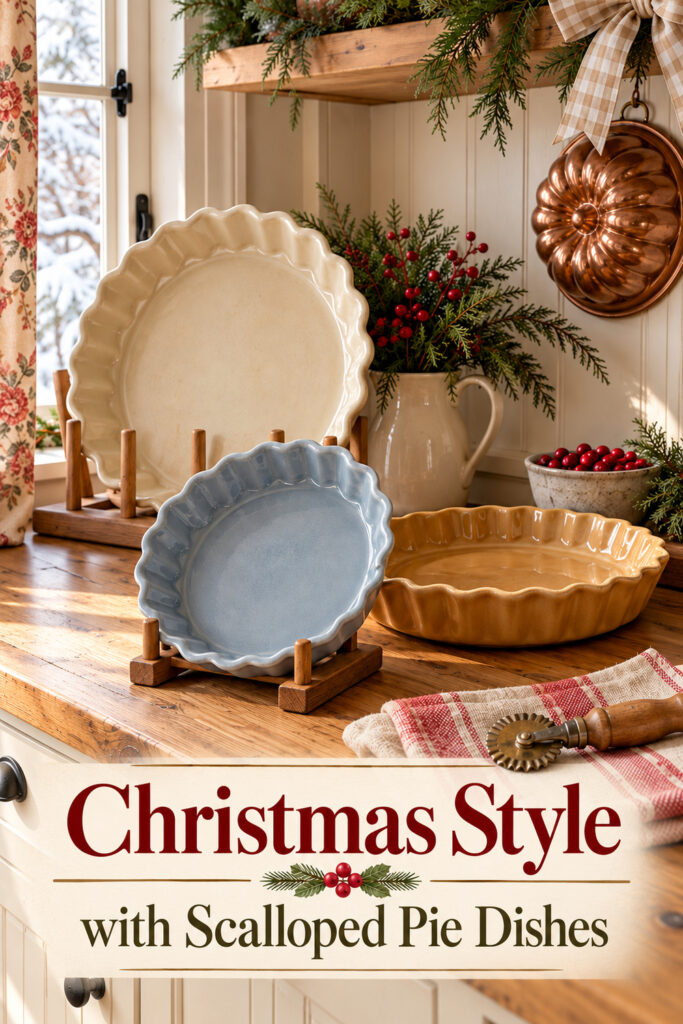
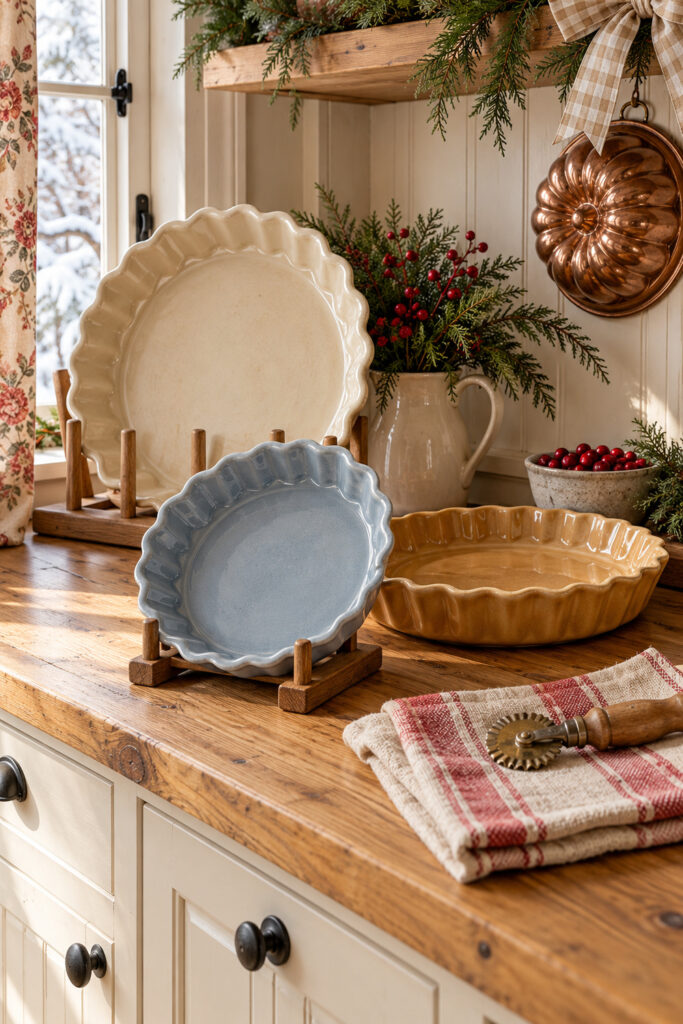
Scalloped rims give this Christmas bakeware display its recognizable shape. A large cream pie dish stands upright at the back, a smaller blue one sits in front, and a honey-colored dish rests flat beside them. The arrangement lets you see both the curved edges and the interiors instead of hiding the collection in a stack.
Cedar, red berries, checked linen, and a copper mold supply the seasonal setting. The dishes remain the main subject, with their glazes carrying most of the color. This is a useful idea for a kitchen dresser, a broad plate shelf, or a section of counter where a few pieces of bakeware can stay on display.
The inspiration image was created with AI and shows a decorating concept you can adapt with similar pieces.
Why These Three Dishes Look Good Together
The rims repeat a soft, rounded pattern, but the dishes differ in size, color, and position. Cream gives the back of the arrangement a pale anchor, blue adds a cooler note in front, and honey glaze connects the pottery to the wood around it. That mix gives the collection depth without requiring a large number of objects.
The upright pieces also change how the collection is seen. A pie dish lying flat shows mostly its outer wall from across the room. On a suitable stand, its interior and scalloped edge become visible together. The lower honey dish provides a horizontal contrast, so the display isn’t simply three circles lined up at the same height.
Christmas details appear around the pottery rather than covering it. The cedar above, berries in a pitcher, and red checks nearby suggest the season while leaving the glazes readable. You can carry the same idea into another kitchen by adding a few removable accents to dishes you already use or collect.
Find Scalloped Pie Plates
Browse current Amazon options that can help you recreate this look.
Browse Scalloped Pie Plates on Amazon →As an Amazon Associate I earn from qualifying purchases.
Key Pieces for a Bakeware Display
Scalloped or Fluted Pie Dishes
Look for the rim first. It is the detail that makes this display different from an ordinary grouping of plates. Your dishes don’t need identical curves, but their profiles should feel related. A large plain dish can sit behind a smaller fluted one if that’s what you own, as long as the more distinctive edge remains visible.
The image shows an imagined, unbranded collection rather than identified products. Treat it as a guide to form and color, not a shopping list of exact matches. Ceramic, stoneware, and other bakeware can differ considerably in weight. Consider that weight when planning the shelf and stands, especially for the largest upright piece.
This idea was definitely meant for me! I make an average of six pies just for Thanksgiving and I love every minute of it – apple, pumpkin, and pecan.
The recipe I use for the apple is from my mother and it’s a frosted one with raisins inside. The pumpkin is the regular old Libby’s recipe. The pecan is one I found online but tweaked just a touch to by using dark brown sugar instead of light. That one is the favorite for my husband and youngest son.
So, my husband got me a set like this but they’re all cream and they sit in the one window cabinet I have in my kitchen all year long waiting for the holidays. They look so pretty!
Secure Stands for Upright Pieces
The supports are part of the practical arrangement. Choose plate or dish stands intended for the size, depth, and weight of the actual pieces. A stand made for a shallow decorative plate may not hold a deep pie dish at a dependable angle. Check how the rim sits in the front supports and how firmly the back is held.
Place each stand on a level surface with enough room behind it. Keep the dishes away from a counter edge and from places where a cupboard door or passing arm could knock them. For high shelves or busy areas, a different display method may be more suitable. The inspiration’s appearance doesn’t replace checking your own hardware and shelf capacity.
Cream Blue and Honey Glazes
A related palette matters more than a matching set. If your kitchen already has blue accessories, let a blue dish make the strongest color statement. Cream can take the back position and a warmer piece can sit low beside it. If everything you own is white, use the wood and checked linen to provide the warmer color instead.
Try the pieces together in daylight before changing their surroundings. Glaze can look different beside warm wood than it does in a cupboard. You may find that one dish is enough to suggest the entire idea once its curved rim is shown clearly. Avoid adding a weaker match just to reach the pictured number of pieces.
Cedar and Red Berry Stems
A short cedar garland above the collection frames the display without filling the counter. Keep trailing stems clear of the dish stands and leave the pottery easy to lift out. A small cream pitcher with berries can repeat the pale glaze nearby. Position it far enough back that the stems don’t cover the scalloped rims when viewed from the doorway.
Checked Linen and a Warm Metal Accent
The folded red-and-cream cloth adds a soft layer at counter level. It looks useful because it belongs in a kitchen, and the check relates to the Christmas berries without repeating their shape. Keep the fabric away from the supporting feet of a stand if it would make the base uneven.
How to Arrange Similar Pieces at Home
Clear the surface and start with the largest dish on its own stand. Set it toward the back, leaving enough room that it doesn’t press against hanging greenery. Check it from the main approach to the kitchen. If the dish reads as a thin oval rather than a circle, adjust its angle only within the stand’s intended use.
Add the smaller upright dish slightly forward and to one side. A little overlap makes the pieces feel grouped, but keep the smaller rim from cutting across too much of the larger one. The cream outline should remain easy to follow. You can move the front dish farther sideways if the colors blend together or the stand becomes difficult to access.
Place the third dish flat beside the upright pair. This is where the arrangement gains a useful low area. Leave enough counter in front to show that it is resting on a surface rather than floating among the others. An empty dish can be decorative by itself; it doesn’t need loose ornaments or food added simply to justify its place.
Now add the pitcher, linen, and cedar. Start with the pitcher behind the low dish, then check whether the berry stems compete with the tall cream piece. Turn or shorten the stems as needed. Set the folded cloth toward the front side, where it provides texture without disappearing under the pottery. A loose kitchen tool can stay nearby if it belongs there, but the display doesn’t need several.
For a working kitchen, decide which dishes need to come out regularly. Put those within easy reach and leave the more decorative arrangement on a quieter part of the surface. Remove greenery and decorative wire before using bakeware, and follow the item’s cleaning and oven-use instructions. Appearance alone can’t tell you whether a pictured or purchased piece is suitable for baking.
Shop Similar Pieces
Look for Deep Dish Display Stands
Compare the support depth and weight guidance with your actual dish. Measure the full footprint on the counter, including the back leg. The stand should support the object securely without requiring a precarious forward lean.
Shop Similar Scalloped Bakeware
Choose one or two pieces with clear rims and colors you already enjoy. Check dimensions rather than relying on a close-up photograph. A smaller blue dish can create the same contrast without needing to match the pictured glaze exactly.
Add Removable Christmas Accents
A modest cedar spray, berry stems, and a folded checked cloth are enough to suggest the holiday. Keep them separate from food-contact surfaces and easy to remove when you want to use the dishes.
Final Styling Tip
Look at the display from across the room and follow each rim with your eye. If one shape disappears behind the next, shift the front dish sideways before adding another accessory.