*This post may contain affiliate links for which I earn commissions.*
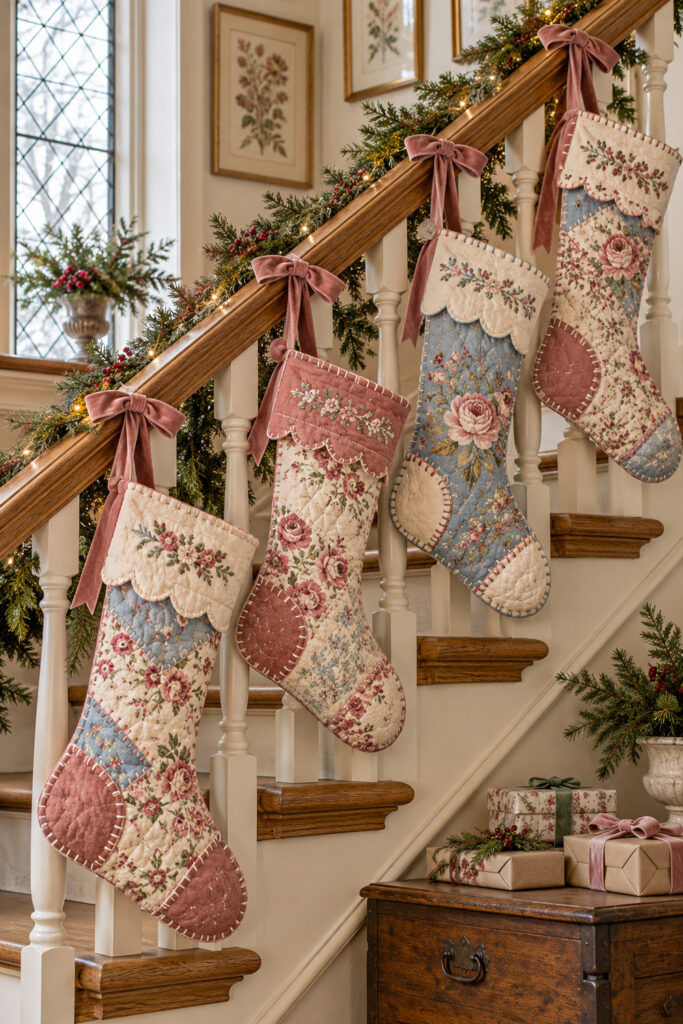
Four patchwork stockings follow the diagonal of an oak staircase, with cream, faded rose, and powder blue fabrics tying them together. Their scalloped cuffs and visible stitching are the details that make the collection worth borrowing. Each stocking differs a little, but none looks unrelated to the others.
The greenery stays close to the railing, and dusty rose bows connect the stockings to that line. This is a useful Christmas idea when you want your staircase to carry a textile display. You can use similar quilted stockings without matching every floral print, provided the cuffs, proportions, and colors have enough in common.
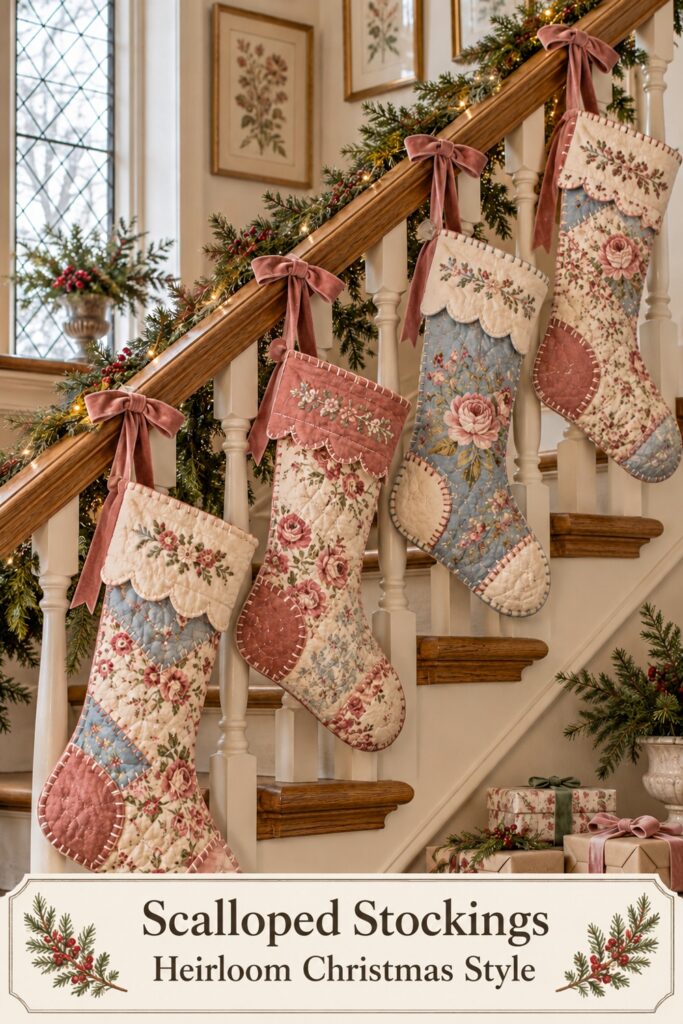
The inspiration image was created with AI. Recreate its overall decorating effect with similar pieces rather than expecting the pictured stockings to exist as exact products.
Why the Stockings Feel Like a Collection
The palette does a lot of the coordinating. Cream appears in the cuffs and patchwork, blue carries several floral sections, and muted rose repeats in the heels, toes, and bows. The balance changes from one stocking to the next. That variation gives the group interest without requiring several separate Christmas themes along one railing.
Find Quilted Christmas Stockings
Browse current Amazon options that can help you recreate this look.
Browse Quilted Christmas Stockings on Amazon →As an Amazon Associate I earn from qualifying purchases.
The scalloped cuffs create a recognizable repeated edge. They’re broad enough to read from a distance, while the embroidered flowers and blanket-style stitches add smaller detail. If you can preserve only one special feature when choosing substitutes, start with the cuff shape. Plain quilted bodies beneath similar scallops can still create a coordinated display.
The warm wood and white spindles provide a fairly quiet backdrop. Greenery traces the diagonal behind the stockings, but it doesn’t swallow the fronts. This separation is worth checking in your own space. A thick garland hanging in front of the fabric would hide the patchwork, which is the main reason this particular arrangement works.
Key Pieces for the Heirloom Staircase Look
Quilted or Patchwork Christmas Stockings
Look for fabric stockings with visible quilting, floral patches, contrasting heels, or softly patterned panels. Their shapes should be recognizable even before you examine the surface. You don’t need identical prints. A consistent background color and similar overall length can bring a mixed collection together, especially if you repeat one trim across the cuffs.
Check the actual measurements against your railing. As a proposed planning method, cut paper stocking outlines and hang them temporarily where you intend to place the real ones. This makes it easier to judge overlap, length, and spacing. It also helps you see whether the toes will crowd a stair tread or interfere with the route upstairs.
Scalloped Cuffs or Curved Fabric Trim
A cuff with rounded lobes softens the top edge and echoes the curved toe of the stocking. Finished scalloped stockings are one option. Another is a simple stocking with a separate fabric cuff or decorative trim, provided it’s securely attached and suits the existing fabric. Keep the edge fairly broad so it can be seen from the hallway.
Dusty Rose Ribbon
The repeated bows are an easy way to connect different stockings. A soft velvet or woven ribbon can suggest the same textile character. Make the loops a similar size across the group, then let the tails vary slightly. This keeps the repetition clear without making every attachment look mechanically identical.
Use the stocking’s proper hanging loop or a suitable attachment as the main support. The visible ribbon can wrap around that point for decoration. Check that the ties won’t slide or loosen if the stocking is touched. If you intend to fill them, confirm their capacity and the strength of the attachment rather than treating a decorative bow as a load-bearing hanger.
Slim Greenery and Warm Light
The evergreen line introduces Christmas without taking attention from the fabric. Choose a garland that can sit close to the rail or outside edge of the staircase. You can leave some wood visible between branches. An uneven natural-looking line often suits quilted textiles better than a thick continuous band that conceals the railing.
If you add lights, use a set suitable for its location and follow its directions for placement. Keep cords secured away from the walking route, and don’t tuck a warm component into fabric. The inspiration’s small points of light support the greenery rather than creating a separate illuminated feature. The stockings should remain the first thing you notice.
Plan the Staircase Before Tying the Bows
Begin with the lower stocking and work up the diagonal. Set enough distance between hanging points that you can see each cuff and most of each body. The toe can overlap the visual area of the next spindle, but it shouldn’t hide the following stocking. Step back between placements instead of finishing all the ties before judging the sequence.
Place the decorations on the side where they leave the handrail usable and the stair treads clear. The inspiration is a styling reference, and your own staircase may need a different arrangement to stay comfortable to use. If the rail is narrow or heavily used, a nearby wall rail or console display can preserve the quilted stocking idea with fewer practical compromises.
Check the view from both the foot and the top of the stairs. Long ribbon tails can look lovely from one angle and fall across a tread from another. Shorten or redirect them as needed. Keep attachment ends tidy and avoid loose loops at foot level. A display that looks settled is usually the one that doesn’t need constant adjustment.
Give Different Patterns a Shared Rhythm
Spread the stronger colors through the collection. If two stockings are mostly blue, separate them with a cream or rose one. This prevents one end of the railing from looking much darker than the other. You can use the same idea with a collection you already have: alternate the busiest patterns with the quieter ones.
Repeat rose in the bows rather than adding another accent color. The image already has floral patchwork, quilting, stitching, greenery, and wood grain. That’s plenty to look at. A simple ribbon choice gives those details room. If your stockings use a different palette, choose a bow color that’s already present in more than one fabric.
Shop Similar Pieces for This Staircase
Look for Scalloped Patchwork Stockings
Compare cuff shape, fabric weight, hanging loops, and dimensions. A listing photo that shows the stocking empty and hanging will tell you more about its drape than a flat close-up alone. Soft quilted fabric should still hold a recognizable outline. If it collapses into folds, consider a gentler display or a light removable insert.
Shop Similar Rose Ribbon
Check whether the ribbon can form the kind of soft bow you want. Narrow satin gives a different effect from wide matte velvet. Neither is automatically wrong, but the inspiration favors texture and generous loops. Test the ribbon against the cuff color before cutting all the lengths, particularly if your cream fabrics have a warm yellow undertone.
Look for Light Evergreen Garland
Choose the garland around the available rail space, not the other way around. It should be easy to secure while leaving a usable grip and a clear stair route. If that can’t be achieved comfortably, skip the garland and let the repeated scalloped stockings provide the complete seasonal display.
Final Styling Tip
Make the cuffs easy to see before perfecting the patchwork sequence. Those rounded edges are the repeated detail that turns several different stockings into one Christmas decorating idea.