*This post may contain affiliate links for which I earn commissions.*
A mobile-home entrance may not have a deep porch, wide staircase, or towering columns, but it does not need any of those features to make a memorable Christmas statement.
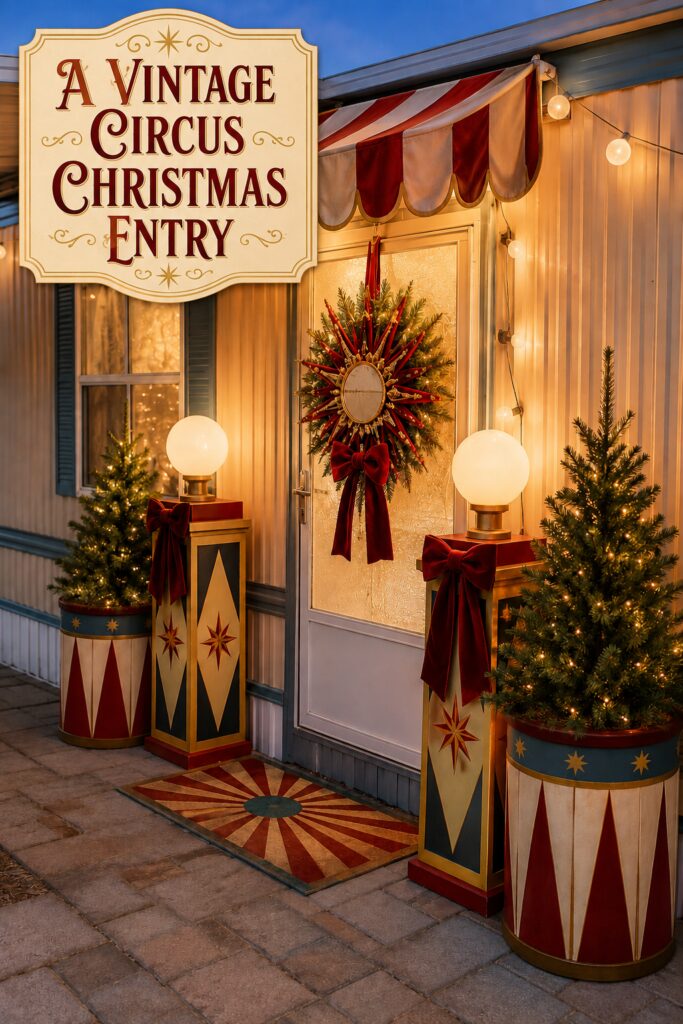
This entry uses the compact architecture to its advantage. A striped marquee frames the door, globe lights create an evening glow, and tall decorative pedestals give the entrance the sense of ceremony that traditional porch columns might otherwise provide.
The design feels theatrical, nostalgic, and tailored rather than crowded. Its vintage-circus character comes from graphic shapes and a controlled palette, not from an abundance of novelty decorations.
Treat the Door Like the Entrance to a Show
The most effective idea in this scene is its sense of arrival. Every decorative element guides attention toward the door.
The marquee establishes the upper frame. Matching pedestal columns create vertical boundaries on either side. The sunburst mat points inward, while the wreath marks the final destination.
This arrangement can make a modest doorway feel more architecturally important without permanently altering it. The key is to build the design around the entrance rather than scattering decorations across the full exterior.
Stand several feet away and identify the visual boundaries of the doorway. Keep the main decorations within or just outside those lines. This produces a deliberate focal area and avoids making the mobile home’s longer facade feel cluttered.
Begin With a Vintage Midway Palette
Cranberry red, aged cream, muted teal, dark charcoal, and antique gold establish the style.
Cranberry has more depth than a standard primary red. Warm cream softens the contrast and gives the striped elements an older appearance. Muted teal introduces an unexpected note while still working naturally with evergreen trees.
Dark charcoal provides structure on the pedestal columns and prevents the palette from becoming too sweet. Gold should appear in narrow outlines, stars, bases, and small details rather than across large surfaces.
A useful balance is:
- Cranberry and cream for the dominant stripes
- Teal on planter rims and selected panels
- Charcoal on the pedestal faces
- Gold around scallops, stars, bases, and trim
- Natural green from the trees and wreath
Repeat each accent in at least two places. The teal planter rims relate to the pedestal panels and the mat’s center. The gold wreath details connect to the columns, awning edge, planter stars, and sunburst pattern.
Use a Striped Marquee as the Main Feature
The fabric marquee transforms the entrance more than any other element. Its broad stripes and deep scallops immediately suggest an old theater or traveling show.
For a practical adaptation, the treatment could be constructed as a removable decorative valance rather than a functional awning. A valance requires less depth and places less visual weight over the doorway.
Use outdoor-rated fabric if the area is exposed to sun, wind, or moisture. The image alternates wide cranberry and cream sections, with the stripes running away from the wall. This direction makes the entry feel deeper.
The scalloped front edge is especially important. Straight striped fabric may read as a patio canopy, while rounded panels introduce the unmistakable marquee character.
Outline each scallop with narrow gold trim or gold-colored outdoor binding. This small detail makes the individual curves easier to see at night.
Plan the Installation Before Making the Marquee
Mobile-home exteriors require careful installation decisions. Siding, roof edges, fascia, trim, and door frames may not support the same mounting methods used on a conventional house.
Do not attach a fabric structure based only on appearance or convenience. Wind can place considerable force on even a shallow piece of fabric.
Before installation, confirm:
- What lies behind the proposed attachment points
- Whether the exterior warranty permits drilling
- Whether the property, community, or park has decorating rules
- How the marquee will respond to wind and rain
- Whether it can be removed quickly in severe weather
- Whether it interferes with gutters, drainage, vents, or roof access
A qualified installer can determine whether a proposed frame or attachment method is appropriate. A decorative fabric panel should never be secured only to thin siding or loosely fitted trim.
If a projecting marquee is not practical, hang a flat striped valance above the door or place striped fabric inside a nearby window. The remaining decorations can still carry the theme.
Give the Scallops a Tailored Finish
The awning’s curves are generous and evenly spaced. Alternating red and cream scallops continue the vertical stripes without interrupting the pattern.
A separate valance strip may be easier to sew and install than cutting the main canopy fabric into deep curves. Attach the finished strip along the front edge once the main panel is complete.
Use a template to keep each scallop consistent. Trace the curves onto the reverse side of the fabric and allow for seams or binding.
Outdoor fabric can fray, so raw edges need an appropriate finish. Binding, lined construction, or sealed edges may be suitable depending on the material.
The antique-gold outline should remain narrow. A thick metallic border could make the marquee look more contemporary or costume-like.
Make the Wreath the Centerpiece
The wreath combines a traditional evergreen base with a dramatic starburst center. That contrast keeps it recognizable as Christmas decor while giving it a strong midway identity.
Begin with a full evergreen wreath sized appropriately for the door. Arrange long cranberry points around a round central medallion, alternating them with smaller gold rays or ornaments.
The starburst does not have to be a mirror. A lightweight painted wood circle, weather-resistant craft disc, decorative medallion, or sealed round sign could form the center.
The surrounding rays might be made from lightweight ornaments, narrow painted wood shapes, sturdy card forms intended for protected outdoor use, or another weather-appropriate material.
Keep the finished wreath’s weight within the limits of the door and hanger. A large visual statement can still be lightweight if the layers are hollow or made from thin materials.
Finish the Wreath With One Grand Bow
The burgundy bow beneath the wreath provides softness after so many angular shapes. Its long tails create a strong vertical line down the door.
A wired ribbon helps the loops maintain their form. For exposed locations, use material identified for outdoor decorating rather than assuming ordinary velvet will withstand moisture.
The bow should end well above the threshold. Long tails can become dirty, catch in the door, or create a tripping hazard if they reach the floor.
Repeat smaller versions of the same bow on the pedestal columns. Matching all three exactly is unnecessary, but they should share the same general ribbon color and finish.
The repeated bows connect the door to the freestanding elements and prevent the wreath from feeling isolated.
Create the Look of Ticket-Booth Columns
The tall rectangular pedestals are among the most inventive features in the scene. Their charcoal panels, cream diamonds, cranberry bases, gold borders, and star motifs resemble decorative columns from an old theater lobby or ticket booth.
They could be made from suitable outdoor pedestal planters, weather-resistant display columns, or custom boxes constructed for a protected entry. Any custom piece should be stable, sealed appropriately, and weighted at the base.
Paint the columns before adding the globe lights. Mark the design with painter’s tape and a ruler so the diamonds and borders align.
Small irregularities can support the vintage effect, but the two columns should have matching overall proportions. Their symmetry is what gives the entrance its ceremonial appearance.
Place them outside the door swing and away from the normal walking path. The door should be able to open fully without striking a pedestal, bow, light, or planter.
Top the Pedestals With Globe Lights
Round globe lamps create the visual impression of illuminated entrance posts. Their simple shape is also an effective counterpoint to the pointed stars and diamonds.
Cordless rechargeable lamps may be easier to position than wired fixtures, provided they are rated for the location and secured against tipping. A globe intended only for indoor use should not be placed outdoors, even under a shallow roof.
Choose warm white light rather than cool blue-white illumination. It will flatter the cream fabric, burgundy ribbon, evergreen branches, and gold details.
The two globes should be similar in size and brightness. If their intensity differs noticeably, the entrance may appear unbalanced after dark.
Secure each lamp according to its instructions and the pedestal material. A heavy-looking base in a photograph is not proof that the arrangement is stable in real weather.
Turn Planters Into Decorative Circus Drums
The round tree containers resemble painted circus drums. Their pointed red-and-cream panels make the theme visible near ground level, while teal rims and gold stars connect them to the rest of the entry.
Existing outdoor planters can be adapted with removable decorative sleeves. This avoids permanently painting containers that may be used throughout the year.
Measure the planter circumference and create a weather-resistant wrap that fits around it. Add alternating long triangles, then finish the top with a teal band and small gold stars.
A rigid sleeve should not cover drainage openings or trap water against the container. Leave enough clearance for water to escape and for the decorative wrap to dry.
The planters also need adequate ballast. Tall trees and broad branches can catch wind, especially when placed close to the edge of a walkway.
Keep the Christmas Trees Narrow
The two evergreen trees frame the entrance without overwhelming it because their silhouettes are relatively slim.
Choose a height that fits comfortably below the roofline and does not block windows, exterior fixtures, address numbers, or access panels. The trees do not need heavy ornamentation. Warm lights are enough because the planters already supply pattern.
A few small antique-gold stars could be added if more connection to the wreath is desired. Keep the decorations securely attached and suitable for the amount of weather exposure.
The tree on each side does not have to be identical, but their overall visual weight should be similar. If one tree is fuller, place it near the less elaborate side of the entrance to preserve balance.
Trace the Architecture With Globe String Lights
The overhead string lights create a welcoming evening atmosphere and repeat the round pedestal lamps on a smaller scale.
Follow the existing roofline rather than hanging the lights in deep loops. This keeps them close to the structure and protects headroom.
Select shatter-resistant bulbs rated for outdoor use. Check the complete product specifications, including connection limits, cord rating, plug protection, and whether the strand is appropriate for the expected weather.
Use exterior electrical outlets and connections that meet local safety requirements. Keep plugs and controls protected according to the manufacturer’s directions.
Do not run electrical cords across the entry path. If the nearest outlet requires a cord to cross the walkway or door, the lighting plan needs to be reconsidered.
Add a Sunburst Beneath the Door
The rectangular mat repeats the wreath’s radiating starburst and creates another visual cue pointing toward the entrance.
A close ready-made match may be difficult to find, but the effect can be approximated with a geometric red-and-gold mat or a suitable paintable outdoor mat.
The mat should remain practical. Check its dimensions, thickness, backing, door clearance, and suitability for the local climate.
Avoid a mat that extends beneath the pedestal columns. Each freestanding object needs a stable, level surface, while the mat should remain easy to remove for cleaning.
If a painted design is used, follow the product instructions for surface preparation, exterior compatibility, curing, and sealing.
Use Symmetry Without Making the Entry Rigid
The scene is strongly symmetrical, but it is not a perfect mirror image.
Both sides contain a pedestal, globe, planter, and tree. The exact tree shapes vary, and the nearby architecture differs. This slight variation prevents the arrangement from appearing like a stage backdrop detached from the home.
Start with the largest pairs and position them first:
- Planters and trees
- Pedestal columns
- Globe lamps
- Bows
- Overhead lights
Then adjust the smaller pieces visually rather than relying only on measurements. The goal is equal weight, not exact duplication.
The wreath can remain centered on the door even if the larger entrance arrangement extends farther to one side because of a window, steps, or skirting.
Preserve a Safe, Usable Entrance
A decorated doorway must continue functioning as an entrance and emergency exit.
Open the door completely and observe every part of its path. Walk through while carrying grocery bags, a package, or another bulky object. Check the arrangement from the perspective of a visitor unfamiliar with the space.
Keep decorations away from:
- Steps and changes in floor level
- Handrails and mobility aids
- Address numbers
- Electrical panels and utility access
- Vents and exterior equipment
- Door handles and locks
- Windows needed for visibility or emergency use
- Neighboring spaces or shared walkways
Temporary decorations should also withstand expected weather. Wind, rain, ice, and intense sun can affect fabric, lightweight pedestals, artificial trees, bows, and electrical items differently.
Community rules, lease requirements, and local safety standards may apply. Permission should be obtained where necessary before attaching anything to the exterior.
Scale the Look Down for a Narrow Landing
The full design can be reduced to four high-impact features:
- One red-and-cream scalloped valance above the door
- One starburst evergreen wreath with a burgundy bow
- Two narrow prelit trees in painted drum-style planters
- One strand of warm globe lights following the roofline
Skip the pedestal columns if they would narrow the path. The trees can supply the vertical framing by themselves.
A sunburst mat can carry the geometric theme to the floor without adding another freestanding object.
This smaller version still provides stripes, stars, greenery, warm light, and theatrical framing while respecting a more limited entry area.
Why This Compact Entry Feels Grand
The display creates grandeur through proportion and repetition rather than sheer size.
The marquee makes the doorway appear wider. The pedestal columns make it seem taller. Globe lights establish a rhythm along the roof, while the central wreath and mat create a strong line from top to bottom.
The circus reference is sophisticated because it comes from design language rather than literal imagery. Stripes suggest a tent, globe lamps recall an old theater, starbursts evoke painted midway signs, and drum planters introduce pattern at ground level.
These elements transform a practical mobile-home entrance into a distinctive holiday scene while allowing the architecture to remain recognizable.
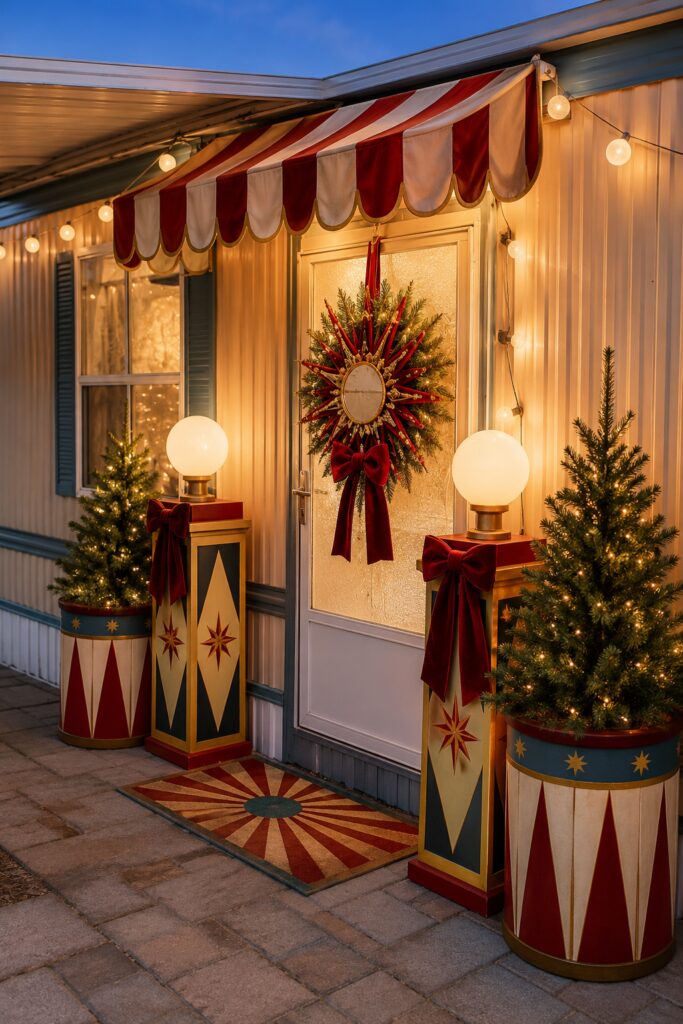
Image disclosure: This AI-generated image is presented as decorating inspiration. Suggested products are visual alternatives rather than claims that exact items shown are available. Product colors, dimensions, prices, ratings, and availability may change.