*This post may contain affiliate links for which I earn commissions.*
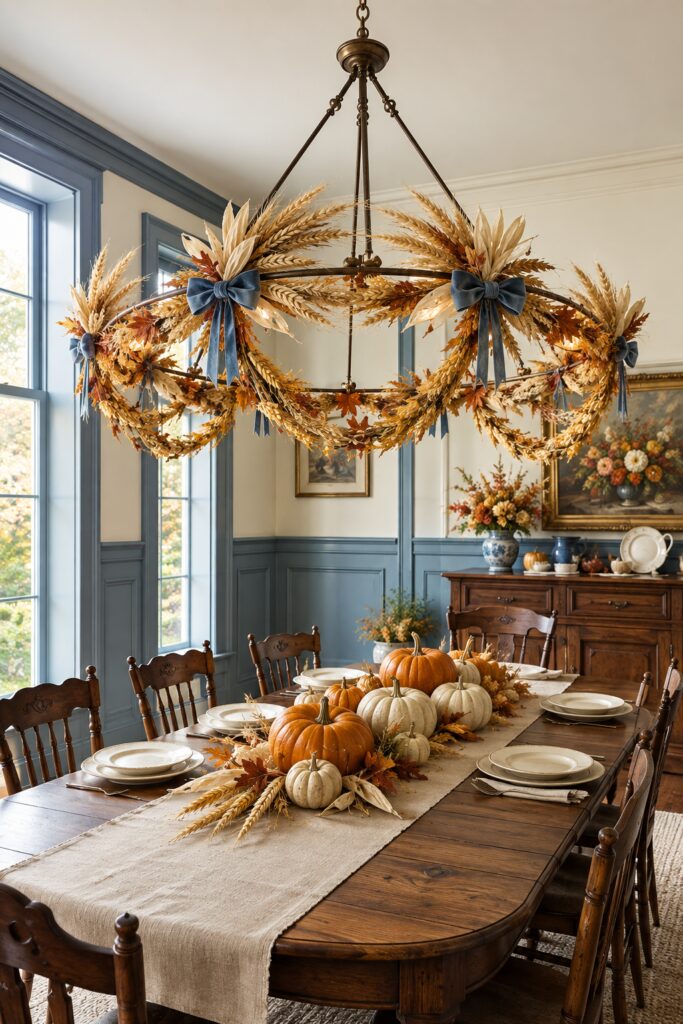
A Thanksgiving dining room feels especially memorable when the decorating extends beyond the tabletop. Here, a generous wheat swag wraps around a large circular chandelier, creating a canopy of golden texture above a harvest table filled with pumpkins and autumn foliage.
The chandelier arrangement is dramatic, but the room remains welcoming. Natural wheat tones soften the dark metal fixture, while slate-blue velvet bows connect the seasonal display to the blue-gray trim around the room. Below it, orange and ivory pumpkins form a relaxed centerpiece along a simple fabric runner.
You do not need the same room, furniture, or chandelier to capture this feeling. The effect comes from repeating colors and materials at different heights, then leaving enough quiet space for every layer to be appreciated.
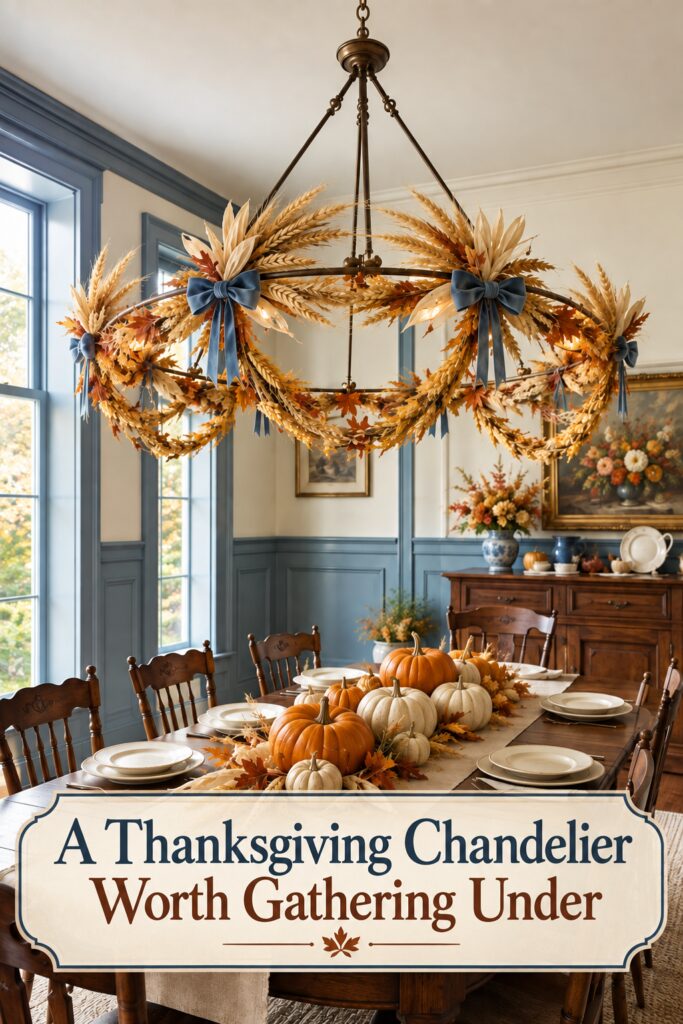
The inspiration image for this decorating idea was created with AI.
Why This Thanksgiving Dining Room Feels So Complete
The chandelier becomes part of the tablescape
Instead of treating the light fixture as separate from the table, the design uses it as an overhead continuation of the centerpiece. Wheat, pale leaves, and rust-colored foliage appear both above and below, making the entire dining area feel connected.
This technique also creates a strong vertical composition. The eye moves from the pumpkin centerpiece to the chandelier swags and then around the room to the floral arrangement and vintage artwork.
Wheat creates movement without looking heavy
Long wheat stems naturally curve and fan outward. Arranged around the circular chandelier, they produce graceful lines that emphasize its shape. Smaller strands drape beneath the metal ring, adding movement without forming one dense, solid garland.
Find Wheat Stems
Browse current Amazon options that can help you recreate this look.
Browse Long Wheat Stems on Amazon →As an Amazon Associate I earn from qualifying purchases.
The airy arrangement is important. A tightly packed mass of decorations could overpower the light fixture and make the room feel crowded. Here, the open spaces between the stems allow light to pass through.
Blue bows give the harvest palette an unexpected accent
The deep slate-blue bows distinguish this display from a more predictable orange-and-brown Thanksgiving scheme. They echo the painted trim and wainscoting, so they feel intentional rather than added as an unrelated accent.
A room without blue architectural details could use ribbon that repeats another existing color. Muted olive, burgundy, cinnamon, warm taupe, or soft charcoal could serve the same purpose.
The table balances abundance with simplicity
The centerpiece is full, but the individual place settings remain restrained. Cream dishes, neutral napkins, and clear sections of wooden tabletop prevent the pumpkins and foliage from competing with too many patterns.
The long fabric runner also helps organize the arrangement. It creates a defined decorating path down the table while allowing the warm wood to remain visible along both sides.
Key Pieces for Recreating the Wheat Chandelier and Harvest Table
Wheat stems and autumn grasses
Choose dried or faux wheat with long, flexible stems. A mixture of full wheat heads, fine grasses, and airy seed sprays will create a more natural arrangement than one repeated stem used everywhere.
Look for materials that are lightweight enough to secure safely. Smaller bundles are easier to position and adjust around a light fixture.
Rust and ivory foliage
The wheat provides the golden foundation, but rust leaves and broad ivory stems add contrast. These secondary materials keep the display from looking flat or overly beige.
Use them in smaller amounts. Tuck short clusters near the attachment points and allow the longer wheat to form the sweeping lines.
Velvet or fabric ribbon
Medium-width velvet ribbon gives the arrangement a tailored finish and introduces soft texture against the crisp dried stems. Structured bows with trailing ends are particularly effective on a circular chandelier because they mark visual intervals around the ring.
The ribbon does not have to match the wall color exactly. It should simply repeat or complement a color that already appears elsewhere in the dining room.
Lightweight garland materials
A flexible autumn garland can form the base of the chandelier treatment. It provides a framework for attaching individual wheat stems and leaf sprays while helping the arrangement look continuous.
Select an open, pliable garland rather than a bulky one. The goal is to support the wheat without concealing the shape of the fixture.
Orange and ivory pumpkins
A combination of warm orange and creamy white pumpkins carries the color story down to the table. Varying the size and shape makes the centerpiece appear collected rather than arranged in identical rows.
Faux pumpkins are practical when the table will remain decorated for several weeks. Real pumpkins can provide beautiful natural variation for a shorter display.
A relaxed neutral table runner
The soft, slightly rumpled runner keeps the table from feeling formal or rigid. Linen-look cotton, washed linen, or another textured neutral fabric would complement the wheat and wood tones.
Choose a runner wide enough to anchor the pumpkins, but not so wide that it covers most of the tabletop.
Styling the Chandelier Safely and Gracefully
Before adding anything, confirm that the chandelier is sturdy and that the decorative materials can remain well away from bulbs, candles, electrical components, and heat. Lightweight pieces are preferable. If the fixture becomes warm during use, select flame-resistant faux materials and maintain generous clearance.
Turn off the power while arranging the decorations. Begin with a thin garland or a series of small stem bundles secured to the outer framework with floral wire. Avoid attaching anything to wiring, sockets, or moving components.
Arrange the wheat in one general direction so it appears to sweep around the chandelier. Add a few outward-facing sprays for height, followed by shorter rust leaves and pale foliage near the attachment points. Finish with evenly spaced bows that conceal some of the wire and create a sense of rhythm.
Step back frequently while working. The display should feel balanced when seen from the doorway as well as from the dining chairs. It does not need to be perfectly symmetrical, but one section should not look noticeably heavier than the others.
Building the Pumpkin Centerpiece Below
Run a neutral runner along the center of the table and place the largest pumpkins first. Position them in a loose, staggered line rather than directly opposite one another. This creates movement and gives the arrangement a more natural shape.
Add medium and small pumpkins around the larger ones, repeating both orange and ivory from one end of the table to the other. Tuck wheat stems, muted leaves, and a few pale grasses into the open spaces.
Keep the arrangement lower near the seats so guests can see one another across the table. A taller pumpkin can work near the center if the surrounding pieces remain low and open.
Repeat a few chandelier materials on the runner, but do not copy the overhead display exactly. The chandelier can hold the sweeping wheat and bows, while the table emphasizes rounded pumpkins and smaller foliage.
Let the Rest of the Room Support the Display
A statement chandelier treatment needs quieter surroundings. Simple cream dishes and neutral napkins are enough for the place settings. A restrained arrangement on a sideboard can extend the harvest palette without competing with the main display.
If the room already contains a strong accent color, repeat it once or twice. A vase, ribbon, napkin edge, or small piece of pottery can create the connection. There is no need to replace the room’s usual decor solely to accommodate a temporary Thanksgiving arrangement.
Shop Similar Pieces for the Thanksgiving Display
Look for Dried or Faux Wheat Stems
Choose stems with varied heights and natural golden coloring so the chandelier arrangement has movement and depth.
Shop Similar Autumn Leaf Sprays
Look for rust, amber, and pale neutral foliage that can be separated into smaller clusters.
Add Velvet Ribbon to Finish the Chandelier
Select ribbon that coordinates with an existing room color and has enough body to hold a soft, full bow.
Look for a Flexible Harvest Garland
A lightweight, open garland can provide the supporting structure for the wheat and foliage.
Shop Similar Orange and Ivory Pumpkins
Mix several sizes and shapes to create a centerpiece that looks layered rather than uniform.
Add a Textured Neutral Table Runner
A relaxed runner in linen, cotton, or a linen-look fabric will soften the table while allowing the wood grain to remain visible.
A Final Styling Thought
Repeat the same harvest materials above and below the table, then use one room-inspired ribbon color to make the entire Thanksgiving setting feel thoughtfully connected.