*This post may contain affiliate links for which I earn commissions.*
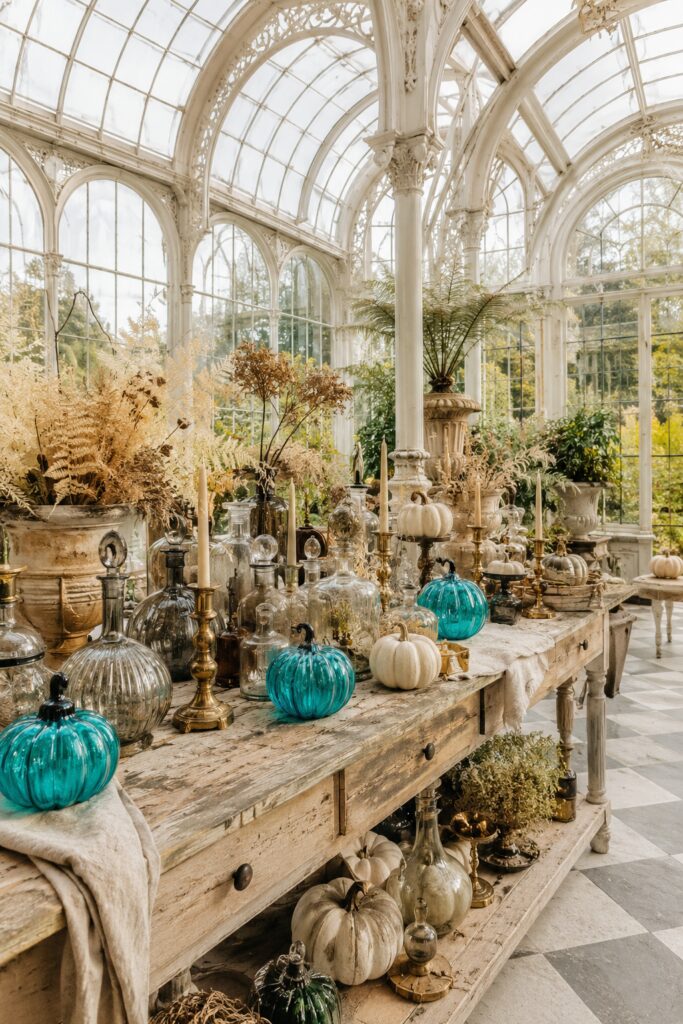
Turquoise pumpkins glow against a collection of old-fashioned bottles, pale ferns, and mellow brass in this sunlit conservatory. Their rippled glass catches the daylight, creating an unexpected jewel-toned accent among cream, straw, and weathered wood.
The long table feels like a botanical workbench dressed for the season. Stoppered vessels stand beside candlesticks, ivory pumpkins interrupt the glass, and loose linen softens the worn surface. There are no grinning faces or dangling cobwebs. The atmosphere is quietly mysterious, with a collected apothecary character.
You can translate this idea to a sideboard, entry console, or deep windowsill. The key is combining a few distinctive pumpkins with ordinary glassware and airy botanical details.
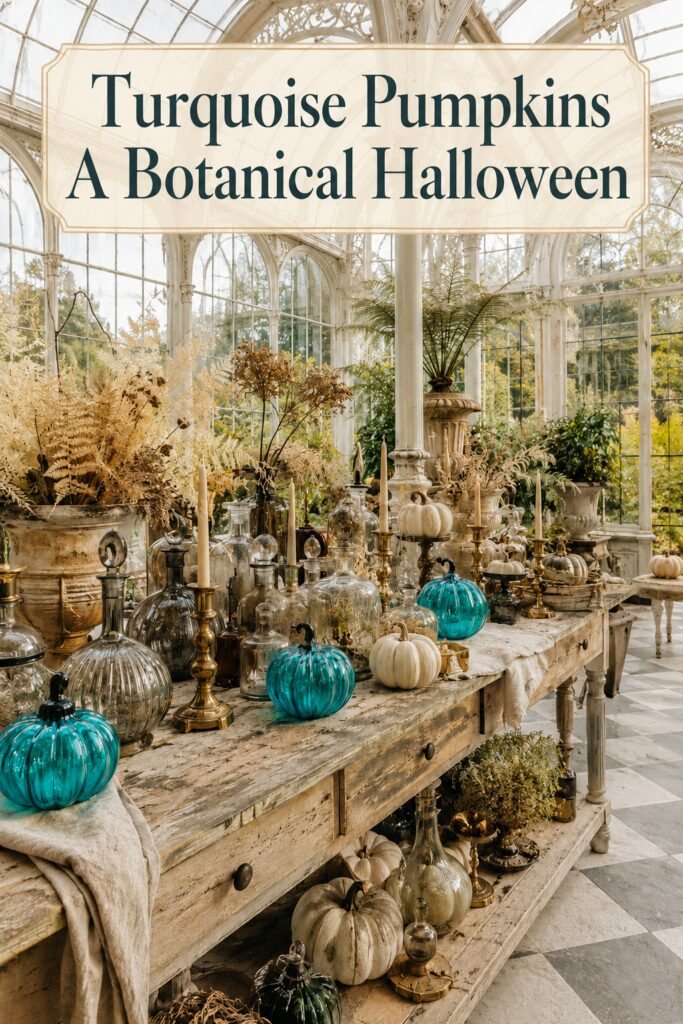
The inspiration image is AI generated. The suggestions below describe ways to recreate its overall decorating effect with similar pieces rather than exact products shown.
The Appeal Is in the Mix of Surfaces
The turquoise works because nearly everything around it is restrained. Cream architecture, neutral foliage, and clear glass leave room for the saturated pumpkins to stand out.
Their rounded shapes contrast with narrow bottle necks and slender candles. Ribbed glass adds another layer of detail, catching highlights without needing painted patterns or elaborate embellishments.
Opaque ivory pumpkins are just as useful. Placed between transparent vessels, they give the eye somewhere to rest. Without them, a dense glass collection could become difficult to read.
Weathered wood prevents the arrangement from feeling precious. Its worn finish makes the polished pieces seem gathered over time, while the linen introduces softness between the hard surfaces.
Start with the Pieces That Matter Most
Turquoise Glass Pumpkins
These are the signature accents, so begin here rather than shopping for every background accessory.
Look for decorative pumpkins in translucent turquoise or blue-green glass, ideally with visible ribbing. Dark or contrasting stems will help the shape remain distinct against pale surroundings.

A single substantial pumpkin can anchor a small display. For a longer console, repeat the color at separate points instead of placing all the turquoise pieces together.
It’s easier to find smaller turquoise pumpkins like these and you could use several of them to give the impression of size by layering them on a tiered tray or shelf.


If a suitable glass version proves difficult to find, combine a turquoise glass vase with a neutral decorative pumpkin. This separates the color from the shape but retains much of the same effect.
Stoppered Bottles and Apothecary Style Jars
The bottles give the display its curious, old-fashioned character. Different shoulders, neck lengths, and stopper shapes make the collection more interesting than a matching set.
Use clean decorative bottles, decanters, or jars you already own. A mixture of clear glass and one or two smoky pieces will suggest the depth shown in the image.


Leave some empty. A tiny dried sprig inside one vessel can feel intentional, while filling every container may make the arrangement look busy. There is no need to add invented potion labels to establish the mood.
Pale Ferns and Branching Stems
The large botanical arrangements create a soft backdrop for the glass. Fine fronds and branching forms are more important here than flowers.
Look for preserved, dried, or faux fern-like stems in cream, straw, and muted gold. Keep enough space between them for their individual outlines to show.


For a small console, one loose arrangement is sufficient. A few tall stems toward the back can suggest the conservatory’s abundance without blocking the entire wall or window.
Brass Candlesticks with Ivory Tapers
Warm metal balances the cool turquoise. The candlesticks also establish a middle-to-tall layer between the pumpkins and botanical stems.
Related brass finishes work well together even when the shapes differ. You can use a pair you already own rather than trying to reproduce the varied collection in the image.
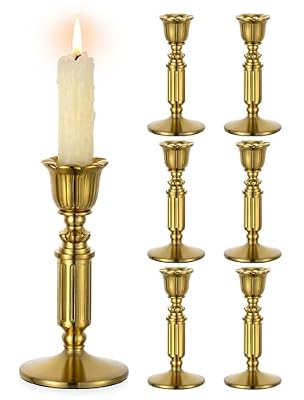


Choose ivory flameless tapers near dried foliage and linen. They provide the slender silhouette and evening glow without placing an open flame among combustible materials.
Cream Pumpkins
Pale pumpkins connect the display to autumn while keeping the palette controlled. Choose warm ivory rather than stark white if your surrounding fabrics and wood have golden undertones.


Mix a squat ribbed shape with a smaller rounded one. Position them near glass pieces so the difference between solid and transparent surfaces becomes part of the arrangement.
You do not need to repeat pumpkins on every shelf. On a compact piece of furniture, a few well-placed examples will read more clearly.
Linen and an Aged Vessel
The linen in the image falls loosely across sections of the table rather than covering it completely. A narrow runner or folded fabric remnant can provide the same softness.
I found that linen-look shawls in a gauzy material are easy to find and pretty affordable if you’re looking to use them as a prop for this display. The nice advantage is that you can wear them later if you like the look.


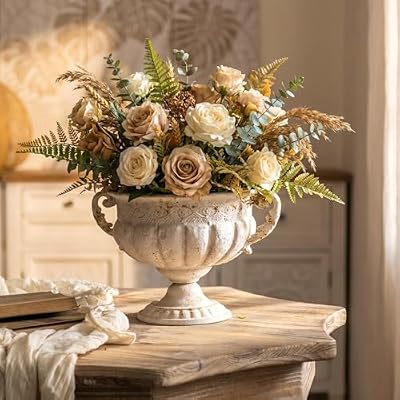
For the botanical arrangement, use a stable urn, pottery vase, or substantial container with a muted finish. An aged appearance is helpful, but ornate handles and carved details are optional.


Let some of the furniture remain exposed. The contrast between rough wood, fabric, and glass is more important than achieving a perfect surface.
Assemble a Collected Display Without the Clutter
Give Each Group a Clear Role
Begin with the botanical arrangement at the back or toward one end. Place your main turquoise pumpkin forward of it, where its color and outline can be seen easily.
Add two or three bottles nearby, varying their heights. Finish with a cream pumpkin and a candlestick to connect the contrasting materials.
Think of this as one complete grouping. Expand only if the available surface still feels empty.
Repeat Turquoise Across a Longer Surface
On a broad sideboard, place a second turquoise accent farther along the arrangement. It can be smaller than the first.
Bridge the space with quieter pieces rather than an uninterrupted line of decorations. Clear glass allows glimpses through the display, but each vessel still needs room around its base.
Avoid positioning delicate pieces where sleeves, bags, or opening doors could catch them.
Use the Light You Already Have
Gentle window light makes translucent glass especially appealing. Try the pumpkin in several positions and notice where the ribbing becomes most visible.
Keep glass collections out of intense direct sun, particularly pieces with rounded stoppers that could concentrate sunlight. Delicate dried materials may also fade with prolonged exposure.
A softly lit sideboard can capture the effect without recreating the conservatory itself.
Keep Lower Shelves Quieter
The inspiration continues the collection beneath the tabletop with larger pumpkins, bottles, and metallic vessels.
If your furniture has a lower shelf, use fewer, sturdier objects there. Leave fragile glass on a safer surface when children or pets can reach the shelf.
The upper arrangement should remain the main event rather than competing with another equally dense display below.
Shop Similar Pieces for a Botanical Halloween
Look for Turquoise Decorative Glass Pumpkins
Prioritize translucent color and a recognizable ribbed silhouette.
Add Stoppered Glass Bottles
Mix clear and smoky finishes with different neck shapes.
Look for Pale Botanical Stems
Choose fine fronds and branching textures rather than a dense floral bouquet.
Shop Similar Brass Candlesticks
Pair suitable holders with ivory flameless tapers.
Add Cream Faux Pumpkins
Use them to interrupt the glass with softer, solid shapes.
Look for Neutral Linen
A loosely placed length can soften the arrangement while leaving the wood visible.
Let the Turquoise Be the Discovery
Start with one glass pumpkin nestled among familiar bottles, a pale botanical arrangement, and a touch of brass. That unexpected color is enough to turn a neutral autumn collection into a distinctive botanical Halloween display.