*This post may contain affiliate links for which I earn commissions.*
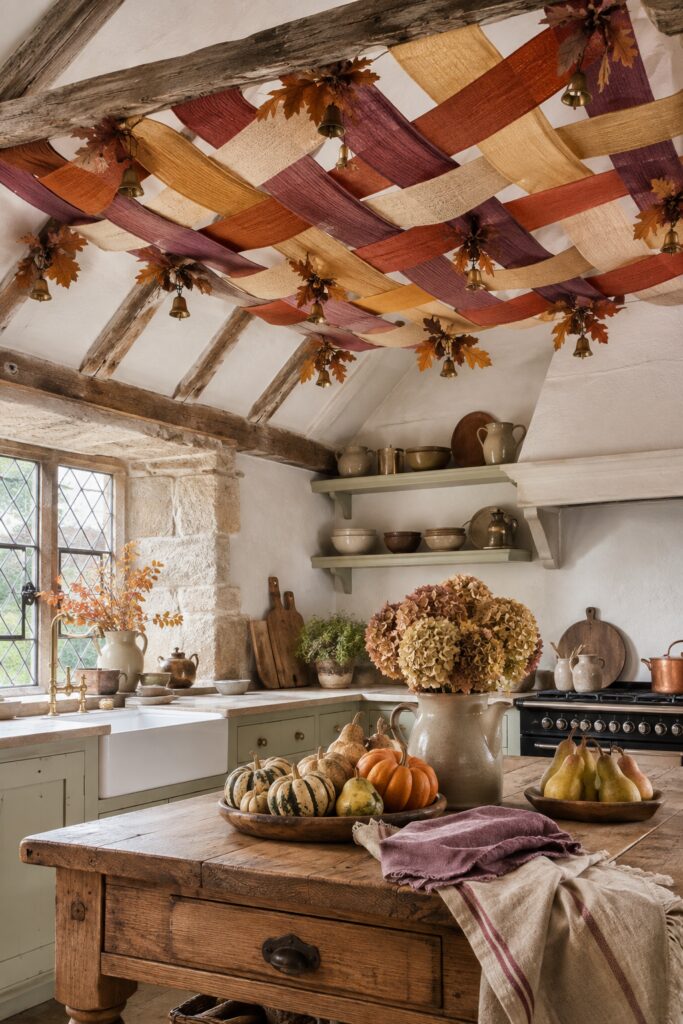
A woven ribbon ceiling turns this quiet English cottage kitchen into an unexpected fall retreat. Broad bands of burgundy, rust, mustard, and cream cross beneath the old timber beams, forming a loose overhead basketweave. Small brass bells and autumn leaf clusters hang at the intersections, giving the display movement and old-fashioned harvest character.
The room below supports the ceiling without competing with it. Muted green cabinetry, weathered wood, aged pottery, pumpkins, pears, dried hydrangeas, and casually folded linens repeat the same earthy palette at a more restrained scale.
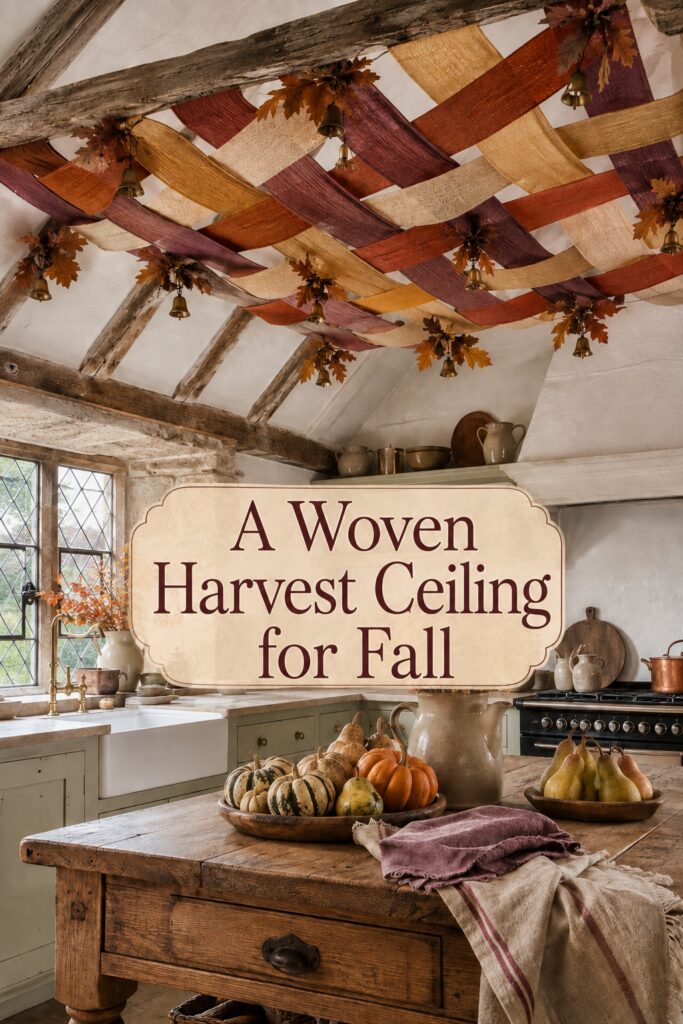
Image disclosure: This decorating concept was created with AI as visual inspiration. Readers can recreate its overall feeling with similar materials and seasonal pieces.
What Makes This Cottage Harvest Look Work
The decorating begins overhead
The woven canopy is the unmistakable focal point. Most fall kitchen decorating happens on counters, shelves, or tables, but this design uses the open space between exposed beams. That change in placement makes familiar seasonal materials feel imaginative and architectural.
The ribbons are wide enough to read as bands of fabric rather than narrow gift ribbon. Their relaxed curves keep the ceiling from appearing rigid, while the alternating over-and-under pattern gives it the character of a handwoven basket.
In a kitchen without exposed beams, a smaller version could be suspended from removable ceiling hooks, attached to a lightweight wooden frame, or installed over a dining table instead.
Muted harvest colors create depth
Burgundy and brick red provide the deepest notes, while ochre, wheat, and cream keep the arrangement from feeling heavy. The colors appear weathered rather than crisp, which suits the stone walls, old beams, sage cabinetry, and scrubbed wooden island.
A practical version only needs three or four coordinated shades. Choose one dark color, two warm midtones, and one pale neutral. Slight variations in fabric texture will make the weave feel collected rather than overly coordinated.
Bells and foliage mark the intersections
Clusters of oak leaves soften the points where the woven strips cross. Small brass-toned bells hang beneath them, adding shine and a graceful vertical detail.
These decorations also disguise attachment points. Floral wire, reusable ties, or narrow cord can be hidden behind the foliage. The bells do not need to be identical. A mixture of two nearby sizes can give the arrangement the informal feeling seen in the cottage kitchen.
The lower half quietly repeats the palette
The kitchen island does not attempt to match the ceiling literally. Instead, it echoes its colors through striped gourds, orange pumpkins, green-gold pears, faded plum fabric, and cream pottery.
The large hydrangea arrangement acts as a visual bridge. Its dusty tan, brown, and muted rose tones draw the eye from the colorful ceiling down toward the harvest centerpiece.
Key Pieces for Recreating the Woven Harvest Ceiling
Wide textured fabric ribbon
Wide fabric or burlap-style ribbon is the foundation of the design. Look for loosely woven material in burgundy, rust, mustard, oatmeal, and warm cream.
Wired ribbon will hold deliberate curves, while unwired fabric creates a softer drape. For a ceiling installation, lighter materials will usually be easier to support. Fabric strips cut from inexpensive yardage can also work when suitable extra-wide ribbon is difficult to find.
Autumn leaf stems or garland
Oak and maple leaves provide the most natural accompaniment to the woven canopy. Choose foliage with varied brown, copper, gold, and muted orange leaves rather than a single flat color.
Small stems are easier to separate into clusters. A garland can also be cut into shorter sections if its internal wire remains secure.
Small antique-style bells
Small bells provide the glint that keeps the earthy palette from looking dull. A warm brass, bronze, or aged copper finish works better here than a highly polished gold surface.
Hang one bell beneath each leaf cluster, or use a few bells only at the most visible intersections. This keeps the design graceful and prevents the ceiling from becoming overcrowded.
Mixed pumpkins and gourds
A shallow wooden bowl of pumpkins and gourds anchors the ceiling treatment. Combine orange pumpkins with striped green, cream, and pear-shaped gourds for a natural market-garden appearance.
Mixing shapes is more important than using a large quantity. Five to nine pieces in several sizes can create a convincing centerpiece on an average kitchen table.
Dried-look hydrangeas
A broad arrangement of browned hydrangeas gives the room faded late-season beauty. Cream, sand, dusty rose, pale olive, and coffee-brown blooms will reflect the canopy without introducing unrelated colors.
Place the stems in a substantial ceramic pitcher so the arrangement has enough visual weight to balance the ceiling.
Striped kitchen linens
A folded plum cloth and a cream towel with narrow burgundy stripes soften the rough wooden island. This is one of the easiest details to use in a smaller kitchen where an overhead display may not be practical.
Choose relaxed cotton or linen-look fabric with woven stripes, fringe, or a slightly rumpled finish.
How to Style a Woven Fall Display at Home
Begin by measuring the space and planning the ribbon pattern before attaching anything overhead. A simple sketch will help determine how many lengths are needed and where the intersections should fall.
Lay the strips on the floor first and test the color sequence. Alternate light and dark shades so adjacent bands remain distinct. When installing them, allow each strip to dip slightly between attachment points. Perfectly tight bands would lose the soft, gathered character that makes this arrangement so appealing.
Keep decorations away from the range, sink, exposed bulbs, ceiling fans, heat sources, vents, and working areas. Use attachments rated for the combined weight of the fabric and decorations. A compact installation over a dining table or nonworking island is a sensible alternative when the kitchen ceiling is not suitable.
Build the leaf-and-bell clusters separately, then secure them after the weave is in position. This is easier than assembling each cluster while working overhead.
On the table, use one low bowl of gourds and one taller floral arrangement. The difference in height creates a pleasing rhythm without covering every surface. Finish with loosely folded striped linens rather than arranging them too precisely.
Shop Similar Pieces for the Ceiling Canopy
Look for wide textured ribbon or lightweight fabric in four related harvest colors. Purchasing separate rolls often produces a richer palette than using a premade seasonal assortment.
Look for Autumn Foliage and Hanging Bells
Select leaf stems that can be divided into manageable clusters. Pair them with small, lightweight bells in an aged finish, using dark cord or narrow ribbon to suspend them.
Add a Mixed Gourd Centerpiece
Choose a set that includes striped, elongated, and round shapes. Display them in a broad wooden bowl and add one or two natural pumpkins if they are available locally.
Shop Dried-Look Flowers and Cottage Pottery
A generous bundle of muted hydrangeas and a cream ceramic pitcher can remain in the kitchen beyond fall. Their weathered colors fit the cottage setting without looking like short-lived novelty decorations.
Finish With Soft Striped Linens
Repeat burgundy or plum in one towel, runner, or folded cloth. A subtle stripe connects the island to the ceiling while allowing the woven canopy to remain the star.
Final Styling Tip
Recreate the idea at a scale that suits your room. Even six broad fabric bands woven over a dining nook, finished with four small foliage clusters, can capture the charm of this cottage harvest ceiling.