*This post may contain affiliate links for which I earn commissions.*
A Thanksgiving room can feel festive without being filled with orange leaves, plaid textiles, and traditional turkey decorations. This remarkable barn interior takes a quieter approach, using pale harvest materials, timeworn architecture, and a few carefully chosen accents to create an atmosphere that feels both rustic and sophisticated.
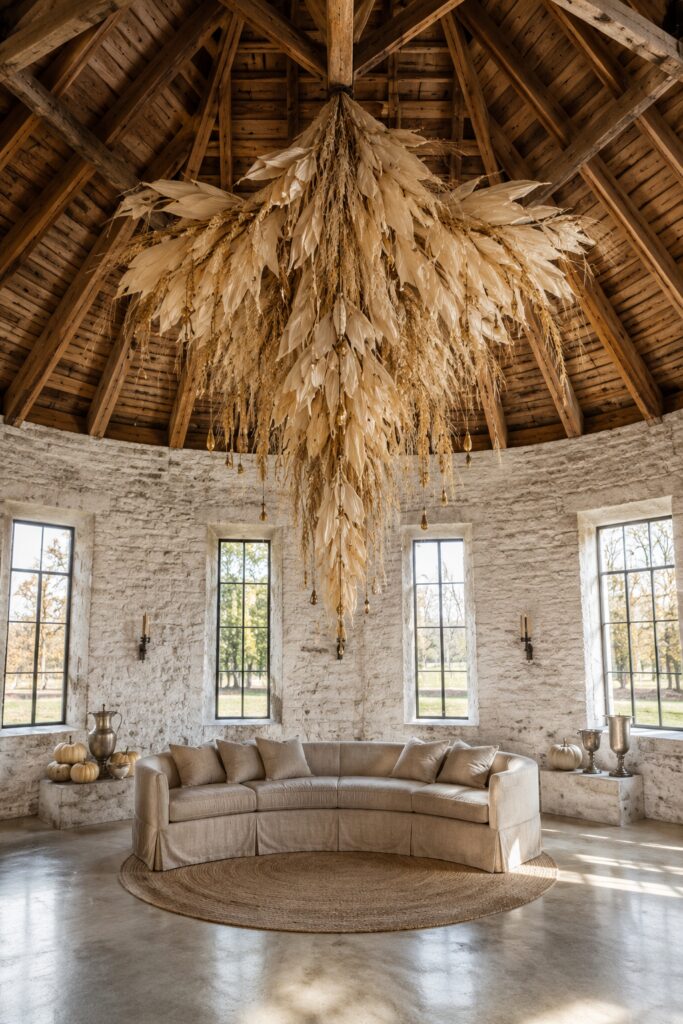
The focal point is an enormous chandelier formed from ivory corn husks and delicate dried grasses. It cascades from the center of the timbered ceiling like an elegant harvest cloud. Small amber glass drops catch the light beneath it, giving the natural materials an unexpected sense of glamour.
Below the installation, a curved linen sofa, woven round rug, pale pumpkins, and silvery vessels create a peaceful gathering area. The effect is grand, but the underlying decorating ideas can be adapted to a normal living room, dining area, sunroom, or covered porch.
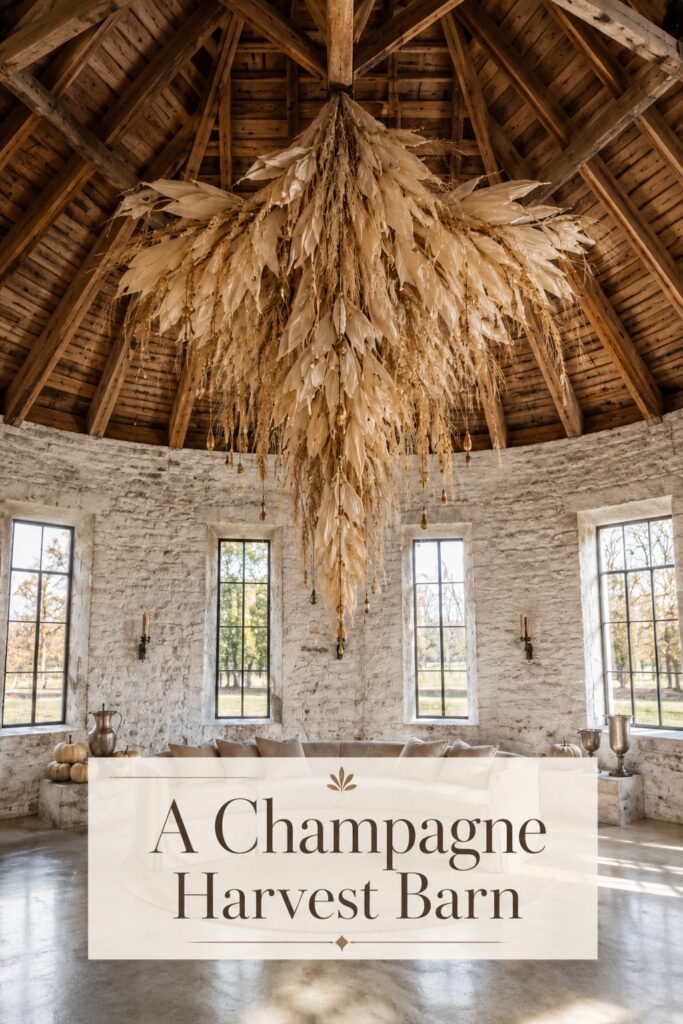
The featured inspiration image was created with AI.
What Gives This Thanksgiving Barn Its Quiet Drama
The Chandelier Celebrates Harvest Materials on a Grand Scale
Corn husks are familiar fall materials, but they are usually tucked into wreaths, garlands, and small tabletop arrangements. Here, they become the primary architectural decoration.
The chandelier spreads outward beneath the exposed rafters before narrowing into a long, feathery center. This silhouette feels especially well suited to the high roof because it fills the vertical space without appearing heavy. Dried grasses and wispy seed heads soften the broader husks and prevent the arrangement from becoming too stiff.
In a real home, the idea can be scaled to suit the ceiling. A compact arrangement could be built around a lightweight wreath form, hanging basket frame, or tiered floral hoop. Corn husks and preserved grasses could then be attached in loose layers, keeping electrical components and heat sources completely unobstructed.
Champagne Tones Replace Traditional Fall Orange
The palette is unusually restrained for Thanksgiving. Ivory corn husks, flax-colored grasses, oatmeal linen, pale stone, muted wood, and warm metallic accents work together without introducing a dominant fall color.
Find Corn Husks
Browse current Amazon options that can help you recreate this look.
Browse Corn Husks for Crafting on Amazon →As an Amazon Associate I earn from qualifying purchases.
Because the colors remain close to one another, texture becomes more noticeable. The crisp edges of the husks contrast with fuzzy grasses, rough stone, smooth concrete, woven jute, and relaxed linen.
Readers can recreate this effect by gathering decorations within a narrow range of cream, champagne, wheat, taupe, and aged silver. A little variation is desirable. Perfectly matched beige can feel flat, while related neutral tones create depth.
Rustic Architecture Is Paired With Softer Furnishings
The barn’s rafters and stone walls establish an old, rugged backdrop. The room feels inviting because those hard surfaces are balanced by a deeply cushioned curved sofa and a large woven rug.
This contrast can be reproduced even without historic architecture. In a newer room, natural wood, limewashed finishes, stoneware, rough pottery, and woven fibers can introduce the rustic component. Linen pillows, rounded furniture, soft throws, and gently draped textiles can provide the comfort.
The goal is not to make every element rustic. The visual interest comes from allowing refined and weathered pieces to share the room.
A Round Furniture Arrangement Echoes the Ceiling
The curved sofa and circular rug form a soft gathering area directly beneath the chandelier. Their rounded shapes help organize the tall room and make the overhead installation feel connected to the seating below.
A sectional is not essential to borrow this technique. A round rug can define a conversation area made from a standard sofa and two chairs. In a dining space, a round table could serve the same purpose.
Centering the furniture beneath the main seasonal feature creates a strong visual relationship. It also makes the installation feel intentional rather than added as an afterthought.
Small Thanksgiving Accents Keep the Room Seasonal
Only a handful of pumpkins appear in the room. They are grouped on the low stone ledges beside vintage-style metal vessels, allowing the chandelier to remain the clear focal point.
Their muted coloring is important. Ivory and pale taupe pumpkins continue the champagne palette instead of introducing a competing accent. The metal vessels contribute shape and age while reflecting just enough light to lift the neutral scheme.
Key Pieces for Recreating the Champagne Harvest Look
Dried Corn Husks
Corn husks provide the broad, curled shapes that define the chandelier. Natural dried husks can be gently opened and layered to create fullness.
For a softer appearance, select husks in pale cream and wheat tones. If the color varies too widely, a light wash or diluted craft paint can help unify them. Keep the finish matte so they retain their natural character.
Preserved Grasses and Seed Heads
Use fine grasses, millet-like stems, wheat, and airy seed sprays to break up the larger husk shapes. Let some strands hang below the main arrangement to establish the loose, cascading silhouette.
A combination of upright, arching, and trailing stems will look more organic than bundles cut to the same length.
A Lightweight Hanging Frame
A wreath form, floral hoop, wire basket frame, or tiered mobile structure can provide the chandelier’s hidden foundation. The size should be appropriate for the room and safely supported from a ceiling joist or properly rated hook.
When decorating around an existing light, preserve ample clearance around bulbs, wiring, and moving parts. A separate decorative installation without electricity is often the simplest choice.
Champagne Glass Drops
Teardrop-shaped glass ornaments or faceted hanging crystals can supply the sparkling details visible beneath the arrangement. Amber, smoke, clear champagne, or antiqued gold tones will blend naturally with the dried materials.
Use these accents sparingly. Their purpose is to catch occasional light, not make the piece resemble a formal crystal chandelier.
Neutral Decorative Pumpkins
Select pumpkins in cream, stone, faded beige, and soft mushroom tones. Mixing finishes can add interest, but avoid introducing too many glittered or glossy surfaces.
Cluster the pumpkins in small groups of three or five. Pairing them with an urn, pitcher, or pedestal will create more height and help them feel connected to the room.
Aged Silver or Pewter-Style Vessels
Tall goblets, pitchers, urns, and handled vessels add an old-world note to the display. Their cool metallic finish provides subtle contrast against the warmer wheat and wood tones.
These pieces do not need to match. A collected assortment of different heights and shapes will suit the barn-inspired setting particularly well.
Styling a Smaller Corn-Husk Installation at Home
Begin with the scale of the room rather than the scale shown in the inspiration image. A chandelier that looks appropriate beneath a vaulted barn roof could overwhelm an eight-foot ceiling.
For a dining room, consider a smaller round arrangement that sits comfortably above the center of the table. A tall entryway could support a slightly longer cascade, while a mantel or sideboard may be better suited to a wall-mounted half arrangement made with the same materials.
Build the shape in layers. Attach the largest husks around the outer frame first, turning some upward and allowing others to fall naturally. Fill the center with additional husks, then weave in fine grasses and seed heads. Add only a few glass drops after the natural materials are in place.
Step back frequently while working. The arrangement should feel abundant, but it still needs visible variation and pockets of air between the materials.
Continuing the Look Around the Room
Keep the surrounding decorations modest so the chandelier receives the attention it deserves. Group pale pumpkins on a console, hearth, or deep windowsill. Add one or two aged metal vessels to create height.
Choose textiles with relaxed texture rather than bold patterns. Oatmeal linen, natural cotton, brushed velvet, and soft boucle can all complement the husks and grasses. A woven jute or braided rug will reinforce the harvest materials at floor level.
If the room needs greater contrast, introduce it through charcoal window frames, dark bronze sconces, or blackened metal candleholders. These small dark notes will define the pale colors without changing the gentle mood.
Shop Similar Dried Corn Husks
Look for clean dried husks in pale natural tones. Larger quantities will be useful for building overlapping layers around a floral frame.
Add Preserved Grasses to Recreate the Chandelier
Choose a mixture of wheat, fine grass, and trailing seed stems. Combining several textures will give the installation its loose, feathery appearance.
Look for a Lightweight Floral Frame
Select a wreath form, hanging hoop, or wire frame that can support the materials without adding unnecessary weight. Make sure the finished piece can be mounted securely.
Shop Champagne Glass Ornaments
Small teardrop ornaments and hanging glass crystals can create the delicate glints seen throughout the chandelier. Warm translucent colors will blend best with the harvest palette.
Add Neutral Pumpkins Around the Room
Mix ivory, beige, and softly mottled pumpkins in restrained groups. Combining several sizes will give a small display more natural rhythm.
Look for Aged Metallic Vessels
Use urns, goblets, pitchers, or pedestal bowls with pewter, antique silver, or softly tarnished finishes. They can hold dried stems or stand alone as sculptural accents.
One Final Styling Tip
Choose one harvest feature to exaggerate, then keep the rest of the Thanksgiving decor quiet. Even a modest corn-husk arrangement can feel memorable when the palette, textures, and surrounding accents allow it to remain the star.