*This post may contain affiliate links for which I earn commissions.*
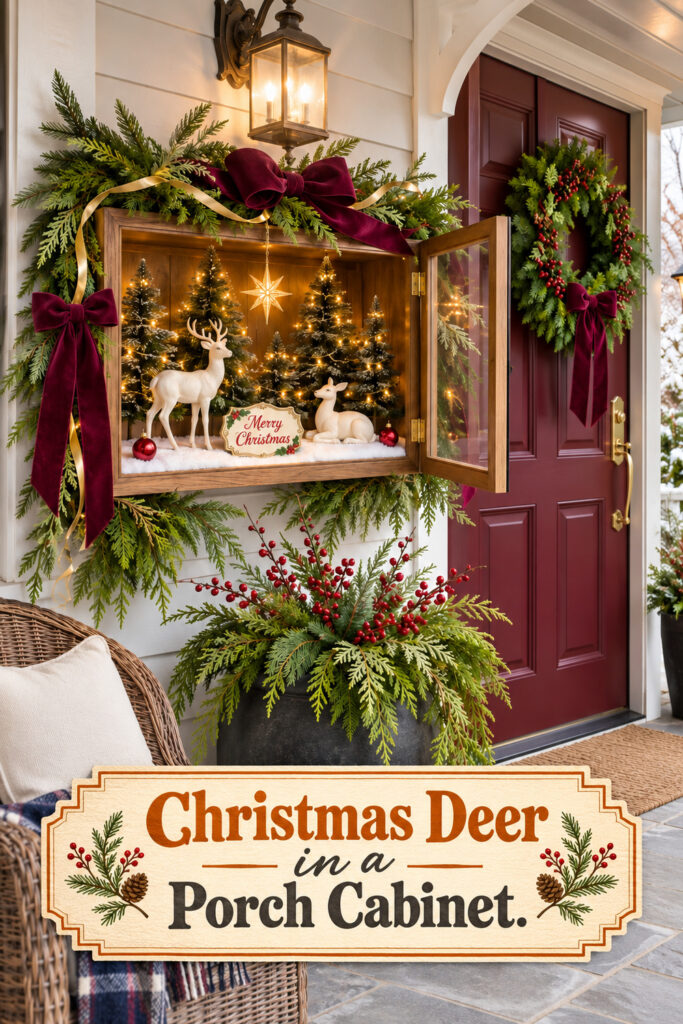
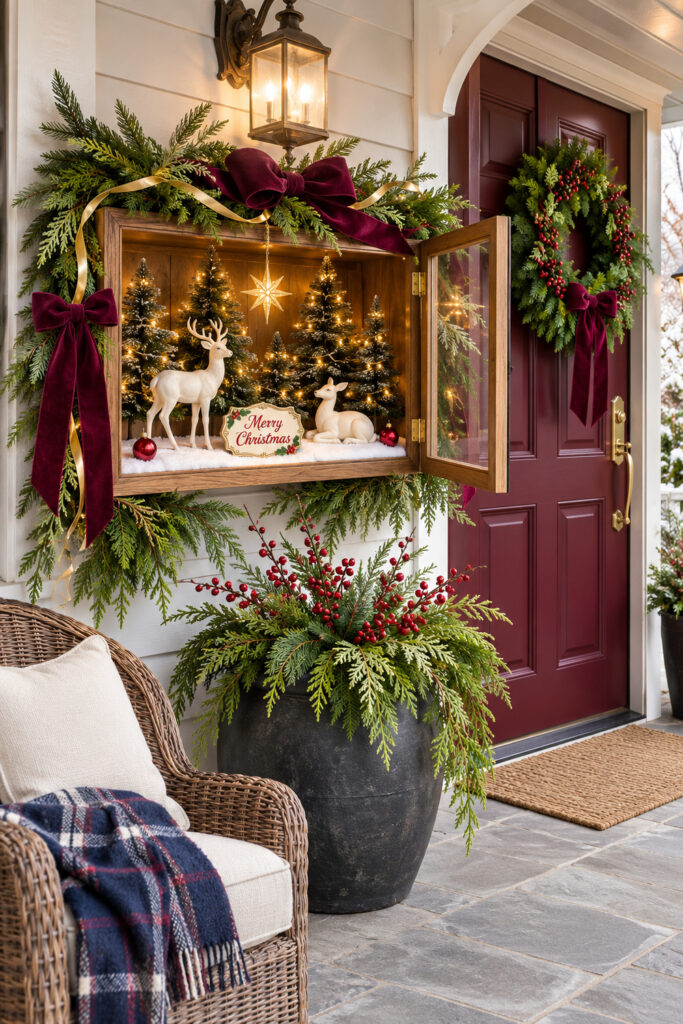
A standing deer and a resting companion share a small evergreen grove inside this porch cabinet. The pale figures show against warm wood, with a star above and two red ornaments near the snowy floor. A little Christmas greeting makes the scene easy to recognize before you notice its smaller details.
Outside the cabinet, full greenery and burgundy velvet bows connect the miniature meadow to the front door. A large planter below repeats the fir and red berries, while a woven chair adds a soft place nearby. The little scene is contained, but the surrounding porch still feels generously decorated.
This image was generated with AI as decorating inspiration. Similar pieces can help you recreate the effect.
Choose the Location Before the Cabinet
A wall cabinet gives the small deer scene a clear back, floor, and frame. Its height brings the figures closer to eye level, while the open glass door in the inspiration lets you see the whole arrangement. The wood finish adds warmth beside the pale porch wall.
Use a cabinet actually suited to its location and exposure. A roof doesn’t make an indoor wood case weather resistant. If the cabinet, lighting, or miniature pieces aren’t appropriate outdoors, place the scene inside the entry instead. You can carry the same burgundy ribbon and greenery to the porch without exposing the delicate display.
Mount the Case for Its Real Weight
Check the wall construction and the cabinet’s mounting instructions before adding decoration. Include the case, glass door, shelf, figures, trees, and outer greenery when planning the load. Use the supplied mounting system or hardware appropriate to the actual wall and product.
Choose a position that leaves the door handle, porch light, and main entrance route clear. Open the cabinet door through its normal swing while the case is empty. Its corner should stay out of the space where guests walk or stand to use the front door. Keep the door closed during ordinary display when the product allows; open it for arranging and inspection.
Let the Two Deer Hold Different Poses
The standing deer gives the scene height, and the resting deer makes a lower rounded shape beside it. Both are ivory, so their different outlines matter more than a difference in color. The open space between them keeps the pair readable.
Choose figures with stable complete supports and a scale suited to the cabinet. Check the standing deer’s antler width and the resting figure’s full body length. Leave room above and beside them, rather than selecting pieces that almost touch the frame. Delicate antlers need space when the door opens and the scene is moved.
Set both figures on a level surface. Use a thin contained snow layer around their bases instead of balancing them on a thick soft mound. The deer should stand or rest independently, with no tree or neighboring figure acting as a prop to hold them upright.
Put the Grove Behind the Figures
The small fir trees form a dark background for the pale deer. Their different heights give the case depth, while warm lights reveal the branches. The grove stays behind the animals so their bodies and legs remain visible.
Arrange the trees before adding the figures permanently. Start at the back corners, then leave a clear center for the star and greeting. Keep every tree on a supported base. If a branch hides the resting deer, move or reduce the tree rather than shifting the animal against the glass.
Use lighting intended for the actual location and follow its instructions. Keep electrical parts accessible and clear of snow material, ribbons, and tightly packed greenery. Unlit trees can work with suitable porch lighting too. The contrast between dark fir and pale deer will still carry the little landscape.
Keep the Snow and Ornaments Low
The contained white floor helps the cabinet read as a winter meadow. A couple of red baubles sit near the edges, repeating the larger berries outside. They remain smaller than the figures, so the scene doesn’t turn into an ornament collection.
Fit a dry display mat or suitable removable pale base inside the case. Keep it away from hinges, latches, lights, and the door’s lower edge. Check that the surface doesn’t shed into the mechanism or make the figures unstable. A shallow layer can suggest snow without hiding the floor support.
Hang the small star from a sound support that suits its weight. Keep it clear of the trees and figures rather than letting it rest on the antlers. The greeting can stand at the front if it doesn’t cover the deer. Check its lettering from the normal approach to the door.
Frame the Case with Larger Greenery
The outer fir branches make a much fuller shape than the little grove inside. Burgundy velvet bows repeat the front door wreath, and narrow gold ribbon adds a lighter line between them. This larger frame helps the small scene belong to the porch.
Use separate appropriate supports for the outer decoration so it doesn’t interfere with the cabinet door or add unplanned weight to its hinges. Keep branches away from lights and working hardware. Follow the greenery’s care or exposure guidance, whether it is fresh or faux.
The broad planter below repeats the same green and red colors. Choose a stable container that fits fully on the landing, with its branches outside the route. Keep watering and drainage separate from the wall cabinet. The planter can supply much of the porch’s fullness while the little case remains precise.
Add Fabric Where It Can Be Used
The woven chair has a pale cushion and a folded navy plaid throw. Those fabrics soften the wood and evergreen display without appearing inside the miniature scene. The chair still has a clear seat.
Choose fabrics for the actual exposure, and bring indoor throws out only when the conditions suit them. Store them appropriately afterward. Keep the seat and side route usable, with no blanket ends reaching the threshold or cabinet door. Repeat burgundy in one small fabric detail if your chair is farther from the front door wreath.
Simplify for a Compact Entry
A smaller suitable cabinet can hold one resting deer, a short tree group, and a greeting. Keep the pale ground and dark background, then reduce the outer greenery so the frame doesn’t crowd the door.
For an indoor version, place the cabinet near the entrance and use a matching ribbon on the outside wreath. You can keep the detailed meadow protected while still linking it to the holiday welcome. Preserve the case’s useful boundaries rather than trying to copy an unsuitable porch location.
Select the Case and Figures Together
Start with the mounting, exposure, and door movement. Then choose miniature pieces that fit the supported interior.
Look for a Suitable Wall Display Cabinet
Check its intended location, fixing method, shelf support, and door swing. A clear front helps protect the scene only when the whole product suits the conditions.
Shop Similar Small Deer Figurines
Compare body length, antler spread, and stable bases. A standing and resting pair gives the small meadow different heights.
Look for Burgundy Velvet Ribbon
Choose ribbon suited to its actual location and the size of the outer bows. Keep the tails clear of hardware and the entrance route.
Check from the Front Door
Walk up to the entrance and use the door normally. Check the cabinet corners, planter branches, mat, and fabric ends. Inspect the small figure bases and lighting before closing the display door. The welcome works best when the room route is as carefully arranged as the miniature meadow.
Final Styling Tip
Leave a small pale gap between the two deer. Their different poses will show more clearly against the evergreen grove.