*This post may contain affiliate links for which I earn commissions.*
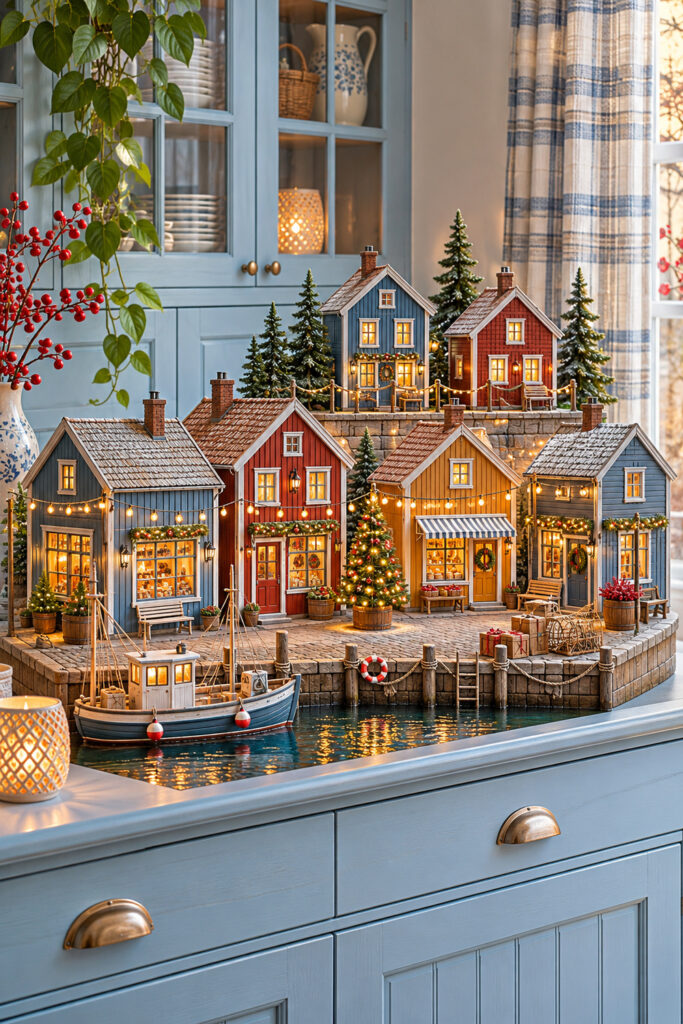
Blue and red houses line a tiny quay, their windows glowing above dark water. A fishing boat rests beside the dock, and a decorated tree fills the space between the shops. This Christmas harbor village has plenty to explore without spreading across an entire room.
The useful idea is its layered layout. Buildings at the back rise above the waterfront row, while parcels, ropes, and small trees give the lower level a story. You can borrow that arrangement for a dining-room cabinet or another deep, steady surface.

The inspiration image was created with AI. Use it as a decorating reference for arranging similar miniature pieces rather than as a photograph of a completed display.
What Makes This Harbor Village Work
The quay gives the buildings a shared edge. Instead of placing each house on its own patch of scenery, the arrangement connects them with one continuous waterfront. That helps a mixed collection feel like a neighborhood, even when the houses have different roof heights.
Color carries the eye through the scene. Blue appears on several buildings and on the supporting cabinet, while cranberry red and ochre interrupt the row. Evergreen trim softens the painted walls. You could use fewer colors, but repeating at least one keeps the village from looking like unrelated houses waiting for a shelf.
The raised rear level matters just as much as the front. It lets you see more windows and rooflines without stacking houses directly behind one another. Taller trees sit around those upper buildings, extending the outline without hiding the smaller shops below.
Notice the changes in roof direction, too. A sideways roof beside a front-facing gable breaks up the row without introducing a new color. When arranging your own houses, try changing their angle before buying another building. Leave each front door connected to an open bit of ground so the little settlement still makes sense. Tiny residents may be imaginary, but their front steps deserve somewhere to go.
Light is spread through the village rather than concentrated in one spot. Glowing windows, small strands, and the central tree create several places to look. Keep that glow gentle enough that you can still see door trim, awnings, and the texture of the quay.
Find miniature village houses
Browse current Amazon options that can help you recreate this look.
Browse miniature village houses on Amazon →As an Amazon Associate I earn from qualifying purchases.
Key Pieces for a Waterfront Christmas Village
Miniature Houses With Related Proportions
Choose buildings with compatible door and window sizes. Their overall heights can vary, but a tiny cottage beside an enormous shop door will make the scene feel less convincing. Painted wood, ceramic, or lightweight model houses can work if their finishes sit comfortably together.
Start with the houses you own. A handful arranged with a clear front row and a raised pair behind can suggest the same idea. Turn one building slightly toward the center so the collection feels gathered around a place rather than lined up for inspection.
A Firm Base and Broad Rear Platform
A removable board makes it easier to arrange the village away from the furniture. Cover or finish its edges so it looks intentional, and protect the cabinet underneath. The board should fit fully on its support without a projecting corner waiting to meet someone’s sleeve.
For the rear level, use a rigid platform that supports each building’s whole base. Scenic fabric and loose snow can hide an edge, but they should never hold up a house. Plan cable access before covering the platform, particularly if several buildings light up separately.
Waterfront Details at Model Scale
The boat, dock posts, and ropes explain the harbor setting immediately. You can suggest water with a painted scenic surface rather than trying to reproduce every reflection. A narrow strip at the front may be enough when the display surface is shallow.
Keep accessories in proportion to the houses. Tiny crates and parcels are useful because they add interest without blocking windows. A few carefully placed pieces will tell the story more clearly than a dock so full that the boat has nowhere to arrive.
Trees and Small Christmas Trim
Use taller miniature evergreens toward the rear and smaller ones near the shops. Leave gaps between branches and buildings so their outlines remain readable. The central decorated tree can be the most detailed evergreen, with the others acting as quieter neighbors.
Small wreaths, garlands, and a few packages give the buildings their Christmas character. Repeat one trim color across several facades. You can simplify the greenery on less visible sides instead of decorating every wall equally.
Arrange the Village on Your Cabinet
Begin with an empty base and place the largest rear buildings first. Check the view from where people normally enter the room. A display that looks balanced from directly above may hide its best house when viewed from the doorway.
Set the lower buildings next, leaving a small opening around the tree or a shop entrance. Offset their corners so you can glimpse the rear level through the gaps. Take a quick photo at normal viewing height before adding accessories; overlapping roofs become much easier to spot in a photograph.
Establish the waterfront edge after the houses are settled. Let the dock project only within the planned base, and leave a little open water around the boat. That empty area gives the busy facades somewhere to breathe.
Run lighting cables along the rear and side edges, following the lighting instructions for the pieces you use. Keep switches reachable. A village that requires moving three houses to turn on a light will test your Christmas spirit rather quickly.
Consider the display’s edges before covering the base. A neat painted border can make the water look intentional and keep the whole harbor visually contained. Leave enough room beside the buildings to lift them out when the season ends. If you use separate scenic sections, label their undersides with their positions while the layout is still fresh in your mind. That gives you a useful starting point next year without requiring you to rebuild the same village exactly.
Add trees, wreaths, and parcel groups last. Put one small detail near a building entrance and another near the dock, then pause. If an accessory covers the feature you liked most, move it rather than adding something taller to compete.
You can also echo one village color in the surrounding room. The blue cabinet in the inspiration does this beautifully, but a runner or nearby bowl could provide the connection without painting furniture. Keep larger room decorations outside the model footprint so the scale change feels deliberate.
Shop Similar Pieces
Look for Miniature Waterfront Houses
Check building dimensions and window scale before choosing additions to an existing collection. Clapboard-style cottages, narrow shops, and simple pitched roofs would support this harbor direction without needing exact matches to the image.
Shop Similar Model Boats and Dock Accessories
Look for accessories intended for the same approximate scale as your buildings. A plain boat, posts, and a little model rope offer more flexibility than a large ready-made harbor section that dictates the whole layout.
Look for Small Village Lighting
Choose lights designed for miniature displays and check how they are powered. Fine wires are easier to conceal, while accessible controls help you switch the arrangement on without disturbing the scenery.
Final Styling Tip
Stand back until the little houses read as one harbor. If the eye stops at a crowded dock or a hidden shop, remove an accessory or shift a building before adding anything else. The village feels inviting when its tiny destinations remain easy to find.