*This post may contain affiliate links for which I earn commissions.*
Fall decorating often leans toward quiet neutrals and earthy brown rooms, but this cobalt sunroom takes a far more adventurous approach. A towering stack of pumpkins rises beside a built-in bench, surrounded by wicker furniture, raspberry pillows, green plants, and an assortment of pumpkins scattered across the wood floor.
The saturated blue background gives familiar orange pumpkins a striking new presence. At the same time, sunlight and natural woven textures keep the room feeling comfortable and welcoming. It is an inspired way to decorate a sunroom, enclosed porch, reading corner, or window-filled sitting room without losing its everyday function.
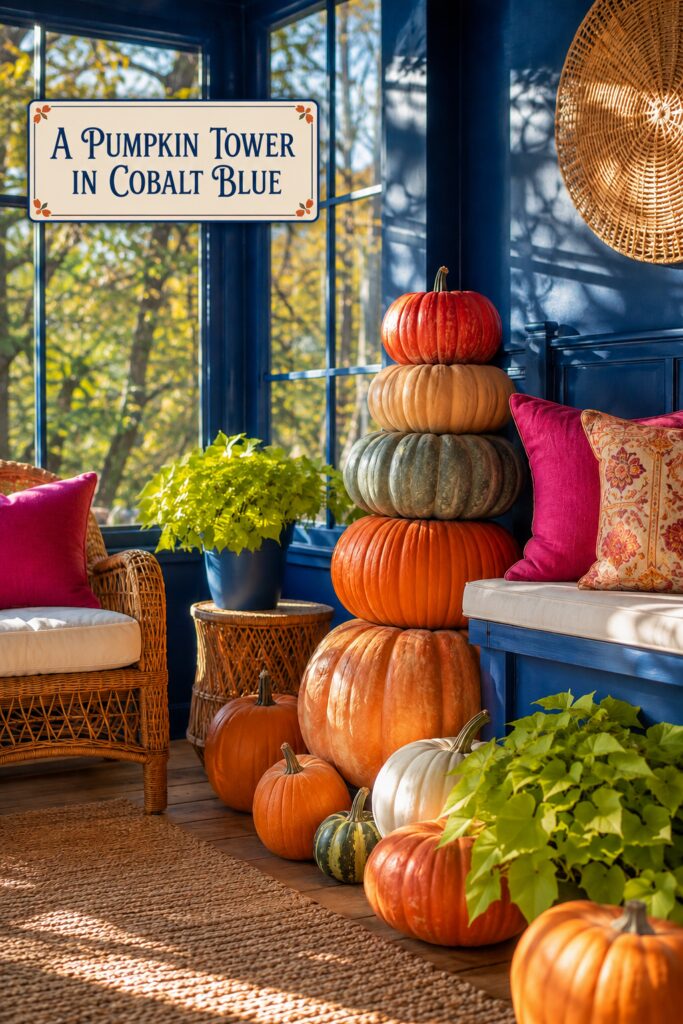
Image disclosure: This decorating inspiration image was created with AI.
Why the Cobalt and Orange Combination Works
Blue and orange sit opposite one another on the color wheel, so they naturally create strong contrast. The cobalt walls make every orange pumpkin appear warmer and more saturated, while the pumpkins prevent the blue room from feeling cold.
The look becomes more nuanced through the addition of secondary colors. Sage green, warm tan, creamy white, raspberry, and fresh chartreuse appear between the two dominant shades. These smaller accents make the palette feel collected rather than limited to a strict two-color scheme.
You do not need cobalt walls to recreate the effect. A blue painted cabinet, temporary wall panel, large folded textile, or blue bench can provide enough cool color behind the pumpkins. The goal is to give the warm fall accents a bold backdrop.
Turn Pumpkins Into a Vertical Sculpture
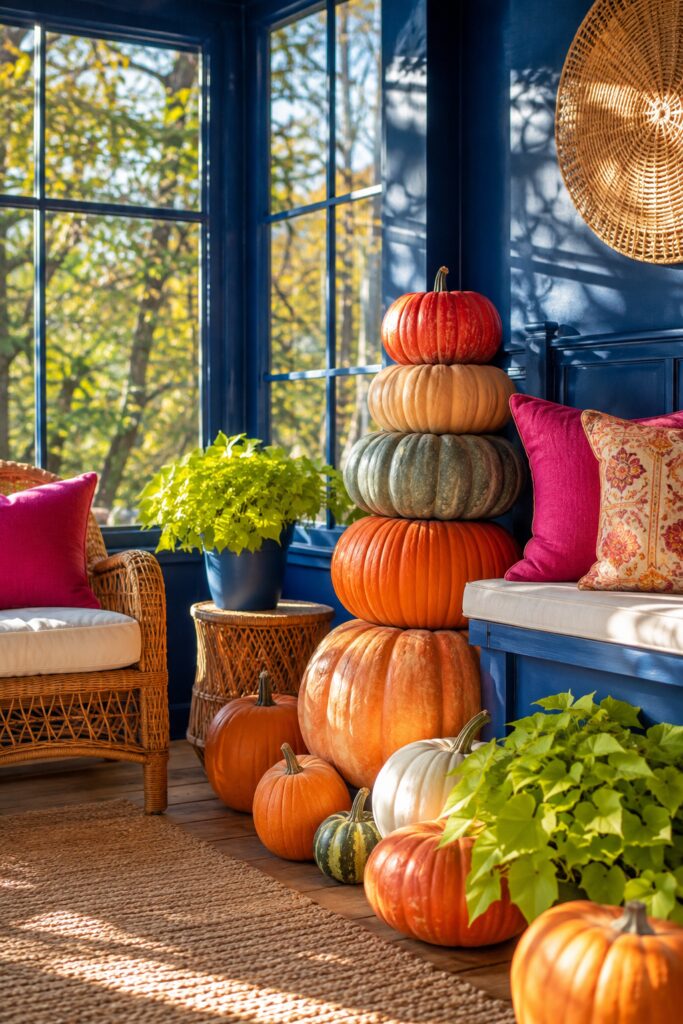
The most memorable feature is the tall pumpkin stack positioned beside the bench. Five pumpkins create a graduated tower, beginning with an especially large pumpkin at floor level and ending with a smaller red-orange pumpkin at the top.
The arrangement works because the pumpkins are wide, relatively flat, and carefully graduated. Each one is slightly smaller than the pumpkin beneath it, which gives the tower a stable, intentional silhouette.
A real tower of this height would be extremely heavy and difficult to secure. Lightweight artificial pumpkins are a more practical choice for an indoor display. They can be attached to a central dowel, threaded pipe, or concealed support structure.
If you prefer to use real pumpkins, create a shorter stack of two or three. Select firm pumpkins with flat tops and bottoms, and keep them away from upholstered furniture and direct heat.
Mix Orange With Tan, Sage, and White
Using five matching orange pumpkins would create a very different effect. The changing colors are what make this tower feel sculptural.
A muted tan pumpkin separates the red-orange top from the large sage pumpkin in the center. A saturated orange pumpkin appears below the sage, while the soft mottled base introduces another variation in surface and tone.
Look for pumpkins in several finishes, including matte, lightly mottled, weathered, or ribbed. Avoid making every pumpkin identical in texture. Slight differences will give the finished tower more depth.
The smaller floor arrangement continues the same principle. Orange pumpkins dominate, but one creamy white pumpkin and one small striped green gourd interrupt the repetition.
Let the Pumpkins Travel Across the Floor
Rather than placing every pumpkin directly at the base of the tower, the image uses a loose procession of pumpkins along the floor. This extends the display across the room and creates movement toward the foreground.
Begin with the largest pumpkins nearest the tower. Add medium pieces beside the bench, then finish with one or two smaller gourds. Turn the stems in different directions and vary the amount of space between each piece.
Do not line them up perfectly. A gently wandering arrangement will look more relaxed and organic.
Keep the main walkway clear. In a compact sunroom, it may be safer to contain the smaller pumpkins in a shallow basket or along the wall instead of extending them into the room.
Warm the Room With Wicker and Natural Fiber
The woven furniture, side table, ceiling light, and rug soften the cobalt walls and connect the interior with the trees outside the windows. Their honey-brown tones also sit comfortably beside the orange pumpkins.
You can create this layer with a wicker chair, rattan table, woven light shade, jute rug, or a few well-placed baskets. It is not necessary to add every element. Two repeated woven surfaces are usually enough to establish the connection.
A natural rug is particularly useful because it creates a quiet base beneath the pumpkins. It also prevents the intense wall and textile colors from overwhelming the room.
Add Raspberry Accents for an Unexpected Twist
The raspberry pillows are a surprising but important part of this palette. They do not match the pumpkins or the walls, yet they relate to both. Their red undertone belongs with the warm autumn colors, while their saturated intensity feels at home against cobalt.
Use one raspberry pillow on each side of the room to distribute the color. A patterned accent pillow containing rust, cream, and berry shades can help connect the solid pillows with the pumpkins.
Velvet is especially effective in this setting. Its soft sheen responds to the sunlight and provides a tactile contrast to rough wicker and ribbed pumpkin surfaces.
Keep the Greenery Fresh and Full
The vivid plants prevent the room from becoming a static seasonal display. Their chartreuse leaves glow in the sunlight and introduce a fresh color that complements both cobalt and orange.
Choose plants with generous, cascading foliage. Sweet potato vine, pothos, ferns, or trailing artificial greenery can produce a similar effect. Dark blue pots allow the leaves to appear as though they are emerging directly from the room’s architecture.
Place greenery at more than one height. One plant can sit on a small table while another rests near the floor. This distributes the green around the pumpkin tower and keeps the composition balanced.
Style the Arrangement Safely at Home
Begin by choosing the location for the tower. A corner beside a bench, fireplace, cabinet, or window seat gives it architectural support and prevents it from interrupting the room’s circulation.
Build the tower from the bottom up and test the balance after adding each pumpkin. Lightweight pieces should be connected internally or secured with removable fasteners. Do not rely on gravity alone for a tall display, particularly in a home with children or pets.
Once the tower is stable, place two or three large pumpkins around its base. Add smaller pumpkins gradually and stop before the floor feels crowded.
Finish the room with textiles and plants. These softer elements help the display feel integrated into a lived-in room rather than arranged as a freestanding seasonal installation.
Shop Similar Pieces
Shop Assorted Artificial Pumpkins
Look for multiple sizes and a mixture of orange, tan, sage, white, and striped finishes.
Find Large Lightweight Pumpkins for the Tower
Choose broad, relatively flat shapes that can be stacked or connected to an internal support.
Add Raspberry Velvet Pillow Covers
Use solid berry-toned covers to introduce contrast without adding a busy pattern.
Look for Natural Wicker Sunroom Furniture
A rounded chair or compact side table can establish the warm woven layer.
Add a Natural-Fiber Area Rug
Choose a simple flat or braided texture that will not compete with the pumpkin arrangement.
Shop Woven Rattan Light Shades
A broad open-weave shade can repeat the furniture’s texture near the ceiling.
Final Styling Tip
Treat the pumpkin tower as a piece of temporary sculpture. Once that central shape is established, use only enough supporting decor to carry its colors and textures through the room.