*This post may contain affiliate links for which I earn commissions.*
A Thanksgiving table does not need a perfectly coordinated dinnerware set to feel gracious. In fact, a thoughtful mixture of floral plates, blue scenic bowls, amber goblets, embroidered napkins, and softly aged serving pieces can make the gathering feel more personal.
This table celebrates that collected approach. Every place setting contains different patterns, but recurring blue, cream, pink, and gold tones create harmony. Pears, apples, wheat, and dried flowers form a natural centerpiece that looks abundant without hiding the china.
The result feels appropriate for a holiday centered on family traditions, shared meals, and stories passed around the table.
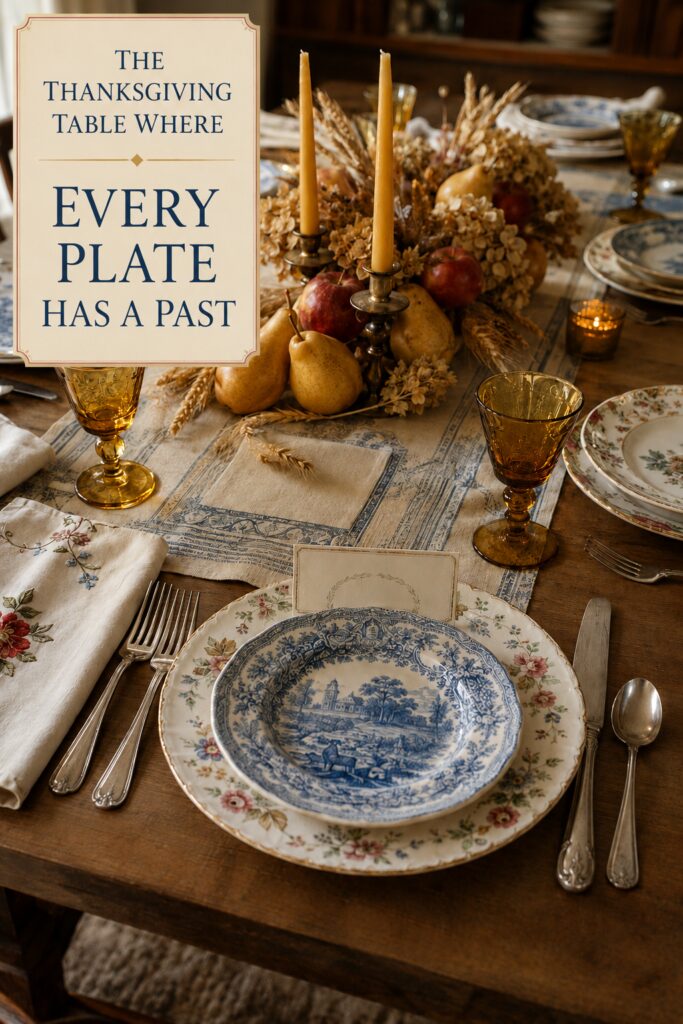
Image disclosure: This inspiration image was created with AI. It is intended to provide decorating ideas rather than represent specific products available for purchase.
Why the Mismatched Place Settings Work
The china patterns differ, but they share several characteristics.
Most pieces have cream or white backgrounds. The floral dinner plates introduce dusty pink, green, and blue, while the scenic bowls repeat the blue found in the runner. Traditional borders and softly detailed illustrations give the dishes a similar sense of age.
Each place setting also follows the same basic formula: one floral dinner plate topped with one blue patterned bowl. Repeating that structure creates order even if the individual designs change.
Amber goblets provide consistent color at every seat. Their warm transparency helps bridge the cool blue china and the golden centerpiece.
Choose One Piece to Guide the Collection
Begin with the china you already have or love most. It might be a set of blue patterned bowls, floral dinner plates, or several inherited pieces.
Use its colors to guide the rest of the table. A blue scenic bowl can be paired with floral plates containing even a small amount of similar blue. A pink floral plate might inspire burgundy apples, embroidered napkins, or muted flowers in the centerpiece.
The pieces do not need identical undertones. Slight variation helps the table look assembled over time. What matters is repeating two or three colors throughout the complete arrangement.
If you are starting without inherited china, collect one layer first. Four or six related bowls are easier to find and use than a complete vintage-style service.
Layer Blue Scenic Bowls Over Floral Plates
The contrasting patterns make the place settings distinctive.
Select dinner plates with delicate floral borders, leaving enough open cream space to prevent the lower layer from looking too busy. Top them with blue-and-white bowls featuring scenic, botanical, or toile-style designs.
The bowl should be smaller than the visible decorative border of the plate. This allows both patterns to contribute to the setting.
Not every blue bowl must match. Related indigo shades and traditional imagery can make a mixed group feel intentional. The floral plates can also vary as long as their scale and coloring remain compatible.
Before using older or secondhand dishes for food, inspect them carefully and determine whether they are suitable for serving. Pieces with uncertain finishes, cracks, or damaged glaze can be reserved for decorative use.
Repeat Amber Glassware Around the Table
One repeated glass color can bring considerable order to mixed china.
Amber goblets glow against the dark wood and echo the pears, wheat, candlelight, and dried flowers. Embossed or paneled glass reinforces the vintage character.
Use matching goblets if you want a dependable visual rhythm. For a more collected treatment, mix two compatible amber designs while keeping their height reasonably similar.
Allow a little space around each glass so the light can pass through it. Their warm color is most noticeable when they are not crowded by flowers or tableware.
Introduce Pattern With a Narrow Blue Runner
The runner carries indigo through the center of the table without covering the warm wood.
Look for a cream cotton runner with faded blue block printing, toile, or a traditional border. A gently irregular design will suit the collected china better than a crisp modern geometric pattern.
Choose a narrow width that leaves much of the tabletop visible. This gives every place setting its own clear space and prevents the patterned dishes from competing with a full tablecloth.
If the runner is longer than the table, allow it to hang naturally at both ends. For a shorter runner, center it beneath the centerpiece and leave the ends of the table uncovered.
Add Embroidered Napkins for Softness
Cream napkins with small floral embroidery connect the china to the textiles.
Choose motifs in faded red, blue, green, or gold. The embroidery can be modest because the dishes already supply considerable pattern.
Fold the napkins into simple rectangles and place them beside the plates. An informal fold supports the inherited, lived-with mood better than an elaborate napkin arrangement.
The napkins do not need to match perfectly. A set of related vintage-style florals can look especially appropriate when the thread colors repeat across the table.
Build a Centerpiece From Harvest Fruit
Pears and apples form the centerpiece’s visual base. Their colors are softer and more natural than a collection of brightly colored ornamental pumpkins.
Arrange the fruit in a loose line down the center of the table. Cluster several pears near the candlesticks, then repeat apples and smaller pieces farther along the runner.
Fresh fruit provides convincing color and texture and can be used after the gathering. Realistic artificial fruit offers a longer-lasting alternative when the table will remain decorated for several weeks.
Avoid creating a perfectly symmetrical fruit arrangement. Turning some pieces and allowing others to overlap will make the display feel generous and natural.
Weave Wheat and Dried Flowers Through the Fruit
Wheat adds fine linear texture, while dried hydrangeas provide soft, rounded volume.
Position a few wheat stems so they extend along the runner instead of standing upright. This keeps the centerpiece low and reinforces the table’s length.
Tuck dried flower heads between the fruit and candlesticks. Cream, parchment, tan, and faded blush work particularly well with the china.
Keep loose plant material away from food and flames. Faux stems or carefully sealed dried materials may be more practical for a table that will remain set for several days.
Use Aged Candlesticks and Honey-Colored Tapers
Dark antique-brass candlesticks create vertical punctuation within the low centerpiece.
Two or three holders are enough. Slight differences in shape or patina will complement the mixed china, provided the pieces remain stable and visually related.
Honey, ochre, or muted mustard tapers repeat the golden shades of the fruit and goblets. Keep them unscented so they do not interfere with the meal.
When candles are lit, maintain clear space around flames and keep wheat, dried flowers, place cards, and sleeves at a safe distance. Flameless tapers can offer a similar glow for a more crowded table.
Finish With Simple Place Cards
A small cream place card gives each layered setting a quiet finishing detail.
Use deckled or softly textured paper with an understated border. Handwritten names would reinforce the personal character of the table.
Place each card above the bowl or tuck it between the two china layers if it remains stable and will not damage the dishes.
The cards do not need ornate embellishment. Their simplicity provides a visual pause among the patterns.
Shop Similar Pieces
Look for Blue Scenic Bowls
Choose traditional indigo patterns that can be mixed rather than one overly uniform contemporary design.
Shop Floral Dinner Plates
Look for cream backgrounds, delicate borders, and faded pink, green, or blue flowers.
Add Amber Embossed Goblets
Repeat one warm glass color at every place to unite the mixed china.
Look for a Blue Printed Table Runner
Choose a narrow cotton runner that leaves plenty of the wooden table visible.
Add Embroidered Cream Napkins
Select restrained botanical embroidery in colors borrowed from the plates.
Build a Pear, Wheat, and Candle Centerpiece
Combine harvest fruit, dried textures, aged candlesticks, and warm tapers in a low arrangement.
Final Styling Tip
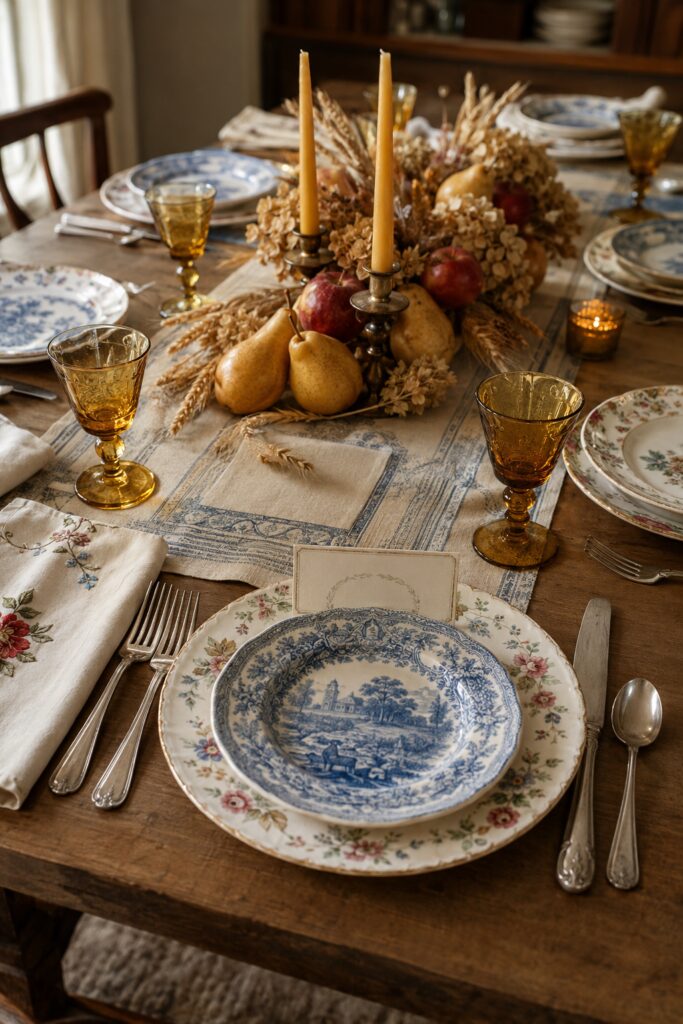
Repeat a consistent place-setting formula instead of matching every pattern. One floral plate, one blue bowl, one amber glass, and one cream napkin at each seat will make the differences feel deliberate.