*This post may contain affiliate links for which I earn commissions.*
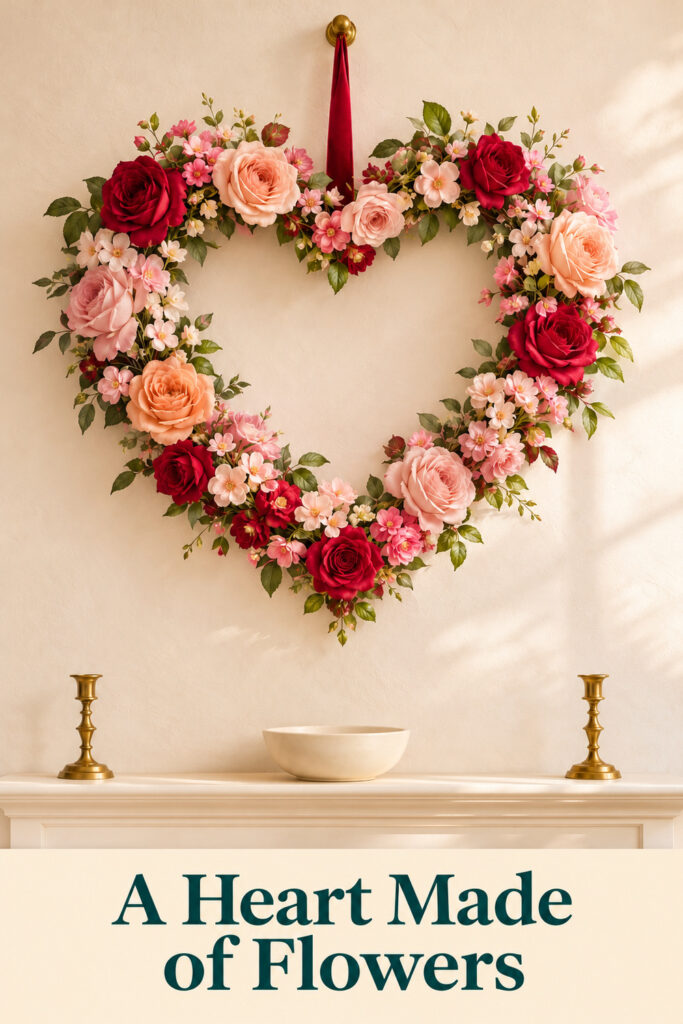
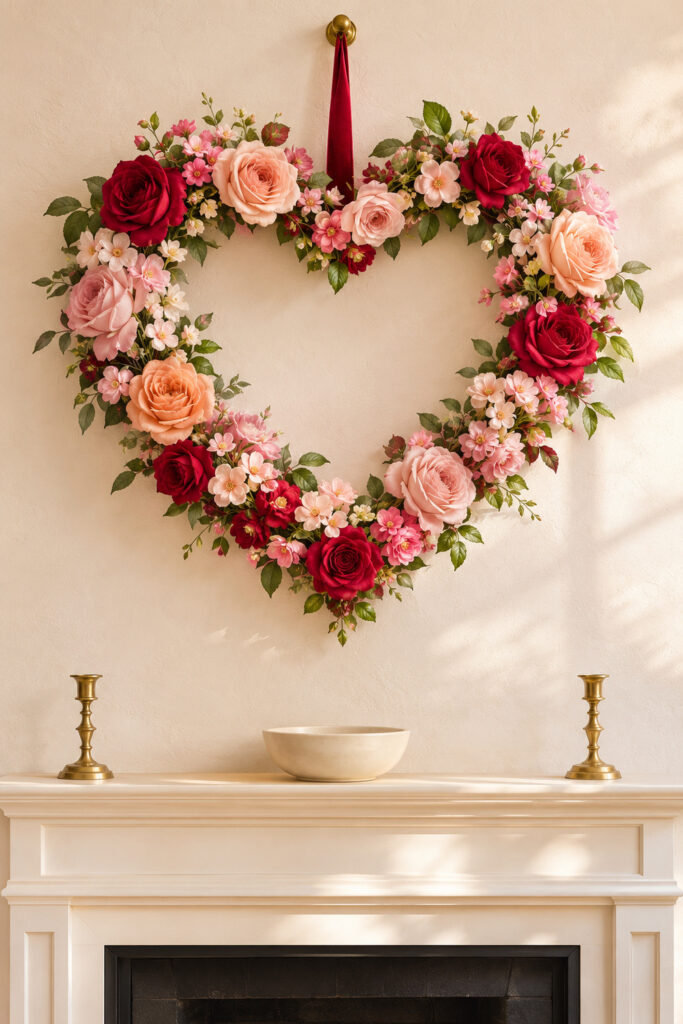
A floral heart hangs above a cream mantel in this Valentine’s Day inspiration. Red roses interrupt softer peach and pink blooms, with small flowers and greenery filling the spaces between them. The open center lets the pale wall become part of the shape.
The mantel underneath is deliberately quiet. A low bowl and two small brass candleholders provide a base without asking for equal attention. If you enjoy Valentine decorations but prefer one clear statement to many little accents, this is a useful arrangement to borrow.
This image was created with AI as decorating inspiration.
What Makes the Floral Heart Work
The outline is recognizable before you notice individual flowers. Two rounded upper curves, a visible center dip, and a pointed lower end establish the heart. Those landmarks matter more than a perfectly even covering of petals.
Larger roses create several places for the eye to pause. Smaller blossoms connect them, while a little foliage separates similar pink and peach tones. The red flowers are spread around the frame, so one side doesn’t appear much heavier simply because it carries all the deepest color.
The open center keeps the arrangement light. It also makes the wreath feel like an object hung on a wall rather than a solid floral panel. A visible ribbon connection above it explains how it belongs in the room.
Find Heart shaped wreath frames
Browse current Amazon options that can help you recreate this look.
Browse Heart shaped wreath frames on Amazon →As an Amazon Associate I earn from qualifying purchases.
Key Pieces for a Valentine Floral Mantel
A Clear Heart-Shaped Frame
The underlying form needs to preserve the heart silhouette once flowers are added. Choose a frame suitable for the intended materials and display method. A very narrow center opening may disappear beneath large blooms, so compare the usable shape with the flower heads you plan to use.
A Few Larger Rose Forms
The larger blooms provide the main texture and color. Faux flowers are a practical interpretation for a dry wall wreath, since they don’t need water containers hidden in the frame. Look for varied petal layers rather than identical tight balls. Soft peach and deeper red can create useful contrast within the same flower family.
Smaller Connecting Flowers
Small blossoms fill selected gaps without becoming as visually heavy as the roses. Their colors can repeat the main palette in lighter amounts. Keep some variation in scale so the wreath has a rhythm rather than an evenly tiled surface.
Restrained Greenery
Leaves help separate neighboring flowers and soften the outer edge. Too much greenery can change the heart into a general leafy wreath, particularly around the center dip. Keep the characteristic outline visible as you compare a finished piece or plan a similar arrangement.
A Suitable Hanging Connection
The ribbon shown above the heart is part of the decoration, but the complete hanging system still needs to suit the wreath and wall. Follow the requirements of the frame, hanger, and fixing method. Choose an appropriate place above the mantel rather than attaching the wreath to something not intended to carry it.
Low Supporting Mantel Pieces
The bowl and small candleholders remain below the floral shape. You can use other quiet objects you already own. Their height and spacing matter more than matching the illustrated pieces exactly. Keep the mantel from becoming a second display with its own competing focal point.
Balance the Flower Colors Around the Heart
Start by looking at the overall shape from across the room. If you are choosing a finished wreath, check photos that show the entire outline rather than only close flower details. A lush arrangement can still lose its heart shape if the top notch fills in or the bottom becomes rounded.
For a similar component-based arrangement, establish where the larger blooms would sit before filling every space. Distribute the deepest red around more than one section. The goal isn’t strict symmetry, but a sense that the whole heart belongs together.
Let the smaller flowers bridge larger blooms without hiding all the structure. Some fine foliage can point outward, but avoid long stems that distort the outline. The top dip and lower point should remain easy to identify.
Check the center opening separately. You should see a clear area of wall rather than a narrow gap between flowers. If the opening seems cramped, use smaller blooms along the inside edge instead of making the whole wreath larger.
These are styling principles for interpreting the inspiration, not a tested construction tutorial. If you assemble a wreath, use a suitable method for the actual frame and materials, and check the finished attachment and weight before hanging it.
Give the Wreath a Quiet Place to Hang
A pale family room wall makes the red and peach flowers easy to see. Against a strong wall color, compare the flower palette in that setting before choosing. Some pinks may disappear against a similarly warm background, while cream or peach can provide more separation.
Position the wreath in relation to the mantel, not only the ceiling height. It should feel connected to the fireplace area without hanging so low that mantel objects obscure the pointed base. A paper outline can help you judge the overall scale before installing a fixing.
Keep floral materials away from heat sources and follow any fireplace clearance requirements. The inspiration shows an inactive fireplace; it doesn’t establish a suitable clearance for a working one. An adjacent wall may be the better location if the mantel area isn’t appropriate.
Place supporting objects after the wreath is settled. The low bowl creates a quiet center beneath the open heart, while the candleholders extend the arrangement sideways. You could use fewer objects on a narrow mantel and preserve the same clear hierarchy.
Try the display in normal room light. Petal texture should remain visible without relying on a spotlight. If the flowers merge into one dark shape in the evening, improve the surrounding room illumination rather than adding a string of bright lights through the wreath.
Shop Similar Pieces
Look for Heart-Shaped Wreath Forms
Compare the width of the outer frame and the size of the center opening. Check the form’s intended materials and hanging provisions. The useful shape is one that will still read as a heart after the flowers add thickness.
Shop Similar Faux Garden Roses
Look for a range of bloom sizes and natural-looking petal layers. Compare the warm and cool notes within the pinks before combining them. Very large flower heads may need more space than the frame you have in mind.
Add Small Blossom Sprays
Choose smaller flowers that can connect the roses without another dominant shape. Flexible stems can help with placement, but they still need secure attachment. Keep their color range close enough to support the larger blooms.
Look for Soft Hanging Ribbon
A narrow velvet or woven ribbon can finish the area above the heart. Check that the visual ribbon and the actual support arrangement work together. Keep extra tails from distracting from the open center.
Final Styling Tip
Stand where you normally enter the family room and look for the heart outline first. If the flowers are lovely but the shape is unclear, simplify its inner edge and restore the top dip before adding another bloom.