*This post may contain affiliate links for which I earn commissions.*
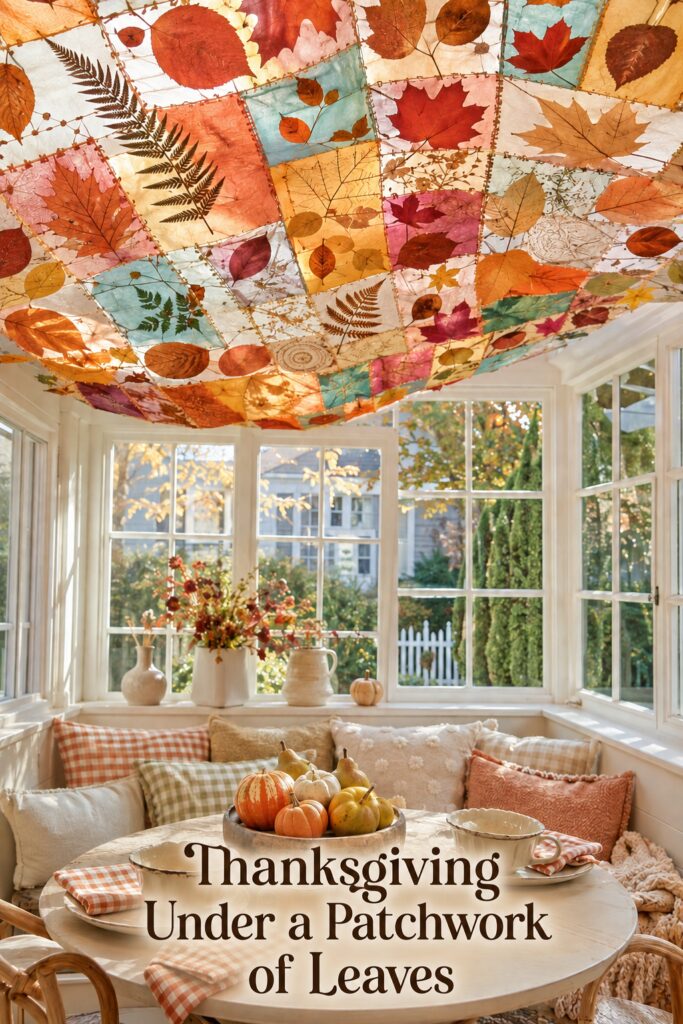
Some Thanksgiving decorations sit quietly on a table or mantel. This extraordinary patchwork leaf canopy changes the feeling of the entire room.
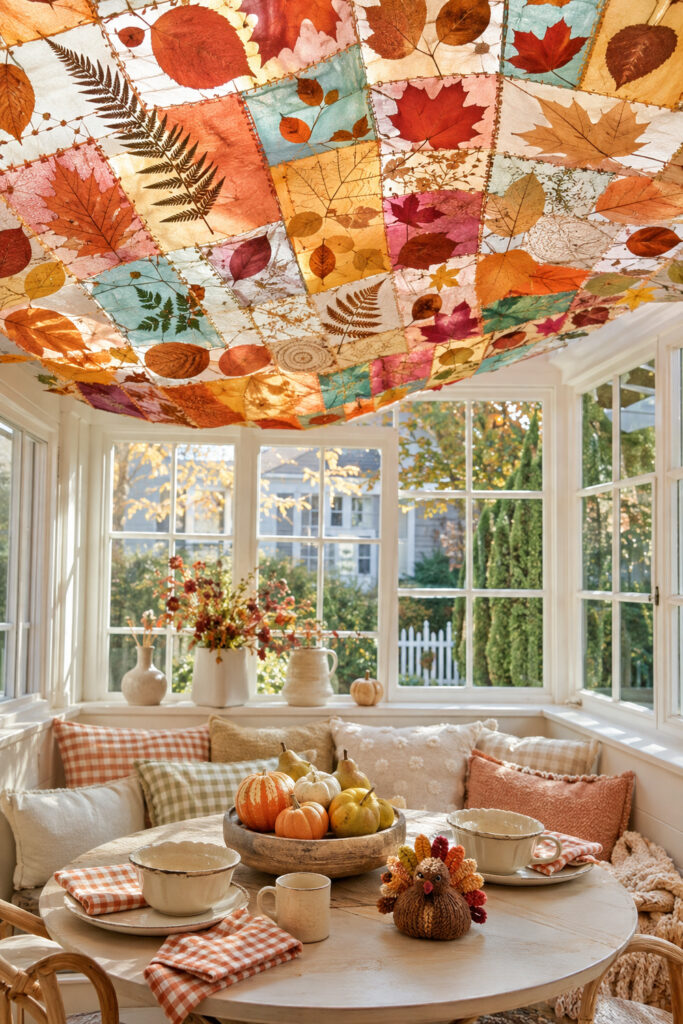
Suspended across the ceiling of a sun-filled breakfast nook, the canopy resembles an autumn quilt made from light. Translucent panels in coral, aqua, amber, cream, cranberry, and soft green are filled with pressed leaves, fern fronds, and delicate botanical impressions.
Below it, a round table is dressed simply with checked napkins, cream pottery, pumpkins, pears, and a tiny knitted turkey. The result feels handcrafted, nostalgic, and wonderfully welcoming.
You can capture the same atmosphere without reproducing every panel exactly. A smaller canopy, a suspended botanical banner, or a collection of leaf-filled panels over one portion of a room can establish a similar sense of wonder.
The inspiration image for this decorating idea was created with AI.
Why the Overhead Patchwork Is So Captivating
The canopy works because it changes both the color and quality of the light. Rather than hanging as an opaque textile, the thin panels allow sunshine to filter through them. Leaves and fern fronds become glowing silhouettes against softly tinted backgrounds.
Each square is different, but the repeated rectangular format gives the collection order. Rust stitching or decorative lacing outlines the panels and emphasizes the handmade patchwork effect.
The canopy also sags gently between its attachment points. That relaxed drape keeps it from looking like a rigid ceiling treatment and gives the nook the intimacy of a garden tent.
Although the design includes many colors, they are softened by the sunlight. Traditional orange, brown, and gold mingle with pink, faded aqua, pale green, and cream. Those less expected shades make the installation feel artistic rather than conventionally rustic.
Building the Look Around Botanical Panels
Translucent Handmade Paper or Lightweight Fabric
Thin mulberry paper, tissue-weight handmade paper, organza, or another sheer fabric can provide the glowing base for each panel. A mix of warm and cool shades will make the patchwork more interesting.
Cream and pale gold should appear frequently enough to keep the canopy light. Coral, cranberry, aqua, and orange can then be scattered across the arrangement as stronger accents.
Before committing to a large installation, hold a few materials against a sunny window. Some papers look richly textured in the package but become too opaque when light is placed behind them.
Pressed Autumn Leaves and Ferns
Large maple and oak shapes create the most dramatic silhouettes. Smaller leaves, airy stems, and fern fronds help fill the panels without making every section feel identical.
The leaves can be placed between two translucent layers or recreated with flat botanical cutouts. Natural leaves offer wonderful variation, but high-quality dried or artificial versions may be easier to use consistently.
Avoid loading every square with the same number of botanicals. One oversized leaf can fill a panel, while another might hold a loose branch with several smaller leaves.
Visible Stitches and Decorative Joining
The warm brown stitching is part of the design rather than something to conceal. Blanket stitches, cross stitches, lacing, or rustic twine can outline the individual sections.
For a decorative interpretation, make smaller finished panels first and then join them into rows. This is more manageable than working with one room-sized sheet.
If an overhead installation is not practical, hang several rows vertically in a sunny window. The light will still reveal the translucent colors and botanical silhouettes.
Keeping an Overhead Display Safe and Manageable
A canopy should be made only from lightweight materials and attached to secure supports appropriate for the room. It should never cover a smoke detector, air vent, ceiling fan, recessed light, pendant light, or electrical fixture.
Keep paper and fabric well away from candles, heaters, and other heat sources. A high window installation or wall-mounted version may be a better choice in a room where safe ceiling attachment is difficult.
A smaller canopy above the window seat can produce plenty of impact without covering the entire ceiling. Leaving open space around the edges will also keep the sunroom feeling airy.
Echoing the Canopy Colors Below
The built-in bench repeats the ceiling palette through a relaxed mixture of pillows. Orange-and-cream gingham relates to the warm panels, while sage checks connect with the green leaves and pears.
Textured ivory and coral pillows prevent the arrangement from becoming overly patterned. Their nubby, embroidered, and woven surfaces support the handmade feeling of the canopy.
The pillows do not form matching pairs. They are arranged like a collected assortment, which suits the charming, artistic character of the room.
A Simple Thanksgiving Table Beneath the Leaves
The table remains intentionally quiet. Its pale painted surface gives the eye a place to rest beneath the detailed ceiling.
A low weathered wooden bowl holds miniature pumpkins, gourds, and golden pears. The centerpiece repeats the canopy’s rounded leaf colors without interrupting conversation across the table.
Cream bowls, plates, cups, and a simple pitcher add an old-fashioned pottery texture. Orange gingham napkins connect the place settings with the window-seat pillow and introduce pattern at table level.
The small knitted turkey adds a playful Thanksgiving note. Because it is the only overtly themed figure on the table, it feels endearing rather than excessive.
Arranging a Similar Thanksgiving Nook
Begin with the overhead or window installation because it determines the room’s palette. Choose four or five principal colors and repeat them through leaves, panels, linens, and pillows.
Once the canopy is installed, keep the furniture and tableware neutral. Cream, weathered wood, pale paint, and natural rattan allow the botanical colors to remain prominent.
Build the centerpiece in a low, wide vessel. Mix pumpkins with pears or apples to create varied shapes, and select a few fruits in gold or green rather than using orange alone.
Add one small Thanksgiving character, such as a knitted or woven turkey, near the centerpiece. It should feel like a discovered detail, not the main attraction.
Complete the nook with branches or berry stems on the windowsill. Their upright form connects the tabletop with the canopy and brings the outdoor autumn view into the room.
Shop Translucent Paper for Botanical Panels
Look for lightweight handmade sheets that allow light to pass through and offer a softly fibrous texture.
Find Pressed Leaves and Fern Fronds
Mixed botanical sets make it easier to vary the scale, leaf type, and composition from one panel to the next.
Add Decorative Thread and Hanging Supplies
Warm brown embroidery thread, natural twine, and lightweight hanging hardware can help produce the visible patchwork structure.
Look for Orange and Sage Gingham Linens
Checked napkins and pillow covers repeat the homespun pattern without competing with the canopy.
Choose a Rustic Harvest Centerpiece Bowl
A shallow wooden vessel offers enough room for pumpkins, pears, and gourds while keeping the centerpiece comfortably below eye level.
Include One Handcrafted Thanksgiving Accent
A knitted, woven, or fabric turkey adds personality and reinforces the handmade nature of the room.
Final Styling Tip
Let the patchwork installation provide the detail and drama, then use quieter textures and repeated colors below it. That balance makes this imaginative Thanksgiving nook feel warm, usable, and inviting.