*This post may contain affiliate links for which I earn commissions.*
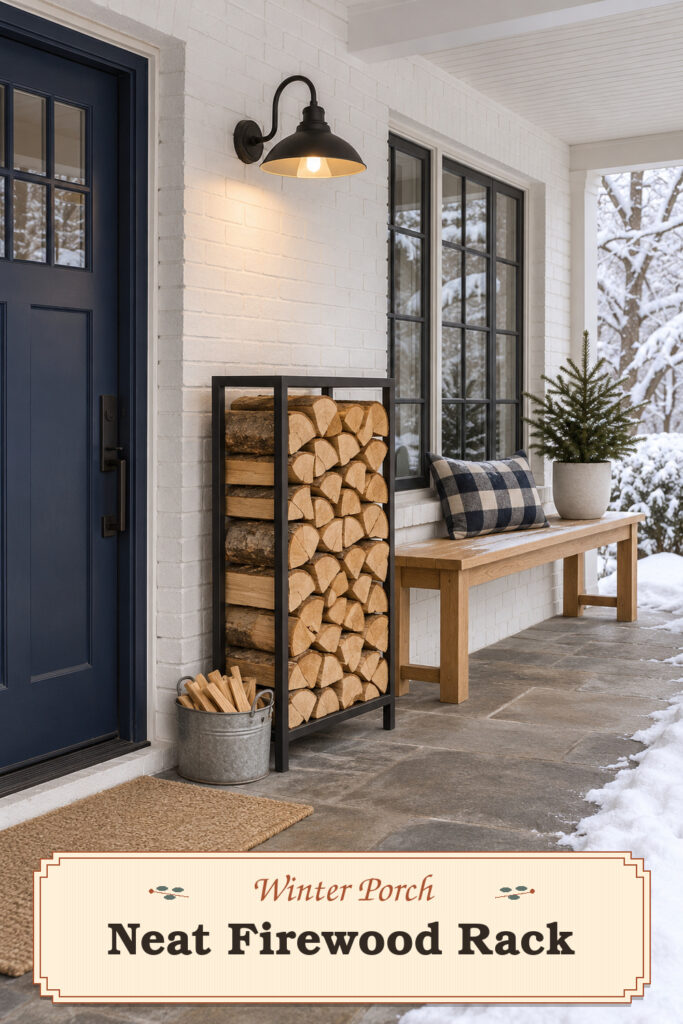
A firewood rack can do more for a winter porch than a second planter. This compact black rack sits between a navy door and an oak bench. The cut ends of the logs make a warm pattern against white brick, and a small metal pail keeps kindling close. Snow beyond the covered porch gives the whole setup a clear winter purpose.
This inspiration image was created with AI.
Give the wood a spot of its own
The rack has a simple rectangular frame. It keeps the ends of the logs in one plane, which is why the stack looks orderly even though the logs are different shapes. The dark metal relates to the door hardware and the wall light. There’s just enough space around it for the cut wood to stand out against the brick.
The bench is lower and wider than the rack, which keeps the two from fighting for attention. Its dark checked cushion repeats the navy and cream in a softer form. A small evergreen near the far end adds height without making the bench hard to use. The pail sits low at the other end, where it fits under the main line of sight.
The dry floor under the roof is another useful detail. It separates the seating and wood from the snow at the edge of the porch. To borrow the arrangement, work with the protected space you have. A short stack of wood and one useful seat can carry the same look on a smaller landing. Keep the door and the normal walking path easy to use before you decide where to put anything.
Choose pieces that fit a covered porch
A compact rack with a raised base
Look for a rack built for firewood, with a stated load rating and sturdy feet. A base that holds the lower logs above the floor leaves space to sweep underneath. Measure the rack from front to back, then consider how far the longest logs will project. A narrow frame still needs enough depth to support the pieces you plan to stack.
A metal pail or small kindling bin
A short pail can hold small dry sticks without taking up much room. Look for a wide bottom if the kindling tends to lean to one side. A handle is handy if you want to bring the whole pail inside. Tuck it toward the wall rather than right in front of the rack, where it could be hard to see in low light.
A slim bench with one checked cushion
Choose a seat with enough room for someone to sit down and pull on a boot. One long cushion gives the wood bench a clean line. A navy and cream check is easy to carry from the door to the seat. Pick an outdoor cover that suits the conditions on your porch, and bring it in if the spot gets damp or windswept.
A modest evergreen in a plain pot
The evergreen is a winter accent on its own. A short plant in a heavy pot will keep its shape near the bench without spreading into the path. Choose a pot appropriate for outdoor winter conditions, with drainage that can be managed where it sits. If the porch is narrow, place it just beyond the bench rather than directly in front of the seat.
Put the working pieces in place first
Walk from the steps to the door with your arms full, or imagine carrying a bag of groceries. Notice where you turn, where the door swings, and where you set things down while you find your keys. Keep all of those spaces clear. The rack works best in a spot you can approach from the front without stopping in the doorway.
Place the empty rack on a firm level surface and check that it sits flat. Follow the rack maker’s directions and any local guidance on where firewood may be stored. A porch setup works well as a small supply for near-term use when permitted. In wildfire-prone areas, local guidance may call for keeping all firewood away from the house. In that case, use the checked bench and evergreen for the porch and place the rack at the required distance. Where a small porch supply is allowed, bring only what fits within the rack. The wood should never stick into the walking path or lean against the door trim.
As you load the rack, use pieces close in length and turn the cut ends outward. Place larger pieces where they rest securely, and avoid filling the frame beyond its limit. Split wood will never form a perfectly smooth wall. That’s part of its texture. The finished stack looks good when the general front line is even and every log has a steady place.
Set the bench once the rack is in position. Keep a little room between them so a sleeve won’t catch on the wood when someone sits down. The cushion can echo the door color without matching it exactly. Add the evergreen after you’ve seen the porch with the door open. From the path, its green should lead the eye toward the bench instead of hiding it.
A bench can sit to either side of the rack. Try the side that leaves the kindling easy to reach without leaning over the cushion. If the porch is exposed on one end, move the cushion indoors between uses and let the wood of the bench repeat the split logs. A simple woven doormat can finish the path in the meantime. Keep it away from the rack so you can sweep chips and bark without pulling the mat out every time you use the wood.
Shop similar pieces with winter use in mind
Look for a short outdoor firewood rack
Check the dimensions and maximum load before choosing a size. A simple black finish fits a lot of outdoor hardware. Look for a shape you can access without reaching through rails or stepping around a planter.
Try a weather-suitable checked seat cushion
Measure the seat itself rather than the full length of the bench. Check how the cushion stays in place and whether its cover can be removed for cleaning. A smaller repeat of the check will show on a short seat.
Choose a galvanized pail with a usable handle
A low pail is easier to see than a very small tin and can keep long sticks from spreading over the floor. Look for a rolled rim and a sturdy handle. A plain dark bin will also work if you want the wood and cushion to carry most of the color.
Use a plain dark or stone-colored pot
A simple pot keeps the evergreen from adding another pattern. Choose a stable base and leave enough room for the branches to spread without touching the seat. If you already own a pot in a different finish, try it next to the door before replacing it.
Final Styling Tip
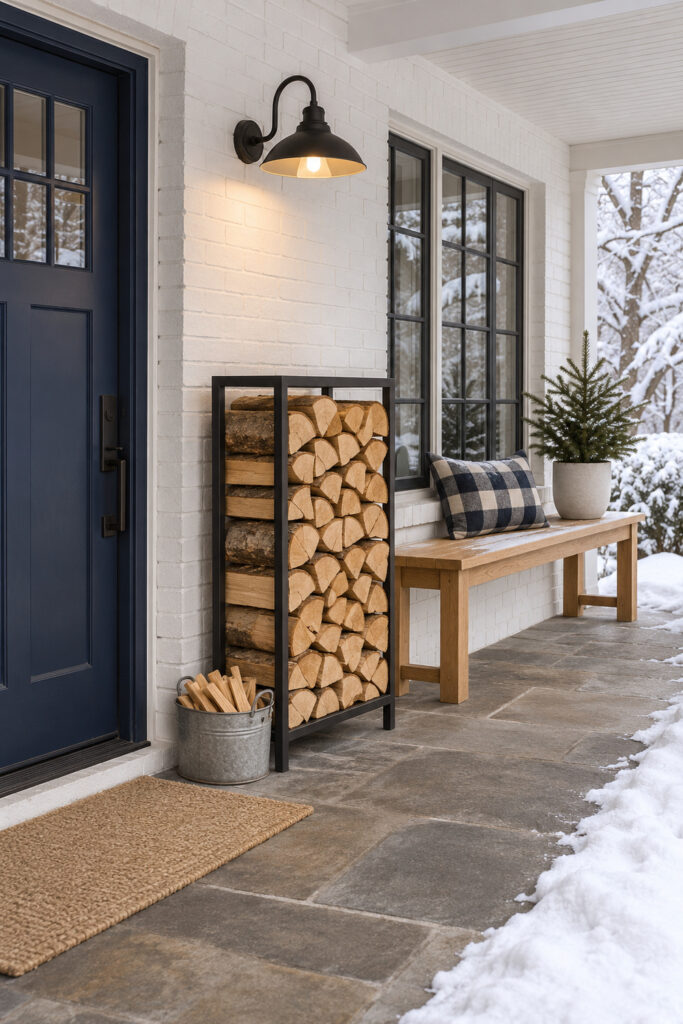
Look back at the porch from the first step. If the bench, logs, and door all have clear outlines, the setup is ready. Leave the open strip of floor plain so it stays the easiest route inside.