*This post may contain affiliate links for which I earn commissions.*
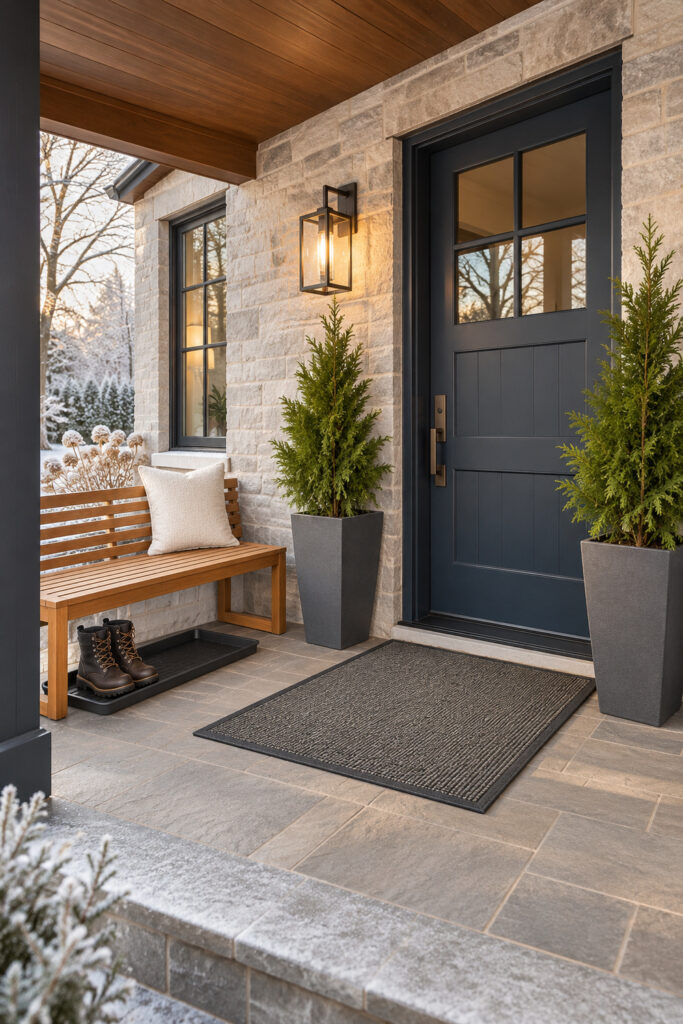
The navy door is the first thing you notice on this winter porch, but it’s the little bench and the boot tray that make the entrance useful. The tray sits underneath the bench, the mat lines up with the door and the two tall pots leave a clear approach. Snow in the yard makes the reason for that arrangement fairly obvious. There’s a place to pause before stepping inside. If your entrance gets a good deal of winter traffic, it’s worth starting with those few practical spots and fitting the greenery around them.
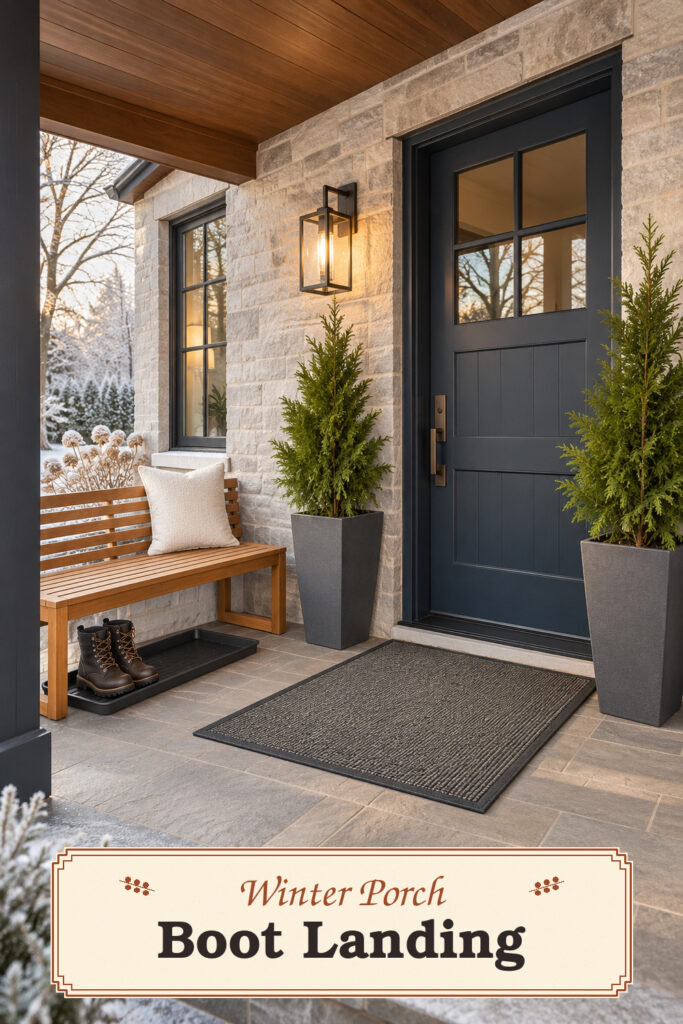
This image was created with AI as decorating inspiration. Similar pieces can help you recreate the look.
Look at how you come home before placing anything
The door has an open strip of floor in front of it. The planters sit back from that strip and the bench takes one side. You can see where the person who needs to sit would go and where another person could pass. At home, open the door all the way and walk out with something in both hands. Look at how much room you actually use. A bench that fits on paper can still sit too close to a handle or make it hard to turn.
Put a small mat down as a trial and see whether it follows the route you use. The dark mat in the picture sits square to the door. It’s wide enough to give the entrance some definition without reaching under the pots. Leave a little clear floor on either side so the mat has an edge you can see. Choose a mat suited to your porch surface and weather, and check that it lies flat and stays put.
If the porch is extremely shallow, use the mat and give up the bench. A boot tray can sit in a sheltered alcove nearby if it doesn’t block the path. A second mat just inside may also be useful when the outside area is exposed. The two-part idea still works when it’s divided across the threshold. Keep the place to stop out of the busiest route.
Use the bench as a landing place
The bench has a slatted seat and simple sides, with a pale cushion at one end. It leaves room for a person to sit down and put a bag beside them. A narrow outdoor bench can do the job in a small entrance. Look for a solid seat you’re comfortable using and measure its legs as well as its top. The legs can take up more room than the seat suggests, especially on benches with a splayed base.
Put the boot tray under the part of the bench where you can still reach it. Try sliding it out with one hand. There should be enough clearance for your boots to stand in it, and the bench supports shouldn’t catch its rim. If your boots are tall, put the tray right beside the bench instead. Keep it close to the wall and out of the door swing. A low lip helps hold drips, and a smooth interior makes it easier to wipe down once it’s empty.
If you already have a bench with solid sides, use the tray at one end and keep a space on top for a bag. One small outdoor-rated cushion can soften the cedar without taking over the seat. If the porch gets a lot of blowing rain or snow, keep the cushion indoors until you want it. The slats and the warm color of the bench will still look good on their own. Use the actual sheltered conditions rather than the picture to decide how much fabric belongs outside.
Make the planters frame the door
The two dark pots are taller than the seat, with loose evergreen tips that sit comfortably against the stone and navy. The pots bring the same dark tone to either side of the door and give the frame some height. Neither needs ornaments or ribbons to look right in winter. This is a good opportunity to leave the Christmas decorations packed away and let the plants and lantern do the work.
Place the taller pot where there’s room to walk around it. Use a plant and container suited to the site and the season. If a branch reaches across the doorway, rotate the container before trimming anything. Moving the whole pot back a little can give a better result than reshaping a branch you like. The porch will look more balanced if you can still see the base of the door frame.
On a small porch, one planter and a bench can balance one another. Put the plant at the end opposite the seat if the door and route allow it. Use a clean, upright shape such as cedar or another evergreen with a narrow profile. Against a dark door, a lighter pot can show up more clearly. With pale walls, graphite makes the foliage easy to see. Repeat the mat color once in the pot or the lantern rather than trying to match every finish.
See what the lantern does after dark
The wall lantern in the picture lights the area beside the door and gives the navy paint a warmer edge. Turn on your existing porch light and see what it reaches. Can you see the tray lip and the edge of the step clearly? If the light sits low beside the planter, check that branches aren’t in front of the glass. You may be able to move the pot a few inches and get a better view of both.
If the porch doesn’t have a fixture at the door, use a suitable outdoor light installed according to its instructions. Keep the floor free of cords and lanterns that someone could kick while taking off boots. A sheltered wall light does more for the approach than a collection of tiny lights tucked into greenery.
Look for pieces that will earn their space
A low-lipped boot tray
Choose a tray large enough for the boots you actually wear and shallow enough to slide out easily. A dark finish echoes the mat without making it hard to see where the edge begins.
A simple slatted bench
Look for a seat you can use comfortably with wet boots and a clear space underneath. Measure the porch with the door open before choosing a length.
Tall graphite planters
Check their footprint and stability as well as the height. A slightly tapered shape gives the door a frame without filling too much of the floor.
Test the porch in the order you’ll use it
Approach the door from outside, sit on the bench, slide the tray out and open the door. Put everything back and repeat it after dark. Check that the mat and tray edges are easy to see. If something gets in the way, shift the smaller item first. It’s easier to move the tray than the planters and it may be all the adjustment you need.
Final Styling Tip
Line up the front edge of the tray just behind the front of the bench. The boots will still be easy to reach, and the route to the door stays clear.