*This post may contain affiliate links for which I earn commissions.*
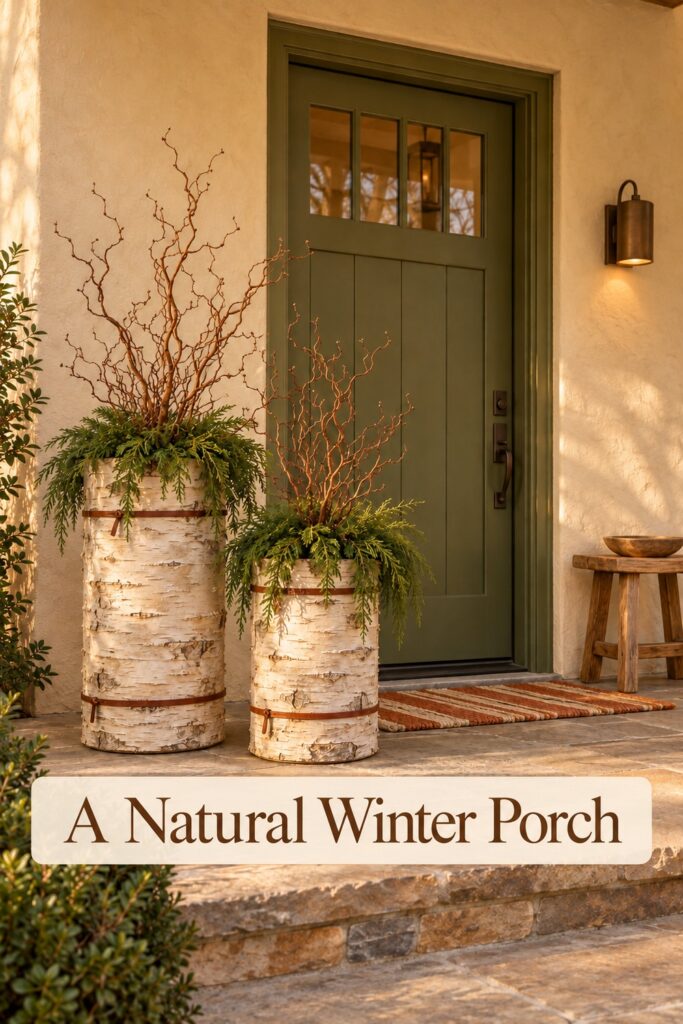
A pair of pale bark planters can give a winter porch plenty of interest before you add a single ornament. Here, long bare branches rise above loose evergreen collars, while narrow brown bands pick up the rust stripes in the doormat. The olive door makes a quiet background for all that texture.
The useful idea is the contrast: solid cylinders below, airy branches above, and greenery softening the join. You can borrow that balance for a covered entry without recreating the whole porch.
This inspiration image was created with AI.
What Makes This Winter Porch Work
The two containers belong together, but their different heights keep them from looking like a matching pair of bins. Their pale surfaces also stand apart from the dark door. That contrast makes the arrangement easy to read from the walk, even though the colors are fairly restrained.
Notice where the green sits. Most of it gathers right at the rims and drapes down over the bark. The branches have room to show their twists instead of disappearing into a tall thicket of foliage. If you enjoy natural materials, this is a nice way to use several without letting them fight for attention.
The rust accents are small and low. They warm up the cream bark and repeat the brown of the branches, while the olive door connects with the evergreen foliage. You could keep a different door color and still use the same principle: pale containers, one green texture, and a modest warm accent near the ground.
Find Birch Style Planter Covers
Browse current Amazon options that can help you recreate this look.
Browse Birch Style Planter Covers on Amazon →As an Amazon Associate I earn from qualifying purchases.
Key Pieces to Recreate the Look
Bark Covered Containers
Look for substantial cylinders with a pale, irregular bark pattern. The markings matter more than an exact white shade. Cream, gray brown, and small darker patches give the surface its character; a perfectly smooth white pot would create a cleaner but less woodsy result.
A plain planter with a separate decorative cover can stand in for the imagined containers. Treat the cover as decoration rather than the vessel that holds damp material. An inner pot keeps wet greenery and any supporting material away from delicate outer finishes. Check that the assembled pieces remain steady before adding branches.
Evergreen Foliage with a Loose Drape
Cedar style sprays suit this image because their small flat leaves fall softly over the sides. A few different lengths make a more relaxed edge than a clipped ring. You can also use another flexible evergreen with a similar trailing habit, provided its scale suits your pots.
Fresh cut foliage and artificial sprays need different care, so choose based on your porch conditions and how often you want to refresh the display. If using artificial stems outdoors, check their stated outdoor suitability. A sheltered doorway still gets changes in temperature and may receive windblown rain.
Twisting Bare Branches
The branches give the arrangement its height without adding much visual weight. Choose several with interesting bends and open spaces between the tips. Straight stems can work, but a bundle of equally straight sticks would lose the wandering shape that makes this particular porch appealing.
Let the tallest branch establish the outline, then add shorter pieces that spread to either side. You want to see the door through parts of the arrangement. Save a few branches for later rather than filling every gap at the start. Empty space is doing useful work here.
Slim Brown Bands and a Striped Mat
The narrow brown bands break up the long pale cylinders. Similar brown ties or decorative straps could echo that effect on suitable covers, but they shouldn’t be relied on to hold a heavy container together. Their role is visual, and they look best when kept slim enough to leave the bark visible.
The striped mat brings those brown notes down to the doorstep. Reuse a mat you already like if its colors work with the bark and door. A plain rust or natural fiber style could make the same connection without duplicating the stripes.
How to Style the Pair at Home
Start with placement before filling either pot. Open the door fully and walk through carrying a grocery bag. That simple test tells you more about usable space than a lovely arrangement viewed from the yard. Keep both containers clear of the door swing, handles, steps, and the normal walking route.
For an entry like this, grouping the pots on one side creates a clear focal point and leaves the other side quiet. Stagger them so the shorter one sits slightly forward. Avoid lining their rims up precisely; the difference in height is part of the appeal. On a narrow landing, use one generous container rather than squeezing in a second.
Give the containers stable internal support appropriate to their weight and setting. Tall branches can catch wind, so don’t let the visible bark cover fool you into thinking a light arrangement will stay put. Position the support inside the actual pot and check stability again after the branches are in place.
Arrange the branches while you can still see their bases. Step back to the approach path and look for a broad, uneven outline that feels intentional. If two large branches cross awkwardly in the middle, rotate one before adding more. A little adjustment can do more than another handful of stems.
Then tuck foliage around the rim to hide the supporting material. Let some sprays hang lower than others, keeping the front edge softer than the upper branch line. Leave enough bark exposed to show why you chose these containers. If the greenery covers most of the cylinder, shorten or lift a few sprays.
Check the display in the light you actually use the entry. A porch sconce can bring out the bark markings, but branches shouldn’t touch the fixture or cover its light. Keep any electrical components and drainage areas accessible. The little stool in the image is a supporting detail; skip it if it makes the landing feel crowded.
Shop Similar Pieces
Look for Birch Style Planter Covers
Check whether a listing describes a working planter, a cachepot, or a decorative sleeve. That distinction affects drainage and what you can place inside. Choose a proportion that leaves enough visible side area for the bark pattern and bands to read clearly.
Shop Similar Cedar Sprays
Look at the stem shape as well as the leaf color. Flexible, branching sprays will drape more naturally than stiff upright picks. Compare the usable foliage length with your container rim so you don’t end up hiding the entire pot.
Add Curly Branches to Recreate the Outline
Favor varied lengths and believable branching over a large identical bundle. Check the overall width of the finished stems against the space beside your door. Natural or imitation branches can supply the shape, so choose according to upkeep and exposure.
Look for Rust and Cream Door Mats
Pick a mat designed for your surface and entry conditions, with an edge that lies flat. A small amount of rust can repeat the brown branch color without making the whole doorway orange. Keep the pattern simple enough to support the bark rather than compete with it.
Final Styling Tip
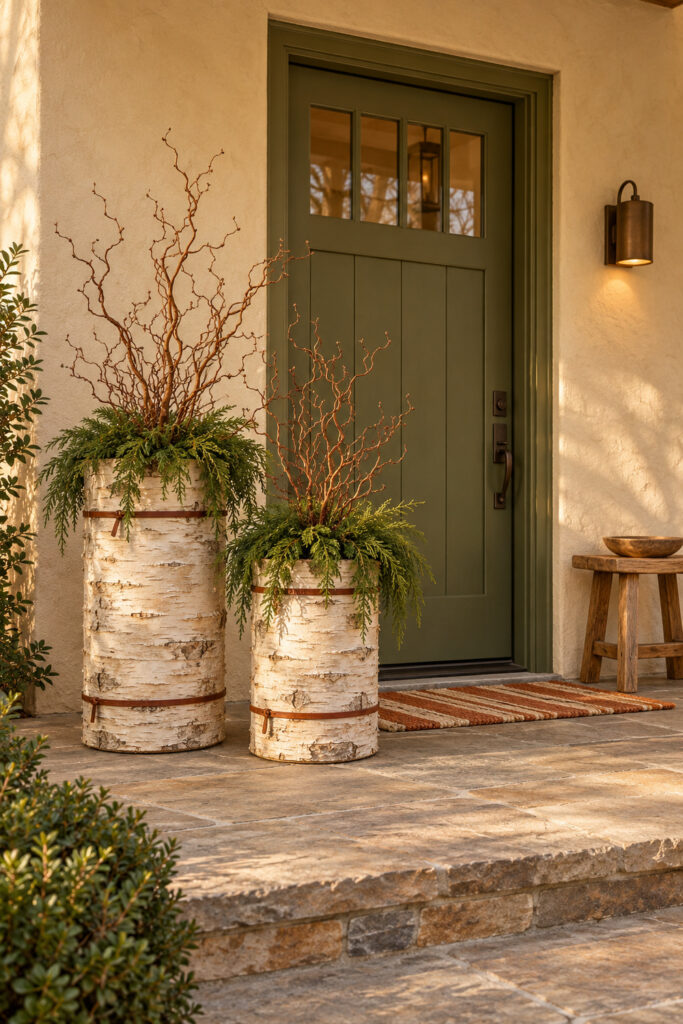
Take one photograph from the walkway before calling it finished. If you notice the foliage first and the bark second, lift a few sprays. Those pale cylinders and open branch shapes are the reason this porch feels different.