*This post may contain affiliate links for which I earn commissions.*
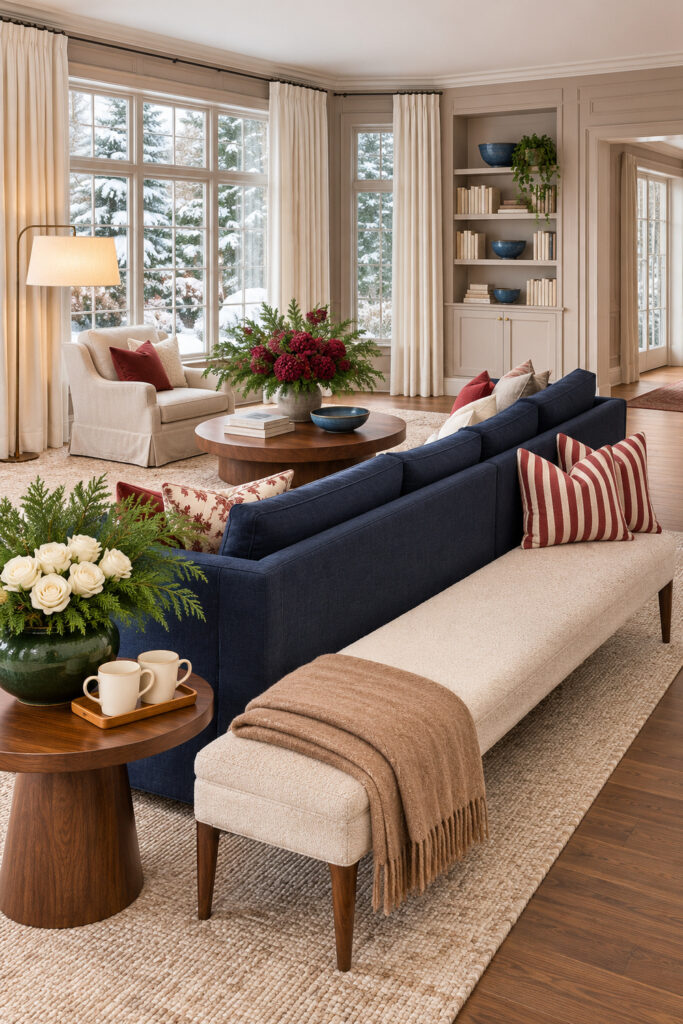
An ivory bench makes a second seating edge behind the navy sofa in this winter family room. Its long, low shape follows the sofa back, with striped cushions at one end and a folded camel throw at the other. The clear middle invites someone to sit without rearranging the whole display.
That placement is the idea to borrow. A bench can give an open room a useful place to pause on the outward side of the main seating group. Here, a side table with winter flowers and mugs connects the two areas, while snowy windows, full curtains, and textured fabrics make the room feel settled for the season.

This image was generated with AI as decorating inspiration. Similar pieces can help you recreate the effect.
Use the Sofa Back as a Starting Line
The navy sofa floats in the room, facing the coffee table and armchair. The bench sits parallel to its back, facing the other way. That makes the room useful from two directions rather than treating the sofa’s rear edge as leftover space.
Look at the way people already move through your room. A bench belongs here only if the outward side has room for someone to sit, stand, and walk past. Mark its proposed footprint on the floor before moving furniture. Include the space a seated person’s feet will occupy, not just the narrow rectangle of upholstery.
Choose a Bench That Reads as a Seat
The ivory bench has a padded top, clean edges, and slender wood legs. Its low height leaves the navy sofa back visible above it. The two pieces stay distinct because their colors and proportions differ, even though they run along the same line.
Choose a bench designed for seating, with a stated capacity and a stable base. A narrow upholstered decorative surface isn’t automatically suitable for a guest. Check the actual dimensions and construction, then compare its height with the sofa back and the rest of your room.
Keep the pieces independent. Leave enough separation to avoid rubbing upholstery and to allow cleaning, while keeping the arrangement from looking like two unrelated islands. The right gap depends on the furniture and room. Test it with the actual pieces rather than assuming a photograph provides a measurement.
Leave a Broad Clear Center
The bench’s cushions are grouped at one end, and the folded throw occupies the other. The open center is what makes the arrangement feel available for use. Covering the entire seat with pillows would turn it into another display shelf.
Use just enough cushions to make the end comfortable. In the image, cranberry and ivory stripes give the pale upholstery a stronger edge and repeat the deeper red accents across the room. Keep the cushion backs against the sofa side without wedging them into a gap where they distort the bench’s outline.
Fold the camel throw to a manageable width and check its hanging ends. The fabric should stay clear of the walking route and bench feet. You can take it off for a guest to use, then fold it back afterward. It earns its place by being useful as well as soft.
Put Flowers Beside the Seating
The round side table holds a full green bowl of ivory roses and cedar branches. Its low rounded form softens the straight sofa and bench lines. A small tray with two cream mugs occupies a separate area on the same surface.
Choose the flower vessel around the available tabletop. Keep its base fully supported and protect the wood beneath it. Direct the fuller branches toward the room rather than over the bench seat or mug handles. Water and foliage should stay contained, with enough space to grasp a cup without brushing the flowers.
The side table’s position is useful to check from both seats. A guest on the bench may need a different landing spot from someone on the sofa. If one table can’t serve both comfortably, keep the flower arrangement there and use a smaller separate drink table at the other end. Avoid creating a long reach across the sofa arm.
Connect the Two Sides with Color
Navy gives the main sofa a clear outline against the ivory bench and pale room. Cranberry cushions repeat across the bench, sofa, and armchair, while camel and cream fabrics keep the room warm. The colors travel through different patterns rather than appearing as a matching set.
Keep one larger upholstered piece fairly plain if the bench cushions have a strong stripe. A woven sofa fabric shows texture without competing with the pattern. On the opposite side, the cream chair can carry a small solid red cushion and a quieter woven companion.
The broad pale rug joins the furniture at floor level. Check its edges and thickness around the bench legs, sofa feet, and walking routes. A bench placed partly on and partly off a thick rug may sit unevenly, so choose a consistent supporting surface for all its legs.
Let the Winter View Do Some Decorating
The windows show snow and evergreens, with long ivory curtains framing the glass. A shaded floor lamp adds warm light near the armchair. Together, those details give the room a winter setting without a tree, ornaments, or a holiday greeting.
Keep the curtains clear of the bench and any moving furniture. If your room has a mild winter view, the wool throw, deep greenery, and warm lamp can still carry the seasonal mood. You can use existing window treatments rather than adding more fabric simply because the inspiration is generous.
The shelves hold orderly books and blue ceramic bowls. Those quieter background pieces leave the large winter arrangements visible. Keep the shelves practical for your own household and repeat a blue or green accent where it helps connect them to the seating.
Try the Layout in a Smaller Room
A shorter bench can sit behind part of a sofa if its placement looks deliberate and leaves a clear route. Align it with a useful section of the back rather than centering it automatically. Place the cushion group at the end nearest a side table, then leave the rest open.
If there isn’t room to sit behind the sofa, use the fabric idea on a bench against another wall. Keep the pale upholstery, striped cushions, and folded throw, but choose a location people can approach comfortably. Preserving the invitation to sit matters more than forcing the exact layout.
A different sofa color can work too. Choose enough contrast for the bench to remain visible, then repeat one accent between both sides. A dark brown sofa with an ivory bench and rust stripes could keep the same warm relationship.
Choose the Seating Before the Accessories
Start with the bench’s intended use and the room’s clear routes. Then select fabrics and a nearby table that suit the layout.
Look for a Long Upholstered Bench
Confirm that it is intended for seating and check its actual height and capacity. Visible wood legs can keep a long pale piece looking light.
Shop Similar Cranberry Striped Cushions
A broad stripe shows clearly against plain upholstery. Choose a comfortable size that leaves a useful section of the bench empty.
Look for a Camel Wool Throw
A substantial soft weave adds warmth beside ivory and navy. Check the care needs and folded size before choosing a long fringed version.
Walk Around the Finished Group
Approach the bench from both ends, sit down, and stand up again. Check the space for feet, the rug edges, and the reach to a mug table. Look over the sofa toward the main chairs to see whether the two areas still feel connected. Move the accessories only after those practical positions work.
Final Styling Tip
Keep the bench’s center open even when you add another winter layer elsewhere. That clear stretch of ivory is what makes this side of the room feel ready for company.