*This post may contain affiliate links for which I earn commissions.*
White bulbs can make a winter room feel fresh without asking it to pretend that spring has arrived. This sunroom keeps the cold garden in view, then answers it with pots of living flowers, a quilted bench, and a little tea table. The plants are the feature, while the fabrics make the room comfortable enough to enjoy them.
The arrangement is generous but straightforward. Taller stems sit near the top of a wooden stand, shorter plants fill the lower shelves, and cream pots mix with terracotta. Blue checks and a folded cranberry blanket repeat the warmth without adding a Christmas tree or another box of seasonal ornaments.
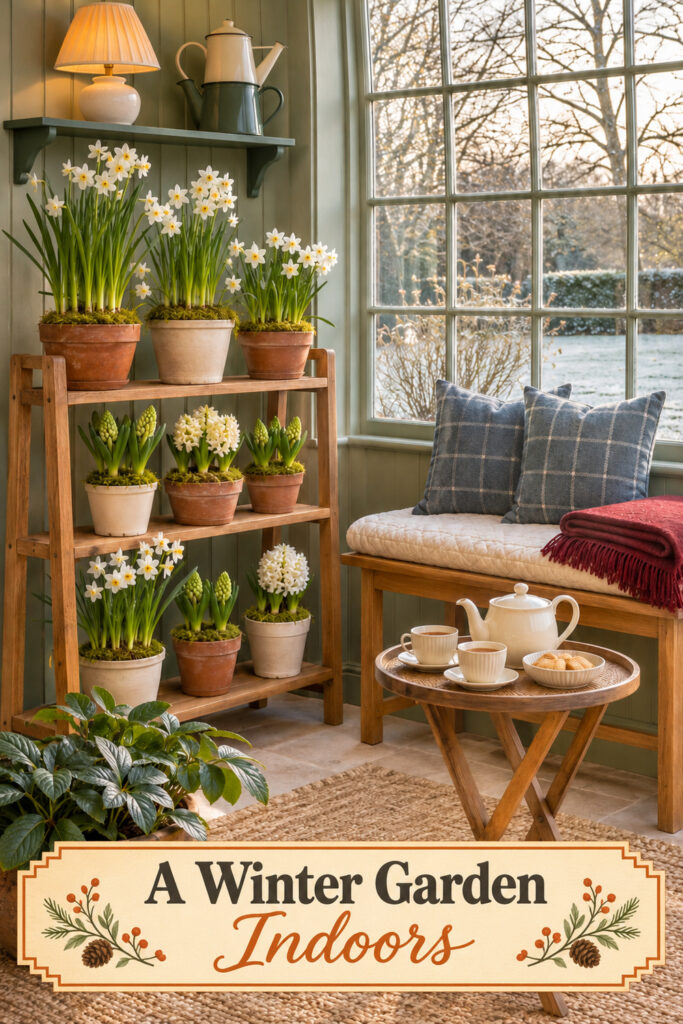
This image was created with AI as decorating inspiration. Similar plants, containers, and textiles can recreate the setting.
Treat the stand as a little indoor garden
The grouped pots give the plants more presence than a few scattered flowers on separate windowsills. Different stages of growth make the display interesting, with open white blooms beside greener, shorter shoots. The stand gives that variety a clear structure.
Choose the plants first, based on the light and conditions your room can provide. The image suggests narcissus and hyacinths, but their appearance isn’t a care plan. Follow the requirements for the actual bulbs or potted plants you select, including their watering and temperature needs.
Find tiered plant stands
Browse current Amazon options that can help you recreate this look.
Browse tiered plant stands on Amazon →As an Amazon Associate I earn from qualifying purchases.
You can buy plants already growing rather than starting bulbs yourself. That makes this a decorating arrangement with living material, not a promise about forcing flowers to bloom on a particular date. Let the plants’ condition determine when they belong in the display.
Give every pot a stable place
The wood stand has broad shelves and a modest height, which lets the pots sit fully on their supports. Its simple frame stays visible between the plants. That open structure suits a window area where you want plenty of light and a clear view.
Check the stand’s load rating with the weight of watered pots in mind. A shelf that feels sturdy beneath an empty planter may behave differently with soil, water, and several containers. Place the heavier pots where the maker recommends, and keep the unit stable on your actual floor.
Use saucers or watertight outer containers to protect the wood. Water plants away from the display when practical, then let excess moisture drain before returning them. Decorative moss can finish the surface, but it shouldn’t hide standing water or make plant care difficult.
Leave small gaps between pots so you can lift one without disturbing its neighbors. The arrangement will change as the plants grow. A little space now gives leaves and stems somewhere to go without turning the shelves into a tight wall of greenery.
Mix containers without losing the connection
Terracotta brings a warm, earthy color into the pale room, while cream pots link the plants with the bench quilt and tea service. The containers vary, but their quiet finishes let the flowers remain the main detail.
Start with a small family of colors rather than matching every pot. A few plain cream containers can settle a group of different clay pots. Keep highly patterned vessels to a minimum, especially when the stand already holds several plant varieties.
Try the pots on the stand before arranging their plants. A broader container can anchor one end of a shelf, balanced by a slightly taller plant at the other. Keep the overall weight sensible rather than chasing a symmetrical arrangement that makes lifting or watering awkward.
If a nursery pot is useful but unattractive, use an appropriate outer container instead of repotting solely for the display. Check that the two fit together comfortably. The outer pot should support the plant without trapping unwanted moisture where you can’t see it.
Make the bench an invitation to sit
The ivory quilt gives the plain bench a thick, soft layer. Slate-blue checked cushions sit behind it, and the cranberry throw stays folded at the end. The colors are comforting without covering the room in red and green holiday signals.
Use a cushion or folded quilt that fits the bench safely. Loose fabric should not slide over the front edge whenever someone sits. If the seat is narrow, choose a thinner layer and fewer back cushions so the bench remains comfortable to use.
The checked pillows repeat the window’s straight lines in a softer form. You can get a similar connection with a small plaid or stripe. Pick one pattern to lead and let the quilt and blanket stay quieter beside it.
Keep a place for the blanket when it is being used. The end of the bench works in the image because it isn’t needed for a second seat. A nearby basket could take the folded throw if your bench needs its full width for people.
Let the tea table stay separate
A small round table gives the seating a purpose without competing with the plant stand. Cream cups and a teapot look at home beside the pottery, while a shallow biscuit bowl keeps the serving group contained.
Choose a stable table at a useful height for the bench. Check its legs on the rug and floor, particularly if it folds. Leave enough room to stand up without catching it with a knee or pushing it toward the plant stand.
Use the tray to limit the serving arrangement. Once the teapot, cups, and small dish fit comfortably, stop adding pieces. A low vase would be pretty, but the room already has a garden beside the seat.
The lamp above the plants adds warmth later in the day. Keep any electrical fixture and cord safely separated from watering areas and damp foliage. Use the room’s proper lighting rather than threading decorative lights through plants that need regular attention.
Fit the garden to a different room
A two-tier stand can preserve the idea in a smaller window area. Choose a handful of healthy plants at different stages and repeat the cream-and-clay containers. You don’t need to shrink every pot into a miniature version of the picture.
If you haven’t got a bench, position a comfortable chair near the plants with a folded quilt or wool throw. Keep its back clear of leaves and its feet out of the watering route. The relationship between living greenery and a warm place to sit is the part to retain.
For a room without a frosty outdoor view, use the same tactile fabrics and warm lamp. Winter comfort can come from how the room is used, not only from snow through the glass. Choose plants that genuinely suit the available daylight rather than selecting them for a seasonal photograph alone.
Choose pieces that help with care
The best decorative choices here also make the arrangement easier to maintain. Think about lifting, watering, and moving the pots before adding more plants.
Look for tiered plant stands
Check shelf depth, load guidance, and stability. A simple frame leaves room for plants to grow while showing the different pot finishes.
Shop similar cream cachepots
Choose sizes that fit your growing pots with room for appropriate drainage arrangements. A protected base is especially useful on wooden shelves.
Look for slate-blue checked cushions
Compare the cushion depth with the usable bench seat. Keep the pattern soft enough to sit comfortably beside the fine leaves and white flowers.
Look at the room in everyday use
Sit on the bench with a cup, then get up and lift a pot from the stand. Adjust anything that makes either action awkward. Check the flowers from the room entrance and turn a pot slightly if its best growth is hidden, while still respecting its light needs.
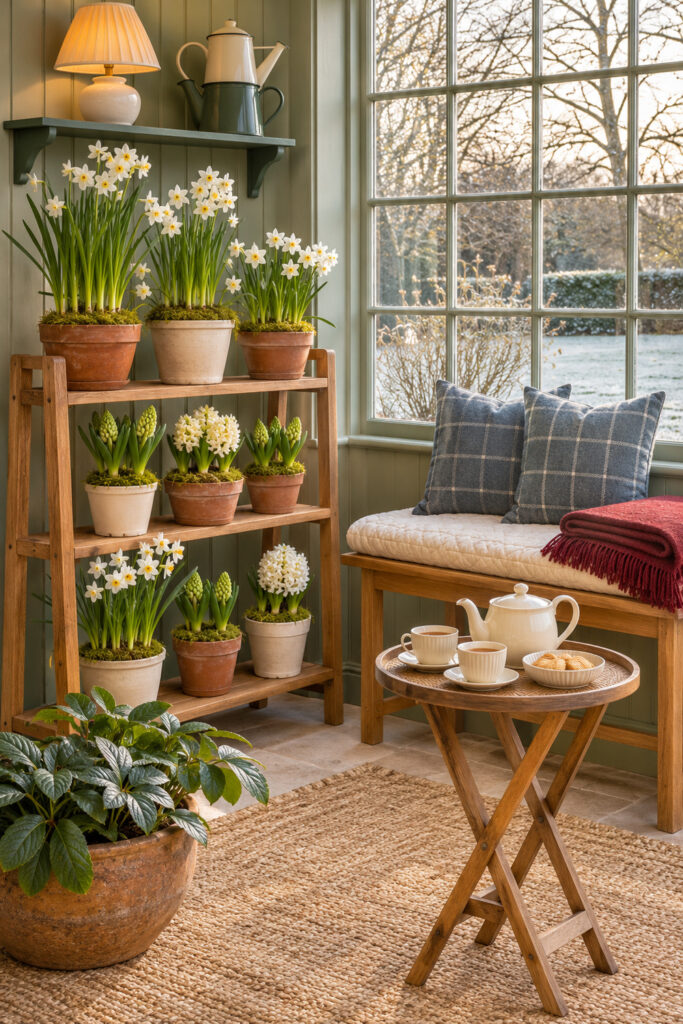
Final Styling Tip
Repeat cream in a pot, the bench quilt, and the tea service. It quietly joins the garden and seating without asking every container to match.