*This post may contain affiliate links for which I earn commissions.*
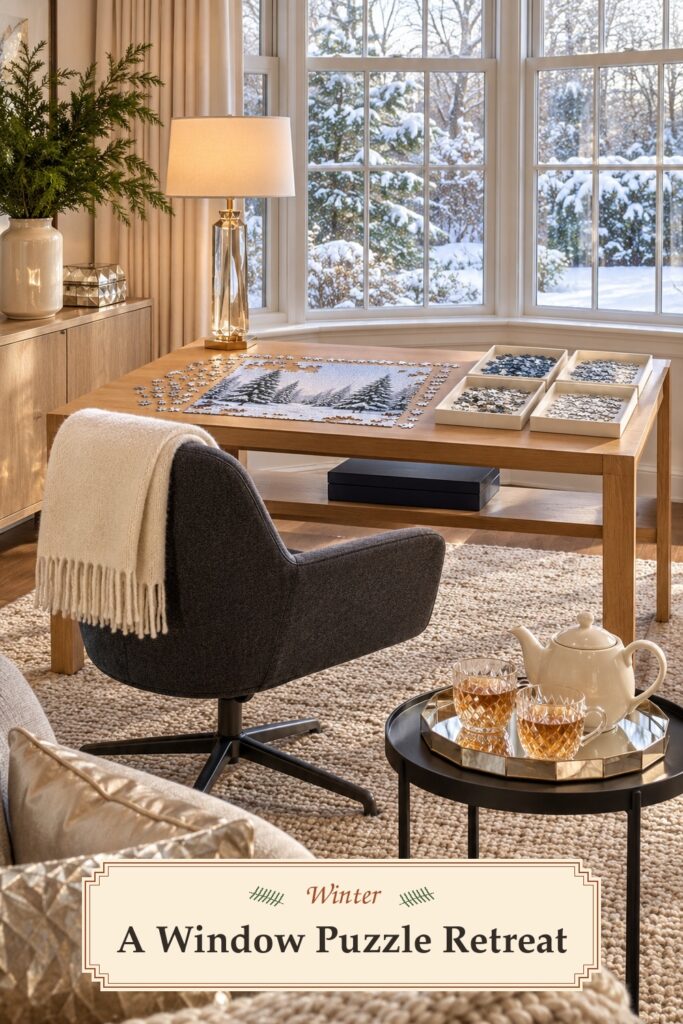
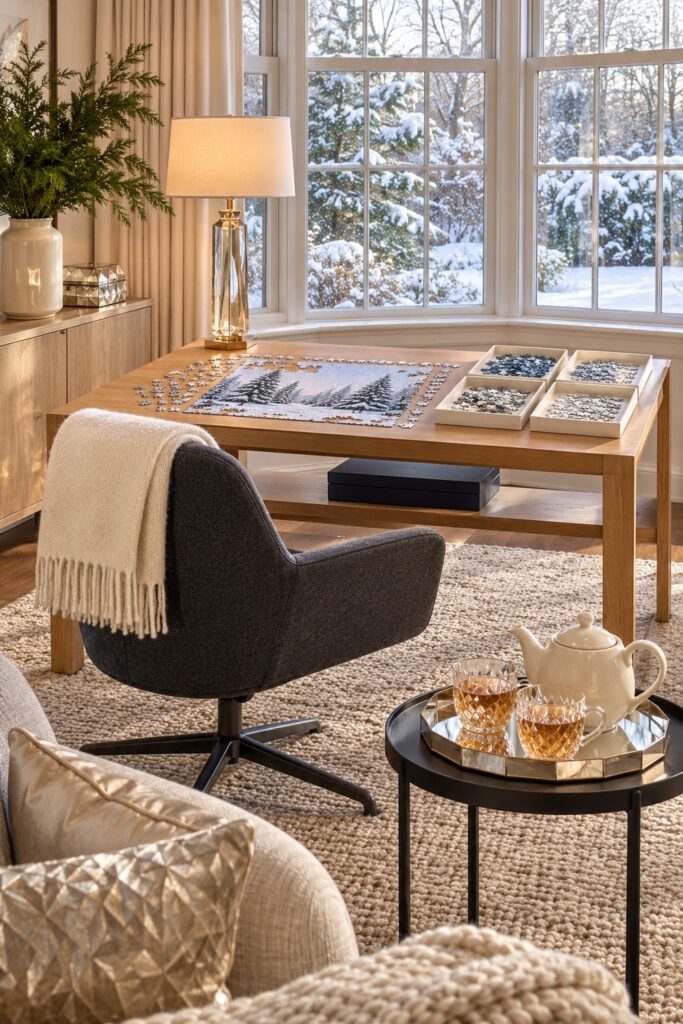
A partly finished puzzle sits on a slim table beside the snowy window. Shallow trays keep the loose pieces grouped at one side, and a separate tea table gives mugs a place beyond the puzzle surface. Cream wool, dark upholstery and a small mirrored tray make the nook feel comfortable enough to leave in place through winter. The useful pieces are also what give the corner its shape.
The inspiration image was created with AI.
Make the Working Surface the Focal Point
The puzzle provides a quiet pattern in the middle of the table. Its colors relate to the snowy view, so the scene feels seasonal without a shelf full of winter ornaments. A group of pale sorting trays gives the loose pieces a clear boundary. You can see what belongs to the activity and what belongs elsewhere in the room.
The trays are small enough to move around one at a time. Grouping them at the side leaves a larger clear patch for the picture. That arrangement is useful even if your table is used for something else between sessions. You can lift the trays away and leave the main puzzle on a suitable board.
Find Shallow Puzzle Sorting Trays
Browse current Amazon options that can help you recreate this look.
Browse Shallow Puzzle Sorting Trays on Amazon →As an Amazon Associate I earn from qualifying purchases.
The tea service sits on a second table. The mirrored tray adds a little champagne gleam beside the soft wool and matte upholstery. Keeping that reflective group separate also makes it easier to protect the puzzle from a spill. Two surfaces give you more freedom than trying to fit every comfort into one small corner.
Key Pieces for the Puzzle Corner
A Table at a Comfortable Working Height
Choose a surface with room for your puzzle and a little space around the edges. Check the finished puzzle dimensions before planning the table. A compact tabletop can look generous until the loose pieces and box lid arrive.
Shallow Sorting Trays
Low trays let you see the pieces without reaching into deep bins. Similar sizes are easy to arrange in a neat group and can be stacked for storage if they are designed for it. A pale interior helps darker pieces show.
A Supportive Chair and a Wool Layer
The chair should pull close enough that you can reach the center of the work. A folded throw over the back can add warmth without filling the seat. If you use a cushion, check that it does not push you too far forward or make the chair height awkward.
A Separate Tea Table
A small stable table can hold a tray, teapot and glasses beside the chair. Leave enough room to put a cup down without stretching over the puzzle. A low mirrored tray connects the clear glasses to the warmer metal details in the lamp.
Arrange the Corner for a Real Session
Set the table and chair in place before adding the soft layers. Sit down and reach toward the far edge of the puzzle area. If you have to lean heavily on the table, a narrower surface or a movable puzzle board may work better. The nook should feel easy to use for a little while, not just look good from the doorway.
Use the window light when it helps you see the pieces. A side position can reduce glare across a glossy puzzle surface. Try turning the table slightly before changing the whole room arrangement. Check the view in the morning and later in the day if the window gets strong sun.
Put the sorting trays on the side nearest your dominant hand or wherever you naturally place pieces as you work. Keep one tray available for a group you are currently using. The others can sit farther back, with their front edges lined up. You will still have a tidy view when you stop for the evening.
A low storage box beneath or beside the table can hold the puzzle box, spare pieces and a folded cloth. Keep it where the chair can move without catching it. If you use a shelf under the table, check that your knees still have enough room.
Place the tea table outside the chair’s pull-back space. Set the tray down empty, then add the teapot and cups. You should be able to lift the teapot without reaching over a cup or brushing the chair arm. A small saucer for a spoon can stay on the tray, leaving the rest of the table clear.
Add the lamp after you test the daylight. A shaded light near the chair can make the corner welcoming after dark, but you still need enough useful light to see the puzzle colors. Move the lamp until your hands do not cast a strong shadow across the area where you work.
The evergreen vase belongs on a nearby cabinet or ledge where it cannot lean into the puzzle. Its dark green gives the room a winter color and relates to the view outside. A plain cream vessel keeps the branches as the detail, with a little open space around their tips.
For a shared nook, keep a second chair easy to bring over. You can move the sorting trays farther to the side and put the tea on a larger nearby table. The little mirrored tray can still hold the cups together without taking over the puzzle area.
A little open space around the table makes the nook easier to return to. Keep the floor beside the chair clear of spare boxes and let the storage shelf hold the things you use less often. The wool rug can soften the area, but check that the chair moves without catching its edge.
If the puzzle has a glossy finish, the reflected light from the tea tray may be visible on its surface. Move the tray a few inches or turn the side table until the brightest reflection falls away from the working area. You can keep the champagne shine in the nook while making the pieces easier to see. This is a useful check to make with the lamp on after dark.
Shop Similar Pieces
Look for a Stable Slim Table
Measure the finished puzzle and allow room for a few trays. Check the leg position as well as the tabletop size so the chair can pull close without an awkward crossbar in the way.
Choose Low Puzzle Sorting Trays
Look for shallow sides and an interior that makes the pieces easy to see. If you want to stack them, check that they nest or close without pressing on the pieces inside.
Add a Comfortable Upright Chair
A chair used for a puzzle needs a useful sitting height and enough support for leaning slightly forward. A deep lounge chair may feel soft but make the tabletop hard to reach.
Find a Small Mirrored Serving Tray
A quiet champagne edge can give the tea service a little shine. Choose a rigid base and a size that leaves room to grasp both sides when you move it.
Use a Plain Wool Throw
A folded cream throw adds texture at the chair back. Keep it short enough to clear the floor and easy to lift without dragging across the table.
Pick a Lamp With Useful Reach
A shaded lamp should put light where you need it without crowding the tabletop. Test the switch position from the chair and keep the cord clear of its legs and the walking route.
Final Styling Tip
Leave the next group of puzzle pieces in one shallow tray before you stop. The nook will look orderly, and the place to begin again will be waiting when you return.