*This post may contain affiliate links for which I earn commissions.*
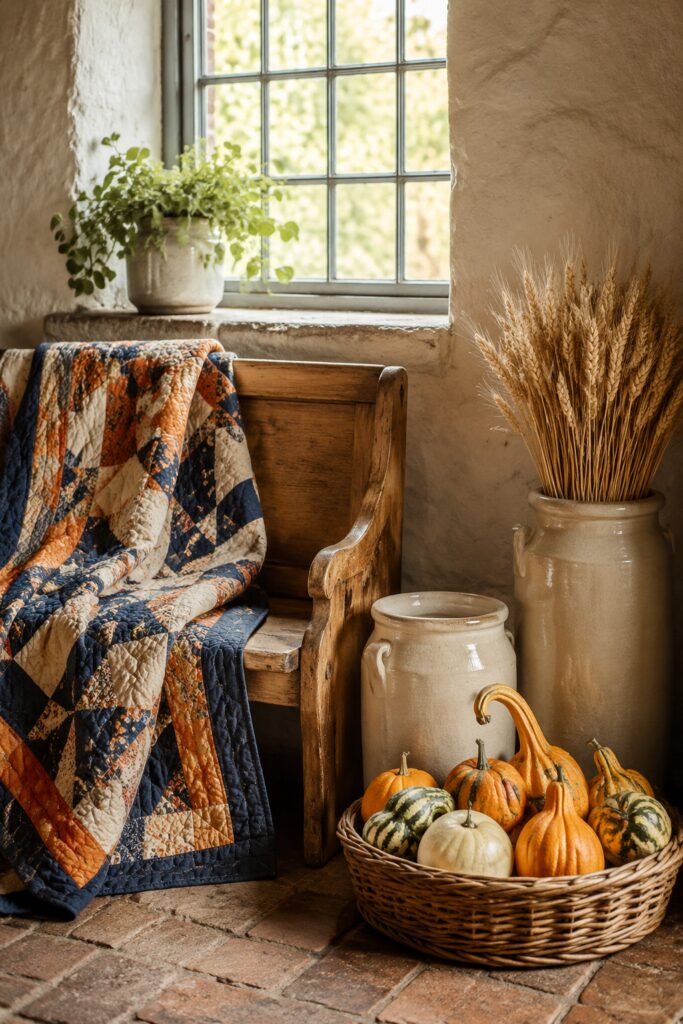
There is something especially inviting about a quilt left within reach as the season changes. In this fall corner, navy, rust, and cream patchwork spills over a wooden bench, showing off its small fabric patterns and stitched texture. Beside it, generous cream crocks and a basket of unusual gourds make the space feel gathered for autumn.
The setting has plenty of character already: a deep window ledge, softly uneven plaster, and worn brick underfoot. Yet the decorating idea does not depend on having an old country house. The same combination of patterned fabric, simple pottery, and harvest shapes can warm up an entry bench or an unused corner near a window.
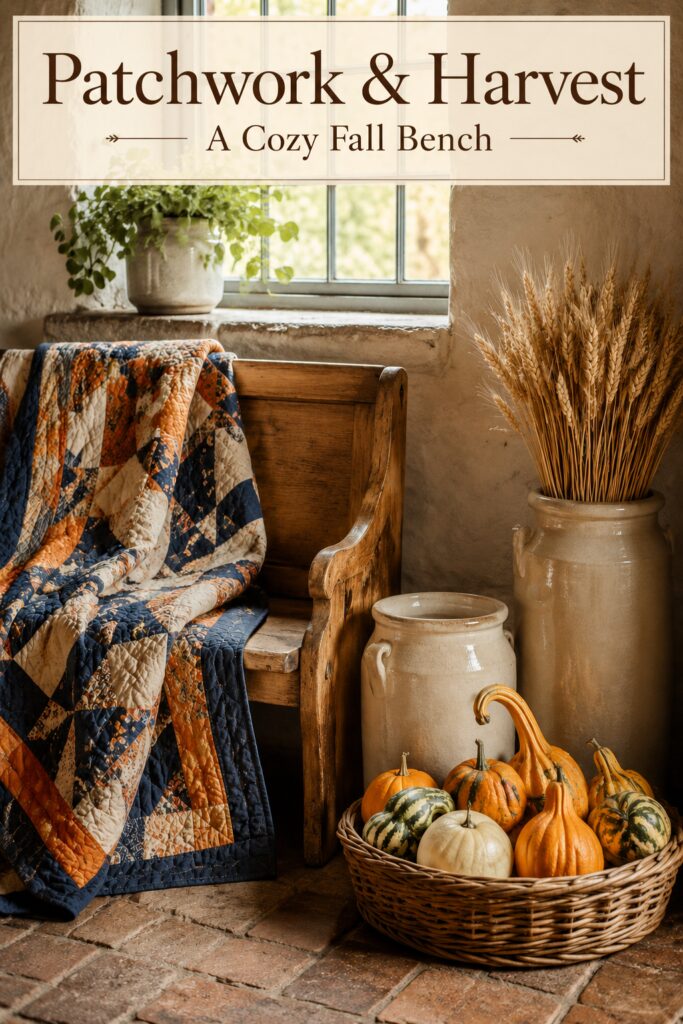
This inspiration image was generated with AI. The suggestions below explain ways to recreate its overall effect with similar pieces.
Let the Quilt Choose Your Fall Palette
The patchwork does more than soften the bench. It supplies the color plan for the whole arrangement.
Rust and orange patches connect with the gourds, while cream fabric repeats the pale pottery and walls. Navy adds depth, giving the warmer shades something substantial to sit beside. Without it, the scene would have a much softer, more neutral appearance.
Notice that the quilt includes small prints as well as contrasting geometric pieces. Those details make the fabric interesting close up, while the larger areas of navy remain readable from across the room.
Find the Perfect Quilt
Browse current Amazon options for patchwork quilts that can help you recreate this look.
Browse Patchwork Quilts on Amazon →As an Amazon Associate I earn from qualifying purchases.
When choosing your own quilt, start with its overall color balance. An exact patchwork pattern is less important than having a dark grounding shade, a warm autumn tone, and a lighter background. Spread it out before deciding which section should face forward on the bench.
Give Each Texture a Different Job
This corner works because its materials contribute different qualities. The quilt looks soft and flexible, the crocks have a gently reflective glaze, and the wheat adds fine, feathery detail. Wicker and worn wood provide a rougher surface between them.
The pottery is particularly useful beside the busy fabric. Its broad, mostly undecorated sides give the eye somewhere to rest. Both crocks are similar in color, but their different heights prevent them from reading as a matched pair placed on display.
The empty shorter crock matters, too. Leaving its opening visible keeps the arrangement from becoming a wall of stems. You can enjoy the vessel’s shape without needing to fill every available container.
Build the Corner from the Bench Outward
Start with a Wooden Seat You Already Have
A bench with a solid back and shaped arms supports the generous quilt drape shown here. Its exposed wood also separates the patterned textile from the pale crocks.
You can use a simpler bench, a wooden chair, or the end of a dining bench. Keep some of the seat or back visible so the furniture remains part of the composition.
Position it where you can appreciate the fabric in daylight. A nearby window helps reveal the stitching and glaze, but avoid leaving a treasured quilt in prolonged direct sun.
Drape the Quilt in One Broad Fold
Fold the quilt lengthwise, then place it over one side of the back. Let it fall onto the seat and over the front, turning a section outward if you want to show more of the patchwork.
The inspiration has a generous drape that reaches the floor. In an everyday entryway, shorten that drop so the edge stays clear of shoes and passing feet.
Keep enough seat uncovered for someone to sit down. A slightly narrower fold often preserves the same layered appearance while making the bench more useful.
Place the Taller Crock Behind the Shorter One
Set the larger vessel beside the bench, slightly farther back. Bring the smaller crock forward so their outlines overlap without hiding its rim.
Look for warm cream, oatmeal, or light tan finishes. Small differences in glaze can make the grouping feel collected, especially when the shapes share rounded shoulders or rolled rims.
Oversized pottery is not essential. In a compact space, use one medium floor vase with a smaller ceramic vessel nearby. Measure the available footprint first so the display does not crowd the walking route.
Arrange Wheat with a Loose Upper Edge
The wheat gives this corner its height. Its golden stems rise well above the crocks, balancing the quilt’s broad sweep on the opposite side.
Gather a bundle loosely and place it in the taller vessel. Adjust the stems so some sit slightly higher than others, then allow the heads to spread gently. A perfectly level top would feel too formal beside the relaxed fabric.
If a wide opening lets the stems collapse outward, place a narrower container inside the crock to hold them together. This also makes it easier to adjust the bundle without filling the entire vessel.
Choose a stem length that suits your space. The wheat should have room to fan out without brushing against the bench user or blocking access to the window.
Gather the Harvest in a Shallow Basket
A low basket keeps the gourds visible and brings another texture down to floor level. The image combines squat pumpkins, rounded striped gourds, and elongated orange shapes with curved necks.
That variety is the appeal. You do not need every piece to match, but repeating orange, cream, and green helps the assortment feel connected.
Set the larger rounded pieces in first. Nestle smaller ones into the gaps, then position a curved gourd where its shape can be seen. Keep the arrangement stable rather than piling pieces precariously above the rim.
For fresh gourds, protect the basket with a discreet liner and check them regularly. Faux pieces are another option when you want to keep the arrangement in place throughout the season.
Pieces Worth Looking For
A Navy and Rust Patchwork Quilt
Prioritize visible stitching, a soft drape, and cream sections that connect with the pottery. A quilted throw can provide enough fabric for a smaller bench.
Cream Crock Style Vessels
Look for simple silhouettes and different heights. A rounded ceramic floor vase can offer a similar effect if a large crock is impractical.
Wheat Stems and a Low Woven Basket
Choose these for their proportions: stems tall enough to rise above the pottery and a basket shallow enough to reveal the harvest shapes.
Mixed Pumpkins and Ornamental Gourds
Combine rounded and elongated forms rather than buying only identical mini pumpkins. Let the quilt guide the balance of warm and pale colors.
Keep One Part Ready for Everyday Life
Before calling the corner finished, sit on the bench and move through the space as you normally would. Adjust the quilt, crocks, or basket wherever they get in the way. The most inviting version is one you can comfortably use, with a soft quilt close at hand and a little harvest color beside it.