*This post may contain affiliate links for which I earn commissions.*
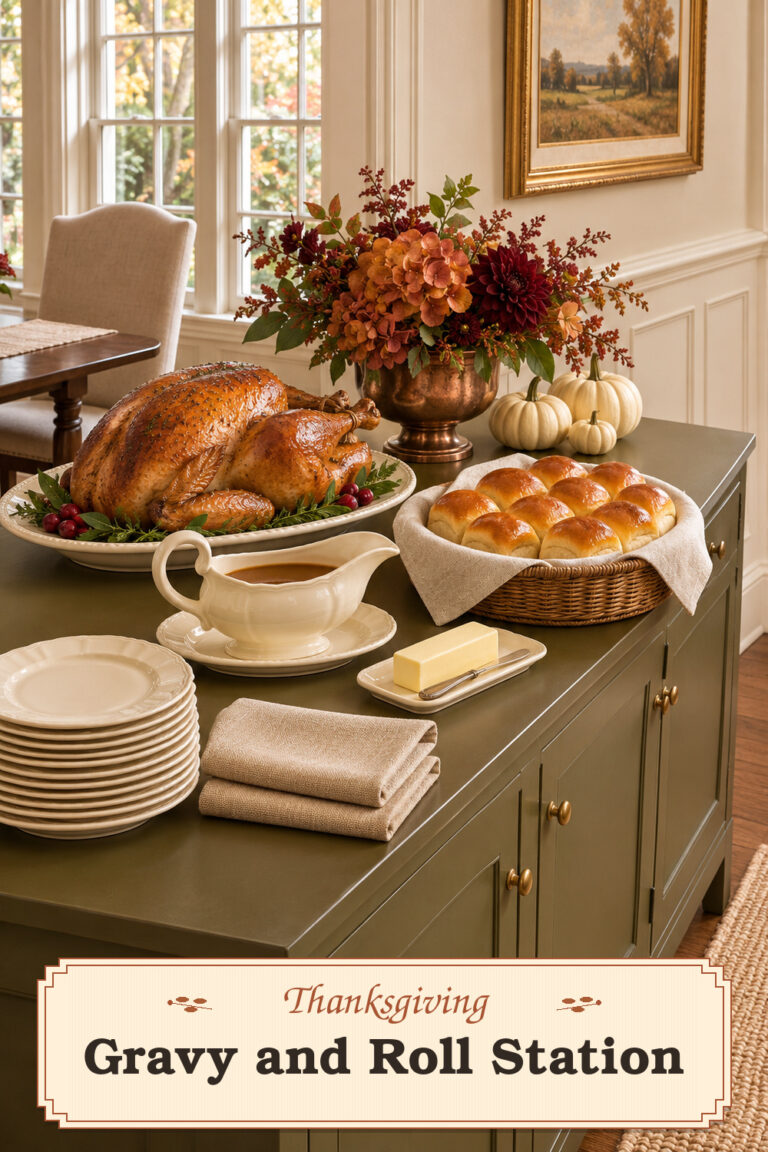
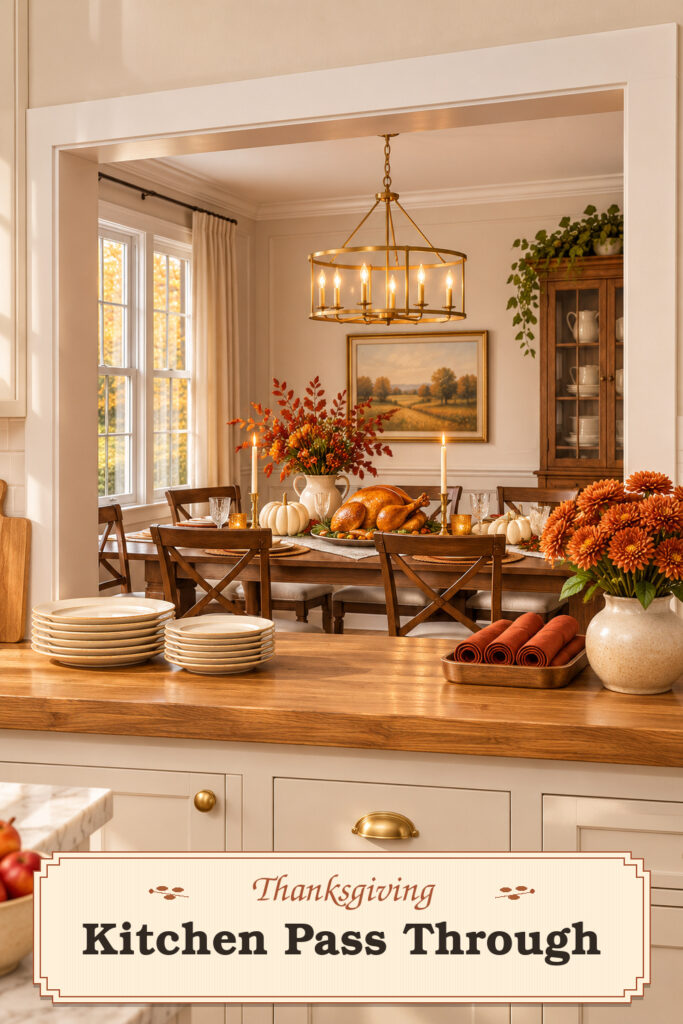
A kitchen pass-through can help a Thanksgiving meal move from the kitchen to the dining room. Here, cream plates sit in two neat stacks on an oak ledge, with rust napkins and a small vase close by. The roast turkey is visible through the opening. Leaving the middle of the ledge clear makes the setup as useful as it is welcoming.
This inspiration image was created with AI.
Let the opening connect the two rooms
The white frame creates a view through to the dining table. The oak ledge adds a warmer line below it. Cream plates make a low stack that’s easy to see without taking up much of the opening. A smaller stack sits beside the larger plates, so the two sizes are easy to tell apart. The napkins carry some of the fall color from the flowers toward the kitchen.
The vase belongs near the edge. Its rust flowers rise into the view without blocking the part where dishes need to pass. Behind them, the turkey and pale pumpkins give the scene its Thanksgiving setting. If your dining room already has a centerpiece, you can keep the ledge simple. One small group of flowers will make the two sides feel connected.
Look at the pass from the side you’ll use most. The dining room may give you the strongest view of the flowers, but the kitchen side will determine where you can pick up and set down a plate. Let function decide where the stacks go. You can move the napkins to the side with more open space and still keep the same colors in view.
Choose pieces that can do more than decorate
Two sizes of plain cream plates
Set out a low stack of the plates you’ll use most often. A second, smaller stack can hold salad or dessert plates. Matching glaze is enough to connect different shapes. Choose stacks that you can lift without stretching, and make sure the dishes fit fully on the ledge. A thin ledge may be better for napkins and an empty serving tray.
Cloth napkins with a steady roll
Rust napkins bring warmth to pale china and white trim. Roll or fold them so they sit neatly without falling open. A shallow tray gives the napkins an edge to rest against. If you have a mix of napkins, group similar colors together rather than placing several patterns in one stack.
A low vase with a broad base
A short vase can hold a loose group of fall flowers without using up the view through the opening. Pick a base that rests fully on the ledge. I’d keep the taller stems close to the wall and let a few lower ones reach toward the china. If the opening is shallow, set the flowers on the counter just beside it instead.
A clear landing spot for dishes
Leave a useful patch of wood between the plate stacks and the vase. Set a large empty platter there to check the fit. You’ll want enough room for the whole platter, plus space to take hold of it from the dining side. Use a suitable trivet when the dish calls for one. Store it nearby so it can come out as needed.
Set it up in the order you’ll use it
Start with the largest serving dish you’ll pass through. Try the motion with it empty. Can you put it down from the kitchen and pick it up from the other side? If the opening is narrow, turn the dish the way it will travel before you add the plates. This tells you how much room to reserve and which side can hold the china.
Put the dinner plates close to the person who’ll be setting the table. Place the smaller stack just beyond them if those plates will come out later. Keep any extra dishes below the counter or in the kitchen. A low stack is easier to reach across and gives the wood ledge a clear edge. If a guest can take a plate without shifting the vase, the setup is working.
Move the napkins to the side where they’re easiest to lift as a group. A tray with a short rim makes that easy. You can carry it to the table while the large dishes move through the opening. If the napkin tray takes up too much room, a short stack beside the smaller plates will give you the same block of color.
Add the flowers last. Start with just a few stems and check the opening from the dining side. The goal is to see a little color in front of the meal without covering the view. Keep stems and leaves away from the transfer space. If the vase still seems large, move it to the back counter and leave one pale pumpkin at the end of the ledge.
If your kitchen opens to the dining room without a built-in pass, borrow the same layout at the end of an island or on a clear console. Put the plates on one side and leave the rest of the top open. Keep the centerpiece in the dining room so guests can tell which surface is for moving dishes and which one is for sitting down.
Try keeping one spare napkin by the handoff spot for quick spills. Fold it flat so it can slip beneath the napkin tray. That leaves the center open and saves a trip back to the linen drawer.
Shop similar pieces with the ledge in mind
Look for cream plates with a modest rim
A low rim keeps a stack compact and makes it easy to separate one plate from the next. Look for a finish that works with the serving pieces you own. A stack of four or five is enough to show the cream color against a dark ledge.
Try a short tray with a raised edge
Pick one that leaves enough room for your hand beside it. A wood, dark metal, or plain cream tray can hold the napkins without looking busy. A small tray is useful if the pass needs to be cleared after the meal.
Choose warm rust cloth napkins
A cloth that keeps a simple fold will sit neatly at the end of the ledge. Check the color next to your china. A muted clay red can look warmer on cream than a very bright orange. You can use the napkins again with winter greenery and white dishes.
Find a small vase with room for several stems
A wider opening lets the flowers spread without needing extra height. Choose a glaze that relates to the trim or wood around the pass. A plain jug can do the same job if its handle stays out of the serving area.
Final Styling Tip
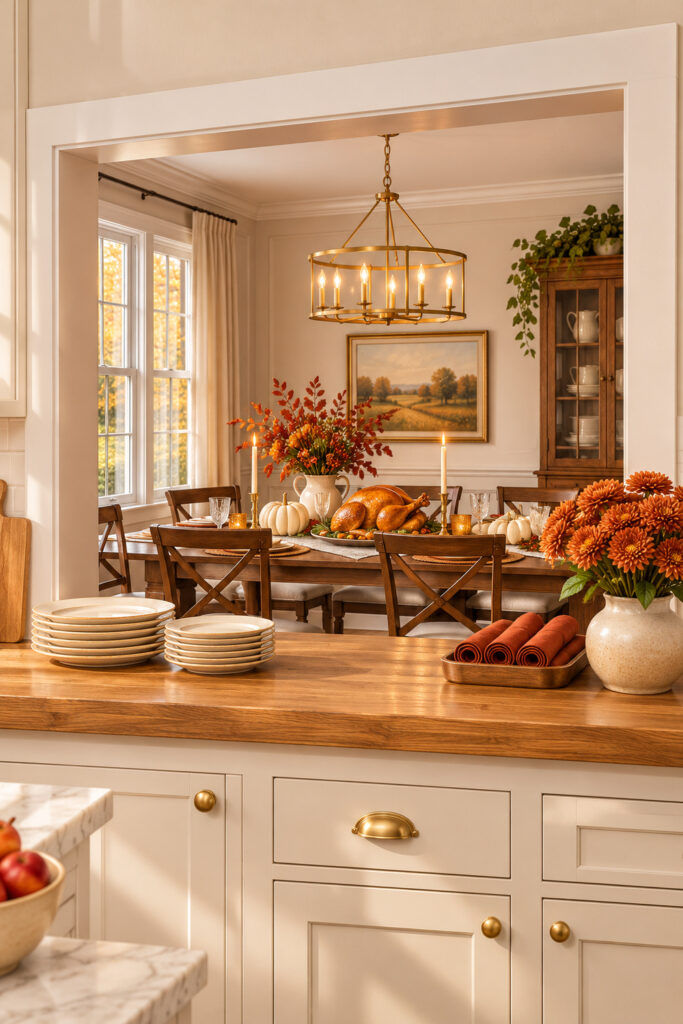
Leave one end of the ledge empty until you’ve tested the largest platter. If the platter can move across easily and the plates still have a clear place, you’ve made room for both the Thanksgiving details and the meal itself.