*This post may contain affiliate links for which I earn commissions.*
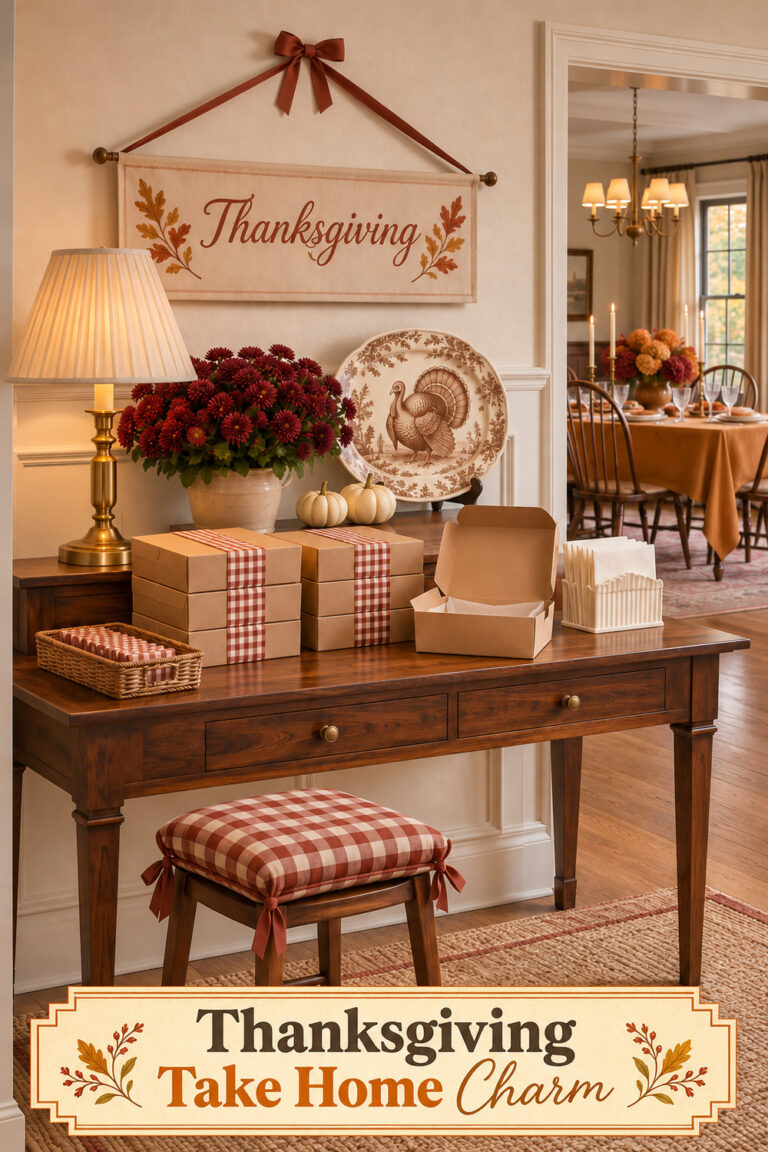
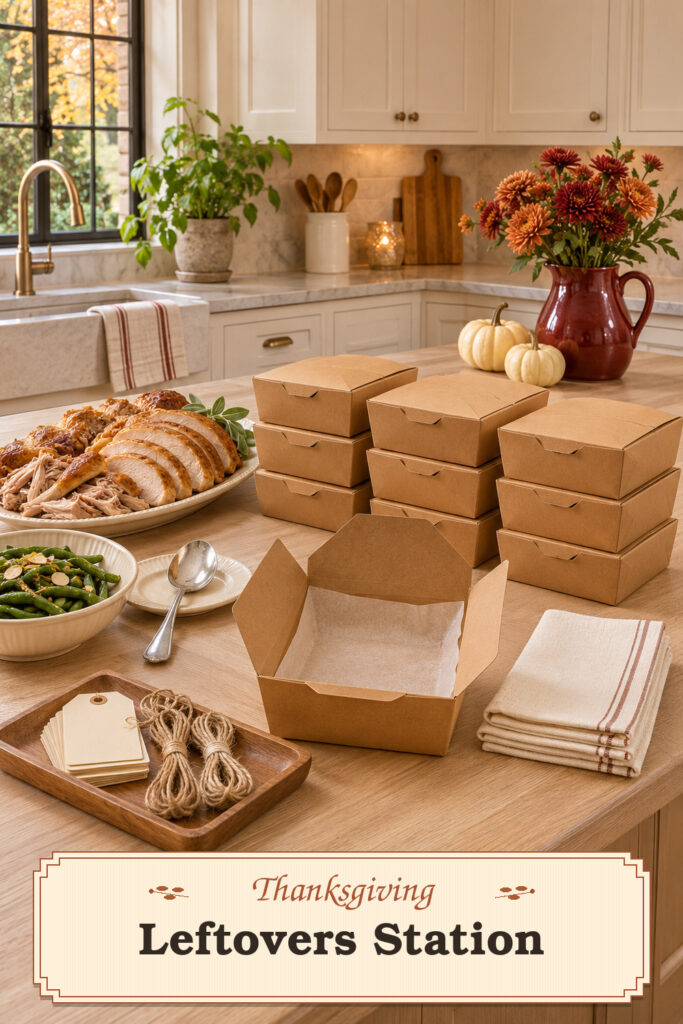
A stack of take-home boxes can look right at home on a Thanksgiving island. The trick in this scene is to treat the boxes as part of the table setting. Their folded edges sit in tidy rows, the napkins and tags have a tray, and a bowl of flowers gives the island a warm spot of color. Guests can see where to start without asking what they should use.
This inspiration image was created with AI.
Why the packing area feels like part of Thanksgiving
Kraft boxes have a plain warm brown that works with oak. The repeated edges make a pattern across the counter. The cream napkins and pale pumpkins give that brown a lighter neighbor, while a deep red jug brings in a stronger fall shade. The food and supplies sit in different groups, with enough room between them to fill one container at a time.
The open box is the most useful detail. It shows how the boxes open and gives the front of the station a clear starting place. Guests can see the parchment inside and find the closed boxes just behind it. The tags and twine are nearby for anyone who wants to mark a package. Put those details on a little tray and you can lift them away when the island needs more room.
A station can work on a kitchen counter or a dining room sideboard. The idea depends on having an empty space to work, more than it depends on having a large surface. On a small counter, set out just enough containers for the first few people. A vase can stay on a nearby shelf or at the end of the island, where it gives the area a fall feel without using the packing space.
Gather pieces that make packing easier
Shallow containers that close securely
Choose a few shallow containers appropriate for the type of food you’ll pack. A secure lid matters for anything moist. Fold-top paper boxes can be a useful choice for a roll or a slice of cake if the packaging is intended for food contact. For saucy foods, keep a few separate containers with close-fitting lids. Choose shapes you can stack easily before the meal.
A shallow tray for tags and ties
A small tray keeps plain tags, a pen, and short lengths of twine from spreading across the work area. The tags can identify who a package belongs to or say what’s inside it. A pen that writes easily on kraft lids may be enough for a smaller gathering. Keep the tray close to the empty boxes so a guest can label one before lifting it away.
A small pile of folded napkins
Napkins belong at the front, where someone can pick one up quickly. A simple fold makes them fit into a shallow space beside the boxes. Use a clean little plate under the stack if you want to move it to the table later. Ivory or oat fabric will fit the kraft tones without blending into the top of the island.
One fall arrangement with a low base
A burgundy jug with russet flowers pulls the color of Thanksgiving toward the back of the setup. Choose a vessel that feels steady when you move it. A few cream pumpkins around its base will show against a dark glaze. On a narrow counter, try one pumpkin with a short bunch of flowers so the branches stay away from any lids that have to open.
Set up three separate spots on the island
Use the first spot for clean supplies. Stack empty boxes close enough together that the folds line up. Put the ones you expect to use most at the front, with smaller containers nearby. Open a sample box and check how much space its lid needs. If it hits the stack behind it, move the stack sideways or turn the open box so its flap faces away.
Leave the middle spot open for packing. A guest should be able to set down a box and a lid at the same time. If there are several people helping, have one person handle food and let the others close and label the containers. On a small island, work in batches. Move finished containers off the counter instead of stacking them around the open box.
Use the third spot for the serving dish you’re working with. A platter and a clean serving utensil will usually be enough. Keep the flower jug beyond that zone, where it can stay as you swap one platter for another. A small ceramic dish beside the platter gives the serving spoon somewhere to rest when you stop.
Set up the decor and empty containers ahead of time and bring the food over when you’re ready to pack it. USDA guidance calls for refrigerating perishable leftovers within two hours, or within one hour if the temperature is above 90°F. Divide food into shallow containers so it can cool more quickly, and use a cooler with ice packs when a trip home requires it. Send the food out when people leave so it can stay chilled until then.
If you expect guests to bring their own containers, keep a clear space at one end where they can set them down. A folded towel under that area gives it a distinct edge. Keep the boxes in the picture stacked at the other end, where guests who need one can find them.
Shop for pieces you’ll use for other gatherings
Look for kraft boxes that hold their shape
An even base keeps a shallow container stable while someone fills it. Look for clearly stated food-contact use, and match the container to the food you’re packing. For guests who take home a mix of dishes, two small containers can be easier to manage than one large one.
Choose a tray that’s easy to move
A short wooden or enamel tray gives you room for a small stack of tags and a pen without taking over the island. A raised rim helps keep the pen from rolling. Check that the tray still leaves room to set down an open lid beside it.
Keep a few plain tags or labels
Blank tags are useful because you can use them again for other holidays. Look for a paper weight that stays flat when you write on it. If you prefer labels, test one on the outside of a chilled container before the meal so you know it will stay in place.
Try a jug with a broad foot
A deep red or brown jug can hold short fall stems through the meal and become a useful kitchen piece afterward. Measure its footprint before adding pumpkins around it. On a small surface the color of the jug can carry most of the decoration by itself.
Final Styling Tip
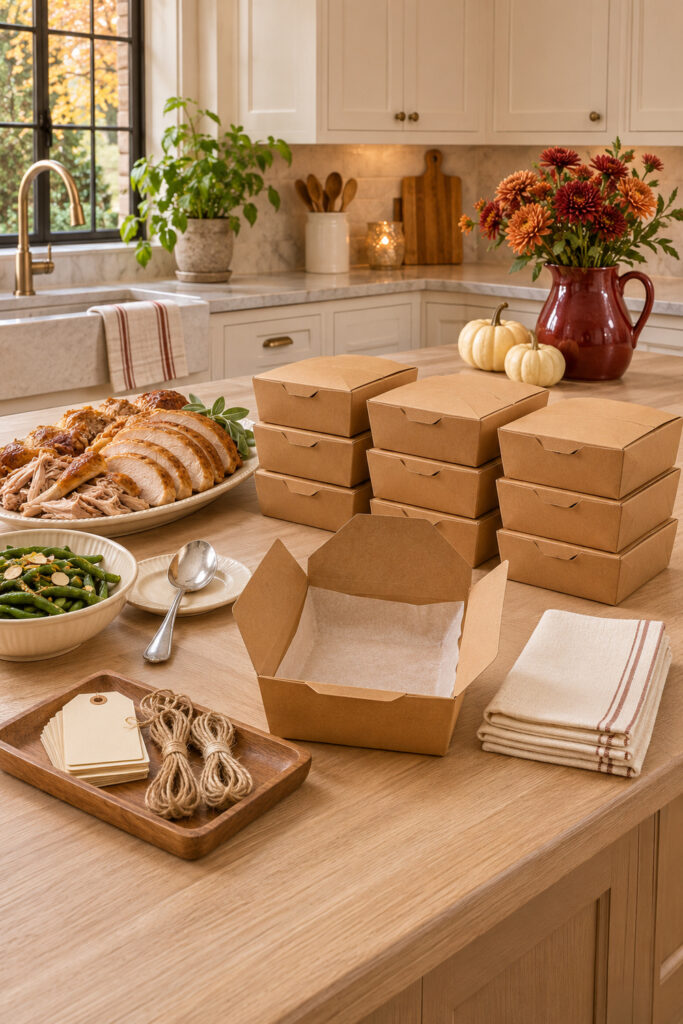
Open the biggest empty container before you set out the flowers. Give the lid a place to swing or sit flat, then place the vase where it won’t be bumped. That small test tells you exactly how much room the packing station needs.