*This post may contain affiliate links for which I earn commissions.*
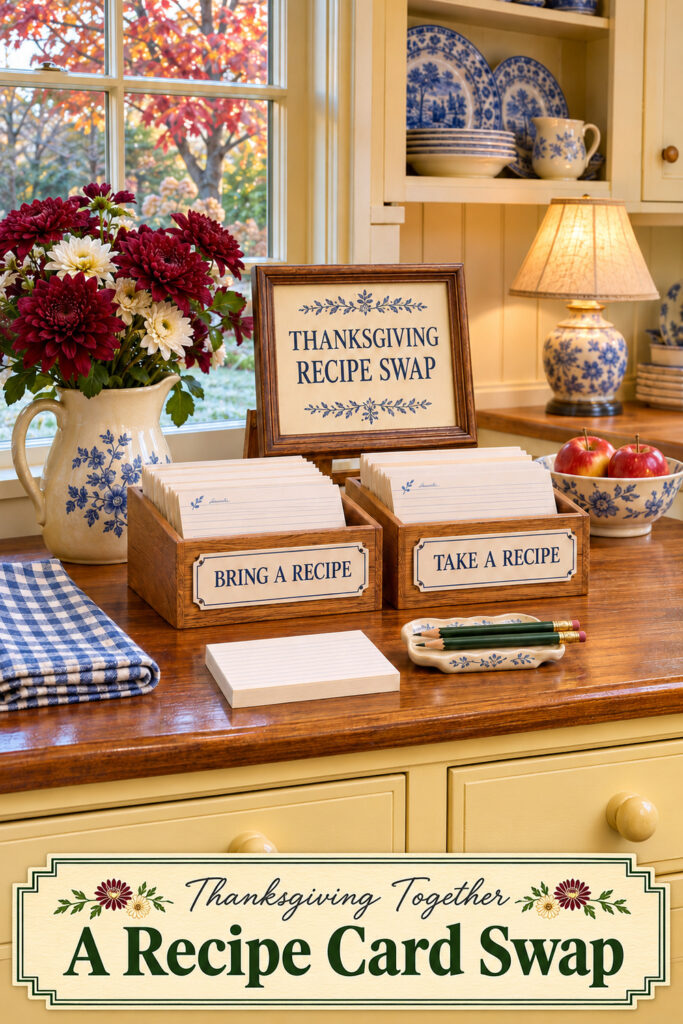
Two wooden boxes make this Thanksgiving kitchen display easy to understand. One invites a recipe in, the other offers a recipe to take, with blank cards and pencils ready at the front. Blue checks, cream crockery, and burgundy flowers give the exchange a cottage setting without taking attention away from the cards.
The useful idea is to give sharing a definite place during a gathering. Guests can bring a copy, write a favorite down, or simply browse what others have offered. You can keep the station small and let it become part of the day at its own pace. Clear labels and a comfortable writing spot matter more than an elaborate display of cooking equipment.
This image was generated with AI as decorating inspiration. Similar pieces can help you recreate its effect.
Make the two directions clear
The matching boxes connect the exchange visually, while their different labels explain what to do. A guest can see where a contribution belongs and where to look for something to keep. That distinction prevents the station from becoming a single pile of cards nobody is sure they may touch.
Decide how your exchange will work before making the labels. You might ask guests to bring several copies, or provide a master card that people can copy onto blanks. If the take box contains the only copy of a recipe, explain whether it is meant to leave with someone.
Keep that explanation short and readable. A small note beside the holiday sign can settle the practical detail without turning the dresser into an instruction wall. The boxes should remain the first thing people notice when they approach.
Choose boxes around the cards
Recipe cards come in several familiar sizes, so use the actual cards as your guide. Check the usable inside width and depth of a box rather than its outside dimensions. Cards need to stand without bending, with enough room for fingers to separate them.
A shallow open box makes browsing easier than a deep container where the titles disappear. If you already have suitable recipe boxes with lids, open them fully and check that the lids stay secure. Don’t balance a heavy lid against a lamp or flower jug.
Keep the card stacks aligned, but avoid packing the boxes so tightly that a guest has to lift the whole group to remove one. Leave some empty space in the bring box for new contributions. The station should have room to change as people use it.
For an assorted collection, use dividers or a small backing card to support shorter pieces. Repeat the same label style on both boxes to connect them even if the wood finishes differ. The exchange can look collected while remaining straightforward to use.
Give writing its own small area
The blank cards lie flat in front of the boxes, with pencils on a ceramic rest. That position makes the supplies visible without hiding the contributed recipes. Leave enough clear counter for a card to sit fully supported while someone writes.
Try the writing height yourself. A tall kitchen dresser may work for a brief note but be uncomfortable for copying a whole recipe. Offer a nearby table or chair if people will need longer, and keep the recipe boxes as the place to browse and return cards.
Use a readable card layout. A clear recipe name, ingredient list, and instructions will be more useful than tiny decorative writing. Encourage contributors to include the source or their name where appropriate, and share only material they have permission to reproduce. A recipe exchange shouldn’t depend on copying someone else’s published pages.
If guests are sharing food information, ask them to write accurately and include any details the reader needs to understand the method. Keep the station as an exchange rather than presenting every card as a tested recipe. People can decide what to try and check the instructions before cooking.
Keep the cottage layers behind the cards
The blue-and-white crockery gives the dresser a familiar background. Similar blue appears on the cards and checked cloth, so the paper doesn’t feel disconnected from the room. You can use plain cards and still make that connection through a cloth or pencil color.
The flower jug sits to the side, where the burgundy blooms add Thanksgiving richness without leaning over the writing area. Keep water contained and leave a gap between the vessel and the nearest box. A spill that reaches several recipe cards would be an unwelcome contribution.
The apples add a small harvest detail at the opposite side. They don’t need to become a large arrangement. Keep food separate from the cards and writing tools, and choose a bowl that stays stable if someone reaches past it.
A shaded lamp makes the station inviting as daylight changes. Position it so people can read the cards without casting a deep shadow over the writing surface. Keep the cord behind the furniture and clear of drawers that may be opened during the gathering.
Set a simple rhythm for the exchange
Put a few prepared cards in the take box before guests arrive. An empty box can make people hesitate because they aren’t sure how the exchange is meant to look. Use recipes you are comfortable sharing and keep any originals you want to retain elsewhere.
Check the station occasionally during the day. Straighten cards, return a pencil to its rest, and make room for new contributions. These small resets keep the display useful without requiring constant attention from the host.
Keep drinks on another surface if possible. The writing space needs to remain dry, and a guest holding a cup may appreciate an obvious place to set it down. A separate side table can solve that without changing the main arrangement.
After the gathering, sort what remains and keep any permissions or source notes with the recipes. You can return the boxes to ordinary kitchen use rather than storing the whole decorated station. The useful pieces will still have a job after Thanksgiving.
Adapt the idea to another room
A dining-room sideboard can hold the boxes while a nearby table provides writing space. Keep the labels facing the main approach and clear any serving pieces from that section. Guests should be able to pause without blocking the meal service.
For a small gathering, use two shallow trays or clearly divided sections of one larger container. The essential feature is the distinction between bringing and taking, not the exact wooden box shape. A few tidy cards and a short message can make the exchange feel complete.
Select the pieces people will handle
Start with cards, boxes, and a comfortable place to write. The crockery and flowers can come from the room you already have. Keep the shopping choices tied to browsing and sharing.
Look for wooden recipe card boxes
Check interior measurements and finger room with your chosen cards. A simple open shape can be easier to use during a gathering than a tightly fitted lid.
Shop similar cream index cards
Choose a surface suited to your writing tools and enough space for legible instructions. Consistent sizes will keep the boxes looking orderly as cards are added.
Look for small freestanding frames
A readable holiday message can sit behind the boxes without blocking access. Choose a stable stand and keep its footprint outside the writing area.
Read the station as a guest would
Approach from the room, pick up a card, and decide where it belongs. If the labels leave any uncertainty, change them before adding another decorative detail.
Then write a short sample at the counter. Move the blank cards or pencils until the task feels comfortable and the boxes remain easy to reach.
Final Styling Tip
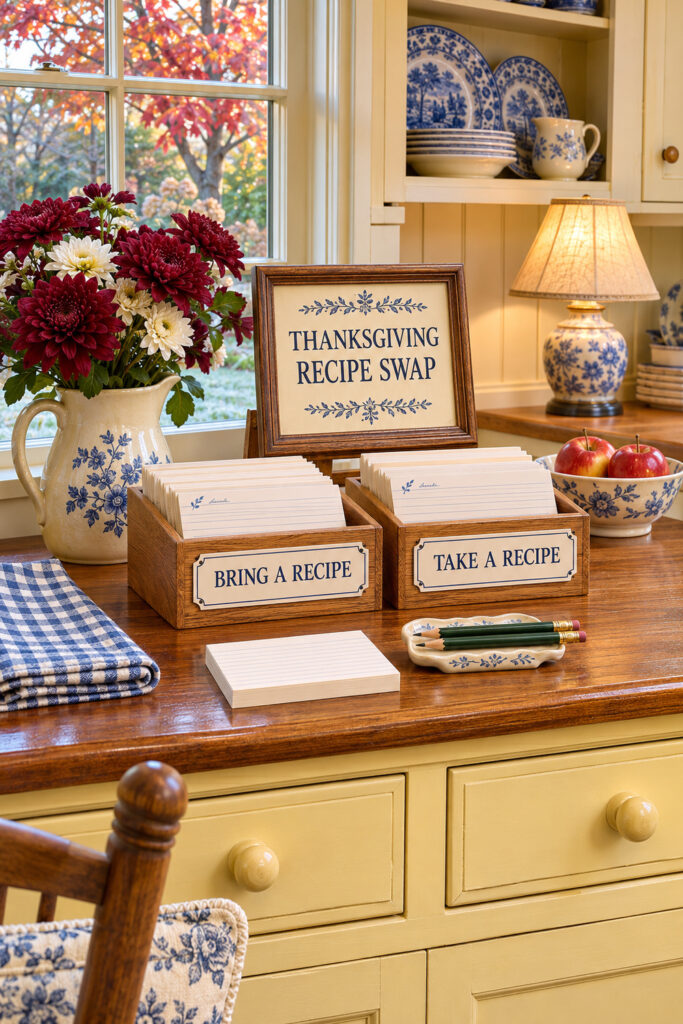
Leave visible space in the bring box. That open area quietly tells guests their contribution has a place waiting for it.