*This post may contain affiliate links for which I earn commissions.*
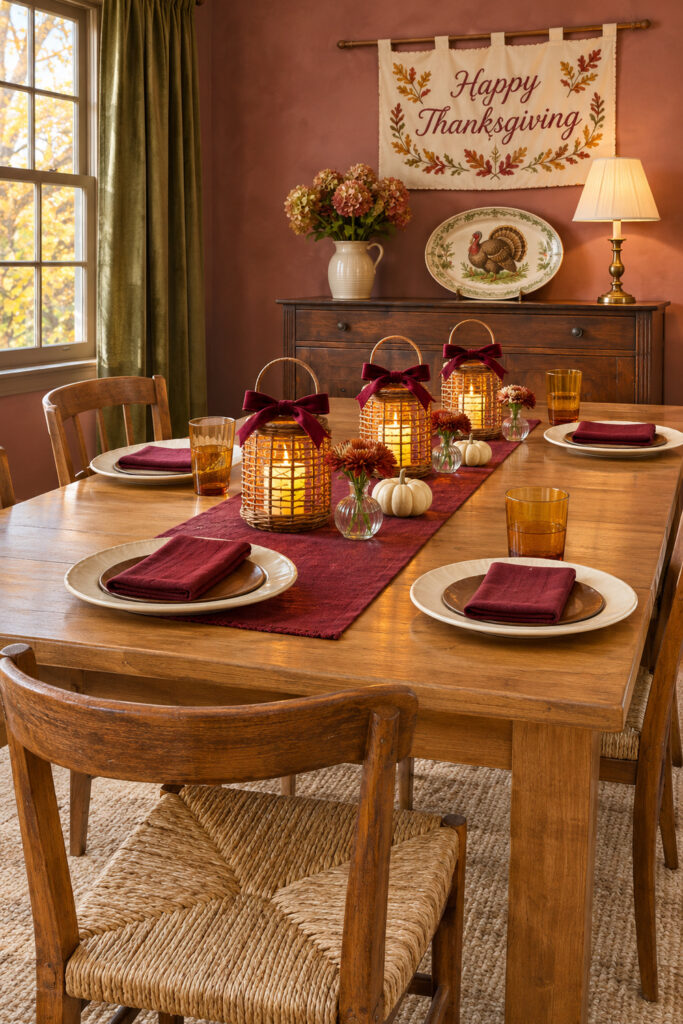
Woven lanterns give this Thanksgiving table a warm glow without making it feel formal. Three small lights repeat down a cranberry runner, with velvet bows, little ivory pumpkins, and low flower vases filling the spaces between them. The materials are familiar, but their careful spacing makes the arrangement feel special.
The table keeps plenty of wood in view. Cream plates, quieter brown centers, folded napkins, and amber glasses sit comfortably around the lanterns, while a turkey platter and a Thanksgiving banner identify the holiday in the background. It’s a useful reminder that an eye-catching centerpiece can be built from a few repeated pieces rather than one enormous arrangement.
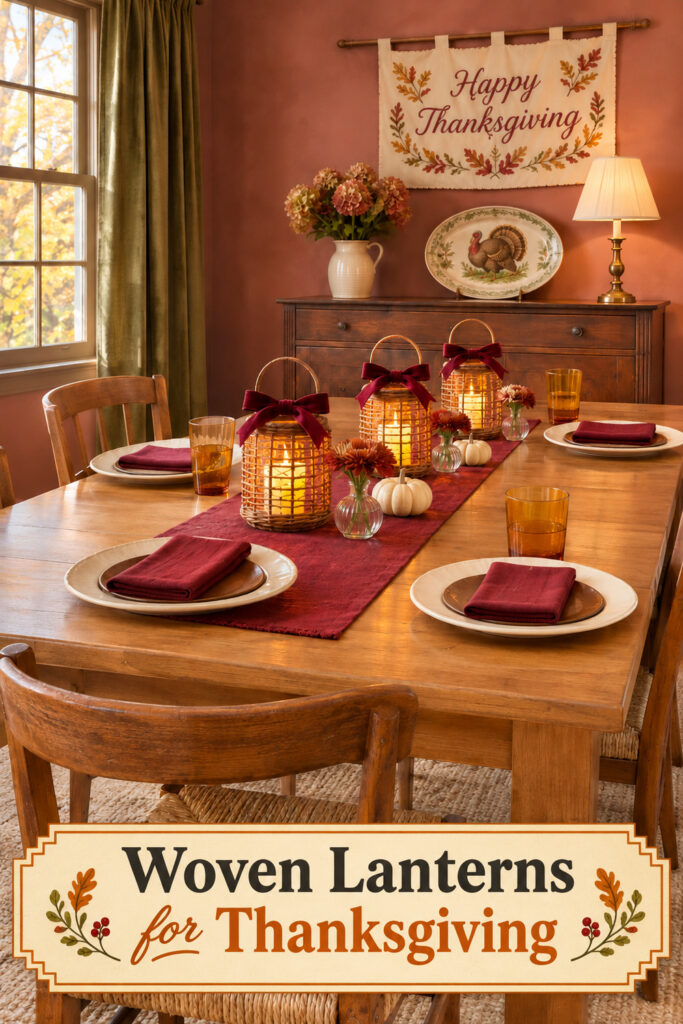
This image was created with AI as decorating inspiration. Similar lanterns and table linens can recreate its overall effect.
Let the repeated lights establish the rhythm
The lanterns form a clear line, but they aren’t pushed together. Each has space around its base, with smaller flowers and pumpkins providing little pauses. The runner joins them without covering the whole table.
Set your plates in place first, then mark out the area available for the centerpiece. Put the largest lantern near the middle if your group varies in size, and check that each guest can still reach their glass and use their cutlery comfortably.
Find woven lanterns
Browse current Amazon options that can help you recreate this look.
Browse woven lanterns on Amazon →As an Amazon Associate I earn from qualifying purchases.
Choose enclosed battery-powered candles for this woven arrangement. They provide the intended glow without an open flame close to wicker, cloth, and velvet. Follow the actual lantern and light instructions rather than assuming a decorative container is suitable for any kind of candle.
Choose lanterns that stay low enough
The lantern handles add height without becoming a solid barrier. You can see between the woven bodies and around the bows, which helps the table remain comfortable for conversation. The light shows through the open weave rather than shining from one uncovered bright point.
Measure the lantern body and handle together before choosing a size. A compact lantern can still feel tall once its handle and bow are included. Try a cardboard shape or an existing object of similar height on the table if you want to judge the view before purchasing.
Look for a stable base and a contained light compartment suited to the specified battery candle. Check that the light can be switched on without disturbing the whole centerpiece. A display that requires lifting several delicate pieces every evening will be less pleasant to use.
Give the velvet a quiet place to show
Cranberry bows sit at the lantern handles, repeating the runner and napkins. Their soft surface contrasts with the wicker without covering much of the weave. The bows are restrained enough to leave the lanterns recognizable.
Choose ribbon that ties neatly at the handle and doesn’t need a huge knot. Make one sample bow before cutting the rest, then compare its size with the lantern body. A broad bow on a tiny lantern can hide the very texture you wanted to display.
Keep the ribbon away from the light’s ventilation, switch, and battery access, following the product’s directions. Trim tails so they don’t trail across a place setting. You can angle the loops slightly for a softer effect while keeping the knots at similar heights.
The runner is a quieter shade of the same color rather than a second competing pattern. If your velvet is especially rich or dark, use a slightly lighter cloth beneath it so the bows remain visible. Matching by general color can look more natural than trying to find an exact fabric match.
Fill the gaps with small harvest details
Tiny ivory pumpkins and short chrysanthemum stems sit between the lanterns. Their scale is important: they finish the arrangement without turning every interval into another centerpiece. Clear little vases keep the flowers light against the deeper runner.
Use bud vases with steady bases and a modest amount of water. Protect the tabletop where needed, and keep the vessels separate from battery compartments. Flowers that spread sideways into glasses or plates should be trimmed or moved.
Choose pumpkins small enough to sit within the centerpiece’s narrow strip. Their pale color repeats the dinner plates and gives the eye a break between the darker lantern frames and crimson fabric. A few visible pieces are more effective than a crowded line of miniature pumpkins.
Try the flowers before adding every pumpkin. Move the vases until the spaces feel balanced, then place the remaining accents where there is a natural opening. This is easier than filling the entire runner and trying to create breathing room afterward.
Keep the places calm beside the texture
The inspiration pairs plain cream rims with brown plate centers, letting the lantern weave and velvet carry most of the detail. Amber glasses repeat the warm light, and folded cranberry napkins connect each place with the runner.
Fold napkins to a consistent size and place them where they can be lifted easily. The simple rectangles shown here suit the relaxed materials. Elaborate folds would add more visual activity without helping the useful arrangement.
Set out the cutlery needed for your actual meal, even though the inspiration keeps some details understated. Test the spacing with a real glass and dinner plate. An attractive table should still make room for the practical pieces that appear when dinner begins.
Connect the table to the room
The turkey platter and pale flowers on the dresser give the table a Thanksgiving background. Their height stays away from the seated conversation area, which is a good place for larger seasonal pieces.
Use a proper plate stand and a stable surface for a display platter. Keep the supporting arrangement simpler than the dining table, perhaps a jug, platter, and lamp. You don’t need to repeat the lanterns across every surface in the room.
The olive curtain and warm rose wall soften the cranberry without introducing another sharp contrast. If your room is neutral, you can get a similar warmth through a small olive cushion or a clay-colored flower vessel. Let the existing room remain part of the scene.
Adjust the idea for the meal
For family-style serving, group the lanterns closer to one end or use a shorter runner with one main lantern. Keep the broadest part of the table free for dishes. The centerpiece should adapt to the menu rather than force the meal to work around it.
On a round table, try a loose triangle with small flowers in the gaps. Check the view from every chair, since a round arrangement can look quite different from opposite sides. Keep the center low and leave a clear ring around the plates.
Use another deep fabric color if it suits your tableware, repeating it in the bows and runner.
Find the pieces with the biggest effect
Choose the lighted lanterns first, since their footprint determines the rest of the centerpiece. Add textiles and small accents after testing their placement.
Look for woven lanterns
Check their dimensions, base, and recommended light source. Choose enclosed battery lights appropriate to the lantern rather than improvising with open flames.
Shop similar cranberry velvet ribbon
Look for a ribbon that makes a tidy small bow. Compare its width with the handle so the weave remains visible beneath it.
Look for low glass bud vases
Stable little vessels help flowers sit between the lanterns without blocking the view. Keep their size modest enough to leave the runner visible around them.
Review the glow from your chair
Switch on the lights and sit down at each place. Adjust any bow that hides a neighboring face, then check space for glasses, cutlery, and serving dishes. Turn tall flower stems away from the conversation rather than adding another vase to balance them.
Final Styling Tip
Leave a small stretch of bare runner between each lantern and its nearest flower vase. That pause makes the repeated lights feel intentional and gives the velvet room to show.