*This post may contain affiliate links for which I earn commissions.*
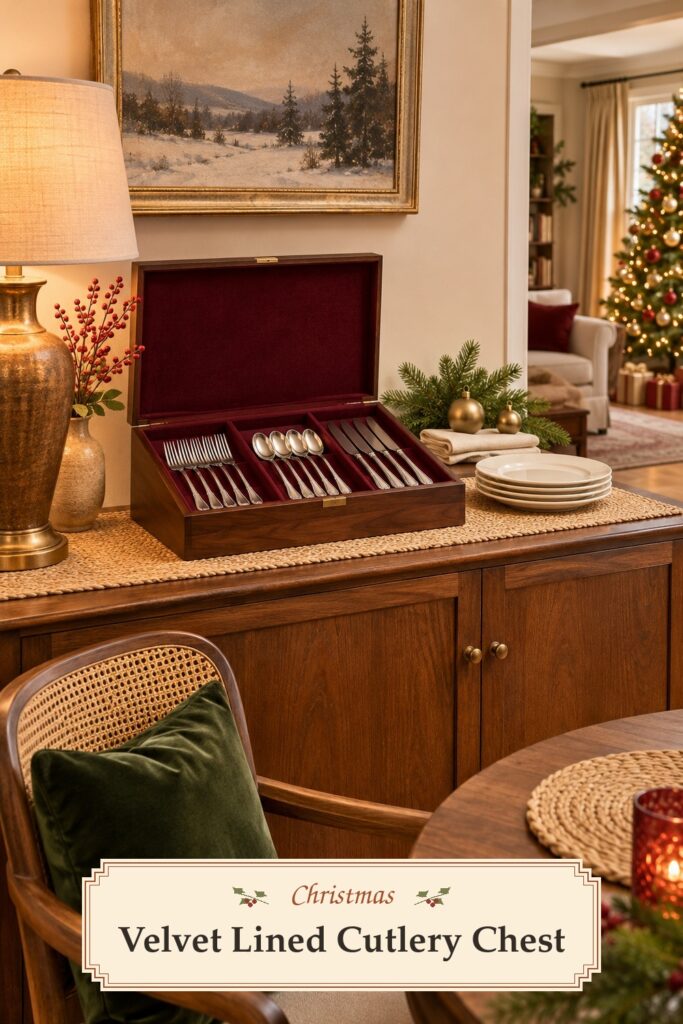
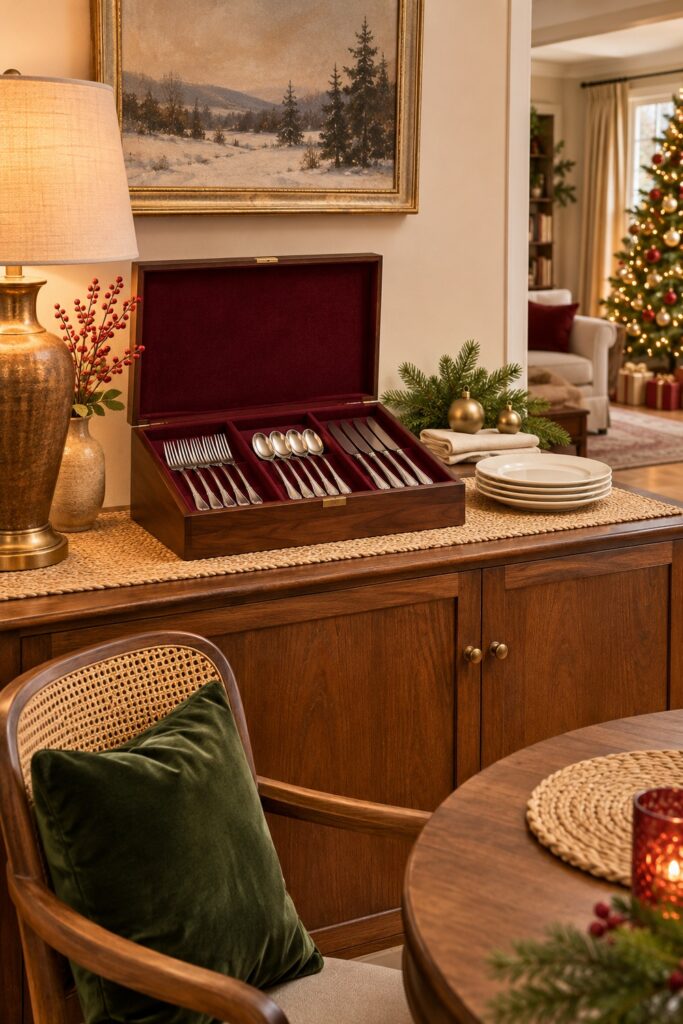
An open walnut chest gives the silverware its own place on this Christmas sideboard. The dark red lining makes the handles easy to see, and the separate groups look orderly beneath a warm lamp. Cream plates and a folded linen wait beside it, with greenery and the tree bringing the holiday into the room. It is a collected look that also helps you get the table ready.
The inspiration image was created with AI.
Let the Lining Provide the Color
The velvet inside the chest is the richest color in the group. It gives the polished metal a darker background, so each handle has a clear edge. The wood around it adds warmth without needing much shine of its own. A plain chest can be especially effective here because the lining and silverware already carry plenty of detail.
The different utensil shapes make a quiet pattern. Forks, spoons and knives sit in separate sections with their handles lined up. That order is what makes the chest feel like part of a finished room. A few pieces laid neatly in the right spaces can look more useful than a case filled beyond its intended capacity.
The sideboard keeps some open surface around the chest. A plate stack and a folded napkin make the serving purpose clear, while the greenery stays farther back. The lamp gives the wood and velvet a warm edge. The larger Christmas details can remain in the adjoining room, where the tree adds depth to the view.
Key Pieces for the Sideboard
A Fitted Cutlery Chest
Choose a case designed to hold the utensils you intend to store. Check the length and shape of its compartments against your pieces. A fitted interior helps the handles sit in an orderly line without needing a separate tray for every kind of utensil.
A Small Plate Stack
Cream plates relate to the pale napkin and keep the dark chest from becoming the only strong shape on the sideboard. Use a stack that sits level and is easy to lift from. The plates can be everyday pieces if their size works for the meal.
A Flat Woven Runner
A braided or tightly woven runner gives the chest a softer setting. Keep it flat under the base, with no thick fold that makes the case rock. A quiet natural color lets the dark red lining remain the main textile detail.
A Lamp and Low Holiday Accents
The lamp belongs far enough from the lid that it can open freely. A short evergreen piece and a few ornaments can sit behind the plate stack or at the other end of the sideboard. Keep them separate from the compartments and utensils.
Arrange the Chest Before Adding Greenery
Set the closed case on the sideboard and check its full footprint. Open the lid slowly and see how much room it needs behind and above it. A lid that nearly touches a wall picture or lamp shade will feel awkward every time you use it. Move the case forward or choose another surface if needed.
Place the utensils in the sections intended for them. Align the handles and leave enough space to lift a piece without catching its neighbor. The case should support the cutlery naturally. Avoid forcing oversized utensils into short slots just to keep the visible row full.
Use the chest as a storage and setup piece according to its care directions. If you are laying the table from it, put the plate stack and linens close by so the sideboard has a clear sequence. A small open patch in front gives you somewhere to rest a plate while you gather the next pieces.
Keep the lamp toward one end. Turn it on and look at the metal from the dining table. You want to see the utensil shapes without a bright reflection hiding the handles. A shaded light slightly to the side often works better than one aimed straight into the open lid.
The runner can extend beyond the case, but keep its edges out of the way of drawers and doors. If the sideboard gets heavy use, a shorter mat beneath the chest may be easier to manage. The woven texture will still show around the base.
Put the greenery down after the practical pieces are settled. Let it soften one back corner or follow a short stretch of the sideboard edge. Keep loose needles and berries away from the open case. A small dish can hold ornaments together where they will not roll toward the utensils.
The Christmas tree in the next room gives the sideboard a festive background. Repeat its red or gold in one small piece near the chest if you want a stronger connection. A folded napkin with a narrow red edge can do that without adding another tall arrangement.
If your case is too large to display open through the season, open it while you set the table and close it afterward. The walnut box can stay on the sideboard with a small holiday group beside it. Its useful role does not depend on leaving every piece visible all day.
The chest lid gives you a dark vertical area above the utensils. Leave that space plain so the silver shapes have a clear background. A little greenery beyond one corner can soften the edge without needing to sit inside the case. If the lid has its own fitted sections, follow the chest’s storage design rather than adding decorative items to them.
The plate stack can sit on the side nearest the dining table. That makes the sideboard useful while you set the places and leaves the lamp at the quieter end. Try carrying a plate from the stack to the table before you finish styling. If you brush the chest lid or a branch, move the stack forward or shift the greenery. The display should support the work you are about to do. A few inches of clear surface can make more difference than another decorative piece.
Check the sideboard doors with the runner in place so its edge does not catch when you open them for linens.
Shop Similar Pieces
Look for a Lined Flatware Chest
Compare the compartment sizes with your own utensils. Check the hinge movement, lid clearance and care guidance for the lining before deciding where the case will sit.
Choose a Plain Walnut Finish
A quiet wood surface will work with both polished metal and soft linens. Look for proportions that fit the sideboard with room beside the chest for plates or a lamp.
Add Cream Side Plates
A modest stack is useful for setting the table and gives the dark case a lighter companion. Choose plates that sit evenly together so the stack feels steady when you lift the top one.
Find a Flat Braided Runner
A low, even weave helps a storage case sit level. Check the width against the base and leave enough visible fabric around the edges to show its texture.
Use a Warm Shaded Table Lamp
A plain fabric shade can soften the reflections on the cutlery. Pick a base that leaves room for the lid to open and a switch you can reach without leaning over the case.
Final Styling Tip
Open the chest with the lamp on and stand where you will set the table. Turn the case slightly if the light hides the handles, then leave the space in front clear for plates.