*This post may contain affiliate links for which I earn commissions.*
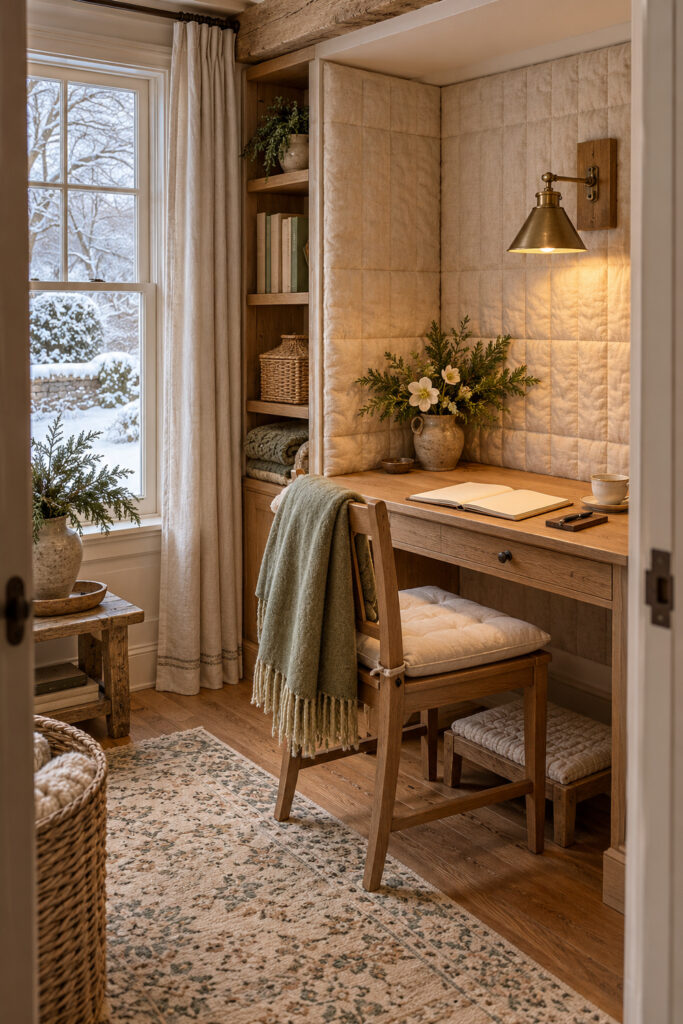
Quilted cream panels make this small writing alcove feel tucked into the room. The soft wall texture surrounds a simple wooden desk, while a brass shaded lamp lights an open notebook. A sage throw, padded seat, and little footstool carry the fabric layers down to where someone would sit.
The quilted walls are the unusual part of the inspiration, but the clear desktop matters just as much. There’s room to write, with flowers kept in a corner and a cup set to one side. You can borrow that balance of texture and open work space even if a full upholstered alcove would be more than you want to take on.
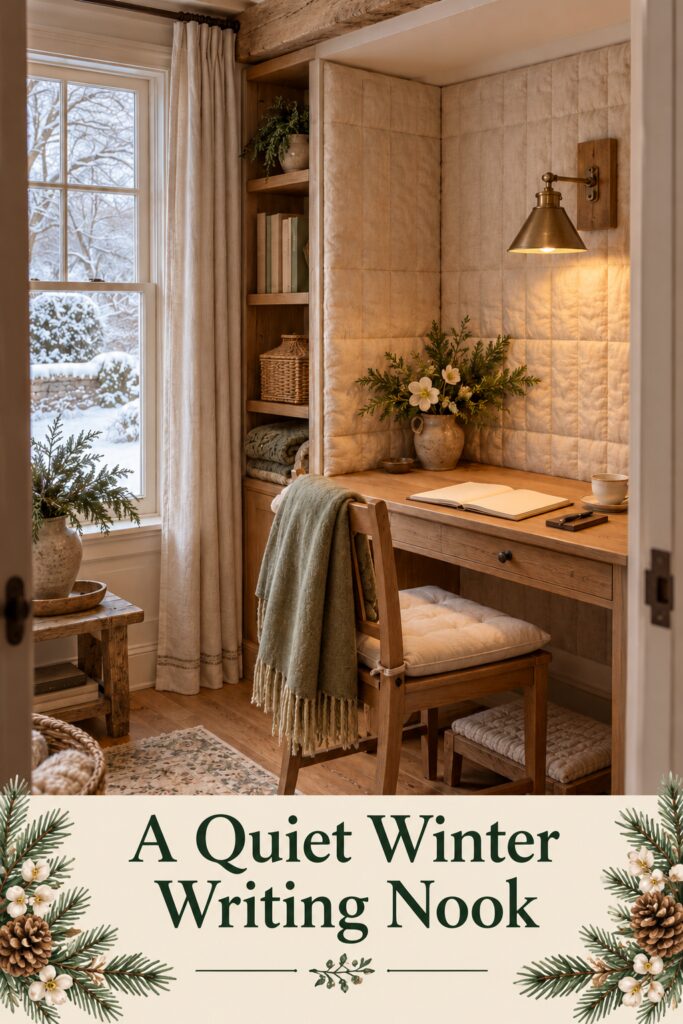
This winter writing corner was created with AI and offers inspiration for adapting similar textures at home.
What Makes This Writing Nook Look Work
The wall treatment changes the backdrop from a plain recess into the main decorating feature. Its broad quilted sections create a quiet pattern, and the pale color keeps the small space from feeling visually crowded. The stitching is noticeable because the surrounding furniture has simple lines.
Warm wood adds enough contrast to define the desk, chair, and shelving. The brass lamp relates to that warmth while giving the upper wall a distinct shape. Sage appears in the throw and folded textiles, connecting the seat to the shelves without introducing another strong pattern.
The snowy window supplies a seasonal setting, but the nook doesn’t depend on Christmas decorations. Green branches and a few white flowers keep the arrangement appropriate through winter. Nothing needs to be packed away as soon as the holidays end, which makes this a useful direction for a corner you want to enjoy for several months.
Key Pieces to Recreate the Look
Cream Quilted Fabric or Upholstered Panels
Look for a quilted textile with visible stitching and a warm cream tone. The inspiration suggests fitted padded panels, but that appearance would need a planned installation. Consider a professionally upholstered wall treatment if you want a permanent version rather than attaching loose fabric around existing fixtures.
A smaller alternative is a securely hung quilt on the rear wall, with the side walls left plain. Check the hanging method, fabric weight, and wall surface before committing. Treat this as decoration, without assuming acoustic, insulation, or fire performance. Keep all fabric clear of heat, outlets, and equipment that needs ventilation.
Find Cream Quilted Coverlets
Browse current Amazon options that can help you recreate this look.
Browse Cream Quilted Coverlets on Amazon →As an Amazon Associate I earn from qualifying purchases.
A Simple Wooden Writing Desk
The desk has an uncomplicated shape, a broad work surface, and a shallow drawer. Those plain lines give the quilted backdrop room to stand out. You can achieve a similar effect with an existing table if its height and depth suit the way you work.
Measure the usable recess before choosing furniture. Allow space for the chair to pull back and for your knees beneath the surface. A desk that fills the opening exactly may look fitted in a photograph but feel awkward to use. You should be able to sit down without brushing every item beside you.
A Comfortable Chair and Sage Throw
The wooden chair repeats the desk’s material, while its padded cream seat echoes the walls. The sage throw drapes over the back and adds color without covering the whole chair. A cushion is an easy starting point if your existing seating feels visually hard beside the quilted fabric.
Choose seating for the amount of time you’ll spend there. A decorative chair may suit a short letter or journal entry, but longer sessions call for support appropriate to you. Keep the throw clear of moving chair parts and off the floor so it doesn’t get caught as you pull the chair out.
A Shaded Task Light
The brass wall lamp provides a focused pool of light above the desk. Its shade directs attention toward the notebook, and the wood backing gives it a defined place against the quilted surface. That mounting detail should be planned before any wall upholstery is installed.
Have electrical work handled appropriately and follow fixture clearances rather than mounting through padding without a suitable arrangement. For a simpler adaptation, use a stable desk lamp on a plain surface. Position it so your writing hand doesn’t create a large shadow across the page, then check the light while actually seated.
Pottery, Greenery, and Quiet Shelf Storage
The small pottery vase sits toward the rear corner, leaving the notebook area open. White flowers stand out against the branches without becoming a large centerpiece. A low arrangement will give you the same contrast if your desk is shallower.
The side shelves hold a few books, a lidded basket, and folded textiles. Use that mix as a guide to containing useful things. A basket can hide spare stationery, while books give the shelves a reason to be there. Keep the nearest shelf available for anything that would otherwise spread across the writing surface.
How to Style It at Home
Start by deciding what you’ll do at the desk. Journaling, writing cards, and using a laptop require different amounts of space. Set out your usual tools on the empty surface and pull up the chair. That tells you how much room remains for a vase or cup before the decorations begin taking over.
Choose the soft backdrop next. If you’re testing the idea, hold a cream quilted textile against the rear wall to see how its color works with the wood and natural light. Don’t cover a fixture or outlet for the trial. A sample can help you decide whether a full wall treatment is worth planning.
Repeat the fabric at seat level with one cushion, then add a muted throw. Keep the folds simple enough that the chair still looks usable. The small padded footstool in the inspiration adds another layer, but it should fit beneath the desk without restricting your feet or your route out of the chair. Leave it out if the space feels cramped.
Arrange the vase at the rear corner and put the notebook in your comfortable writing position. Set a cup on a stable protected spot away from papers and electronics. Then adjust the lamp. Lighting is easier to judge once the actual working arrangement is in place rather than from the doorway alone.
Finish the shelving with a few useful items and visible gaps. The alcove already has plenty of texture in its walls, so it benefits from uncomplicated storage. If the shelves become packed with little decorations, the quilted surface loses its role as the feature. Let the stitching be the pattern you notice first.
Check the drawer with the chair pushed in and pulled out. A dangling throw can catch along its edge, so fold the fabric toward the back before you settle down to write.
Shop Similar Pieces
Look for Cream Quilted Coverlets or Upholstery Fabric
Compare the scale of the stitching with the size of your alcove. A small sample is helpful for checking color before planning a permanent treatment or buying a large textile.
Shop Similar Wooden Writing Desks and Seat Cushions
Choose dimensions that leave room to sit comfortably. A simple desk shape and a plain cream cushion will support the look without competing with the wall texture.
Add Shaded Task Lamps and Small Pottery Vases
Check light direction, fixture clearances, and vase stability. These finishing pieces should support the work area while keeping the desktop open enough to use.
Final Styling Tip
Sit down with your notebook before adding the last accessory. If your arms have room, the light falls where you need it, and the quilted backdrop stays visible, the corner has enough decoration.