*This post may contain affiliate links for which I earn commissions.*
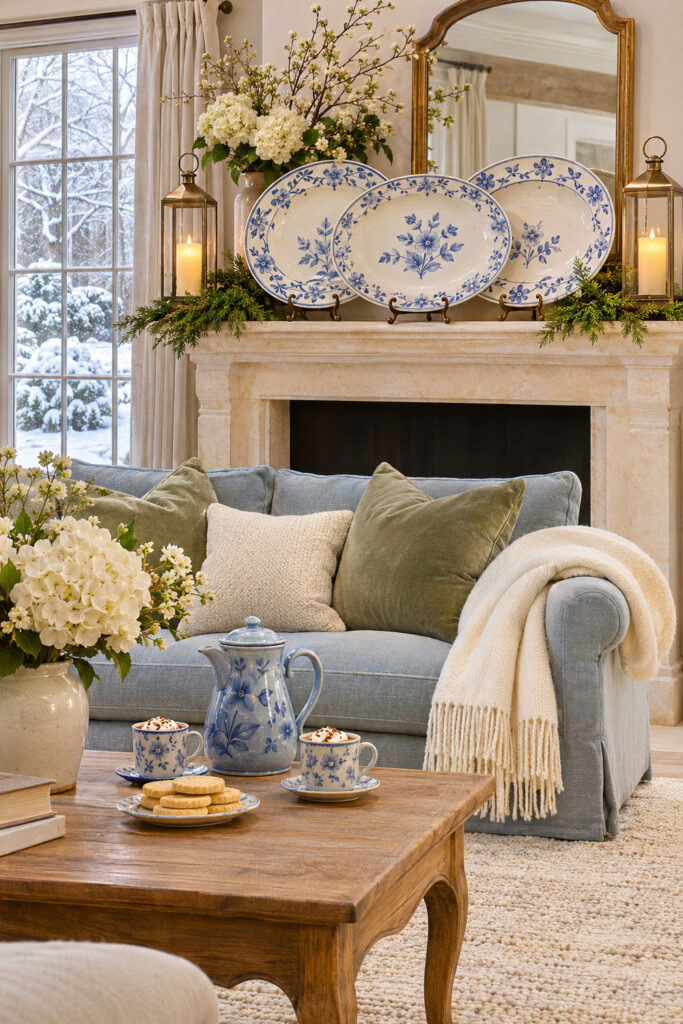
A fan of blue-and-white platters gives this winter mantel its shape. The ceramic borders overlap just enough to feel collected, while low cedar at the sides keeps the group from looking like bare dishes lined up for storage. Warm lantern light brings out the glaze against the pale stone.
The room below stays comfortable with blue upholstery, ivory wool, and a cocoa tray on the oak table. You can borrow the combination by choosing a few well-supported platters and repeating their blue in the seating area. The useful part is the balance between a full collection above and a simple, welcoming place to sit below.

This image was generated with AI as decorating inspiration. Similar pieces can recreate its effect on a surface suited to a supported display.
Let the Ceramic Borders Form the Pattern
The platters provide more than a color repeat. Their broad oval shapes and blue borders make a soft fan across the mantel, with the pale centers keeping the group light. The greenery stays to the sides so those outlines remain readable.
Choose pieces that feel related in scale, even if their border details differ. A quiet floral group will be easier to combine than several large scenes or strongly contrasting patterns. The inspiration suggests collected blue-and-white decoration rather than one exact historic design to reproduce.
Lay out the grouping on a safer low surface before placing it above the hearth. Try the tallest platter at the back, with the others slightly forward. Check that the overlaps reveal each piece rather than making one large dish disappear behind another.
Start with the Mantel and the Supports
The pictured fireplace is unused and unlit. Do not copy the placement around a working fire without establishing the actual appliance’s required clearances and suitable mantel use. A sideboard or broad shelf can carry the same platter arrangement when a fireplace is not an appropriate display location.
Check the depth and condition of the surface before choosing the dishes. Every easel needs enough room for its full base, with a margin at the front. A platter’s rim should not hang out into the room where a passing hand or sleeve could catch it.
Use stands designed for the actual size and weight of the ceramics. Look for a clear lower lip, suitable back support, and a stable footprint. A small decorative stand that barely grips the edge can look convincing in a photograph while being wrong for a heavy serving platter.
Set each stand independently. The plates should not rely on one another to remain upright, and a garland should never be the thing holding a base in place. If the fan needs hidden props to stand, choose a smaller grouping or a deeper surface instead.
Add Cedar Without Hiding the Footing
The greenery gives the ceramic group its winter setting. Full dark branches contrast with the pale glaze and echo the garden beyond the window, but they sit low enough to leave the front dish clear. One generous mass at each outer edge can be enough.
Keep fresh stems in suitable containers or use clean artificial branches with finished ends. Protect the mantel from water, sap, and scratches, and keep the support area beneath each easel clear. Loose needles under a stand can make a level display less dependable.
Shape the greenery away from the platter faces. A branch crossing a blue border may look like another part of the pattern from across the room. Leaving a small gap makes the materials easier to read and keeps the ceramic detail as the main feature.
The two lanterns belong on their own stable spots. Suitable battery pillars provide the pictured warm glow without open flames among branches. Check the lantern dimensions and lighting directions, and leave enough room to open them or reach the controls without disturbing the dishes.
Repeat Blue in the Comfortable Part of the Room
The sofa carries the mantel’s blue at a larger, quieter scale. Sage velvet and ivory woven cushions add different textures without repeating the platter patterns in every fabric. The pale wool throw gives the seating a clear winter layer.
Keep existing upholstery if it works with the blue-and-white pieces. A cream, gray, or natural linen sofa can take the same color through one cushion or folded blanket. You don’t need to replace the largest furniture item to connect a collection to the room.
Fold the throw where someone can lift it easily. Keep its edge clear of the floor and any nearby drink table. A generous wool layer looks inviting when its shape is controlled, while a heap on the seat can make the room feel unfinished.
The rug links the seating and coffee table into one area. Choose a size and pile that suit the actual furniture and walking route. The room can look soft without making table legs unsteady or hiding the edge where someone steps onto the rug.
Keep the Cocoa Tray Useful
The blue pot and cups repeat the platters without adding another wall display. An oak table gives the ceramic service a warm base, while the small biscuit group keeps the serving arrangement manageable. Leave room around it for hands and ordinary use.
Use drinkware intended for the temperature and contents you serve. A decorative pot that looks suitable in the inspiration may have a different purpose in real life. Check the actual piece, and use a separate suitable carafe if you want the color effect without serving from a fragile object.
Place the tray within comfortable reach of the sofa. Keep the cups on level saucers and leave their handles easy to lift. If your coffee table is narrow, use one pot and two cups rather than adding topping jars and another flower vase simply to make it look fuller.
For a smaller room, keep the mantel to one or two platters and let the cocoa service carry the second blue repeat. The warm light, cedar, and wool will still explain winter. More dishes are not always the next useful layer.
Select the Structural Pieces First
Choose the display location and stands before adding ceramics. Then connect the room with a small number of blue and ivory textiles or serving pieces.
Look for Proper Platter Easels
Check the actual supported size and weight. The stand’s whole base must fit securely on the chosen surface.
Look for Related Blue and White Platters
Choose borders and proportions that remain visible when grouped. Inspect older pieces carefully before using them on a raised display.
Look for Closed Battery Lanterns
Choose a stable base and a scale that balances the dishes. Keep the lights separate from the easels and greenery supports.
View the Mantel from the Sofa
Sit where the room is normally used and check that all three platter shapes show. Look for a lantern hiding an edge or a branch cutting across the front dish. Then check the whole route past the hearth, leaving the collection well beyond ordinary movement.
Final Styling Tip
Leave one blue border completely readable at the front of the fan. That clear outline gives the overlapping collection a focal point instead of a busy patch of pattern.