*This post may contain affiliate links for which I earn commissions.*
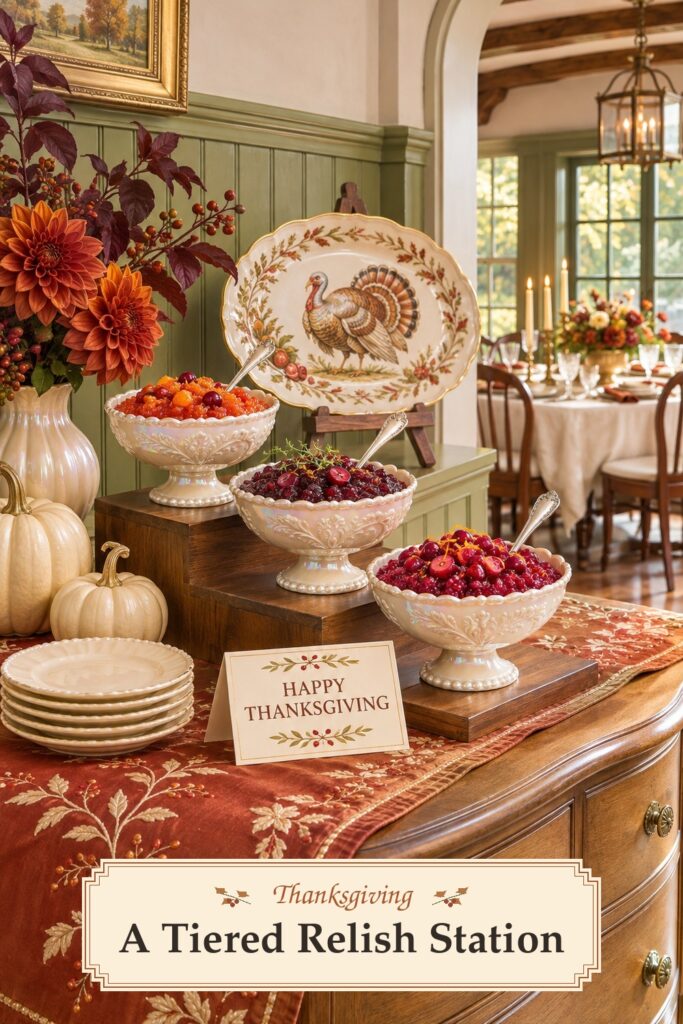
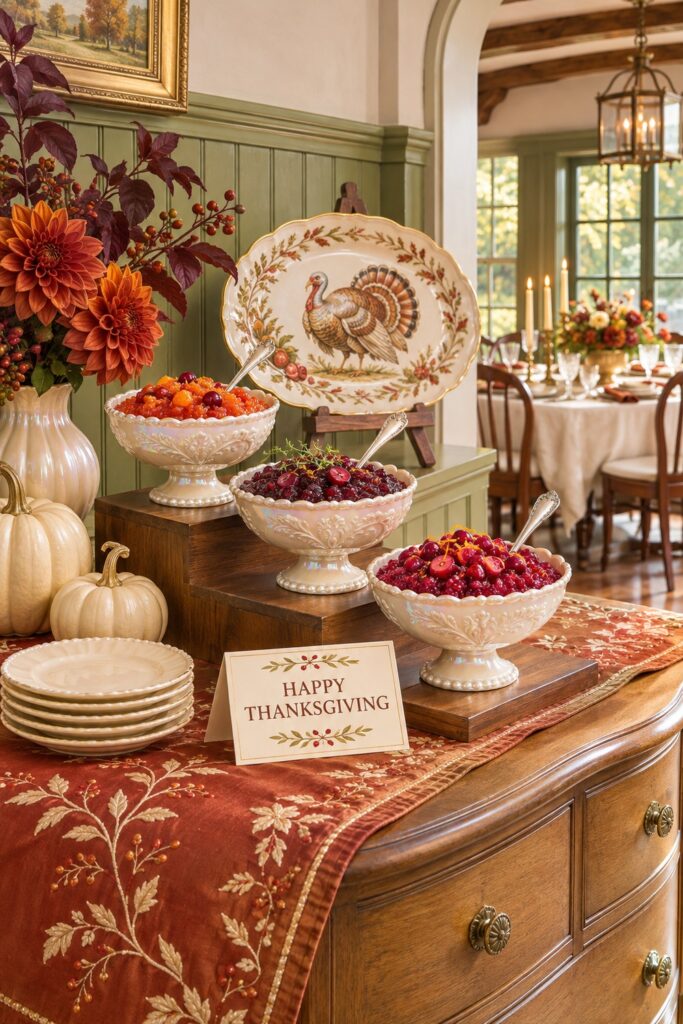
Three bowls of cranberry relish make a little serving display of their own. The red shades are different enough to see at a glance, and the pale bowls sit at staggered heights on a wooden riser. A turkey platter and a Thanksgiving greeting set the occasion behind them. It is a useful idea for a sideboard when several dishes are already competing for space on the dining table.
The inspiration image was created with AI.
Use Height to Separate the Bowls
The shallow steps are the important part of this arrangement. They raise the back bowl enough for its rim and contents to show above the one in front. The bowls stay close together, so the group still feels like one station. With all three at the same height, the darker relishes could blend into a single red patch from the doorway.
The difference in the relishes gives the display its color. One looks ruby red, another has a deeper burgundy tone, and a lighter red-orange sits between them. You can borrow the arrangement for the condiments you actually serve. Put each in a separate pale bowl so the food is easy to identify. A little variation is welcome, but matching bowl shapes will help the group feel settled.
The cream pumpkins and dark flowers frame the food from the side. Their colors make a soft link between the bright relishes and the olive wall behind. Keep the largest flowers away from the front edge, where they could interfere with a serving spoon. The platter does a different job, giving the station a clear Thanksgiving detail at a height above the food.
Key Pieces for the Relish Counter
A Broad Low Riser
A riser with shallow steps gives you several levels without stacking dishes on top of one another. Look for a solid base that sits flat on the sideboard. Each bowl should fit fully on its step, with room to lift it straight up when you need to refill it.
Pale Serving Bowls and Short Spoons
Cream bowls show the color of the relishes well. A modest foot can add a little height, though a flat-bottomed bowl can be more practical on a narrow riser. Give each bowl its own spoon and leave the handles pointing where guests can reach them without crossing another dish.
A Platter and a Small Greeting
The turkey platter sits behind the serving group. Put it in a stand suited to its size and weight, with the base well back from the edge. The small greeting belongs beside it, where it can be read without blocking the turkey design. If the back of your sideboard is shallow, hang the platter securely on the wall instead.
A Runner and a Harvest Accent
A rust-colored runner gives the wooden stand a softer edge. Fold it so the riser sits on a smooth section rather than a thick seam. A few cream pumpkins and a short flower arrangement at one end can finish the group without taking up the space guests need to serve.
Arrange a Station Guests Can Reach
Start with the empty bowls. Place them on the riser and try reaching each one with a serving spoon. The back bowl should be easy to use without lifting the front bowl out of the way. If you need to stretch over the first dish, make the riser shallower or move the bowls into a loose diagonal.
A tiered display works best for smaller dishes. Large, heavy bowls can become awkward to lift from a back step, especially after the food has been served several times. A broad tray with three low bowls is a good adjustment for a short counter. You can still vary the heights a little with the bowls themselves.
Decide where the plates belong before you add the decorative pieces. A small stack at the open end of the station gives guests a clear starting point. If the relishes go directly onto dinner plates, leave a landing spot where someone can steady a plate while serving. That space is more helpful than an extra vase.
Keep the food in suitable covered storage until you are ready to serve, following the recipe’s handling directions. The display can be assembled with empty dishes earlier in the day. Then you only need to fill the bowls and put out the spoons. This also gives you a chance to check the height of the arrangement without hurrying.
Turn the bowl handles or spoon handles toward the room once the dishes are filled. If the spoons slide down into the food, use shorter ones or set them on small rests beside the bowls. A saucer near the station gives you somewhere to put a used spoon while you bring a clean one.
Leave the decorative pumpkins on the outside of the riser. Their rounded shapes help the group feel full, but they should not become something a guest has to dodge. Flowers can sit farther back, where their height is useful and their stems stay clear of the food.
For a smaller gathering, two bowls may be all you need. Set one higher and let the platter fill the space behind the lower dish. You can repeat the third color in a napkin, flower or small pumpkin. The arrangement will keep the same layered look without adding a condiment just to fill a bowl.
Small labels can be useful if your relishes have different ingredients. Place a simple folded card beside each dish where it can stand on its own. Keep it off the spoon rest and outside the reach of drips. A card on the riser face can work too, as long as it is attached in a way that leaves the stand easy to clean.
Think about how you will refill the bowls once the meal is under way. A small batch in a light bowl is easier to replace than a heavy dish filled to the rim. Keep the spare portion in its proper storage and swap the bowl when needed. If the serving area is far from the kitchen, keep the flowers and platter on a separate tray so the decorative pieces can move together when you need more working room.
Shop Similar Pieces
Look for a Shallow Wooden Display Stand
Choose steps deep enough for your bowls and a finish you can wipe clean. Check the base as well as the top, especially if the stand will sit on a narrow dresser.
Choose Cream Footed Bowls
A wide opening makes a small serving dish easier to use. Try the bowl with the spoon you plan to put in it and check that the handle can rest without tipping.
Add Small Individual Serving Spoons
A short handle is useful when several bowls are close together. Look for a shape that can sit neatly on a spoon rest if you want to keep the handles out of the dishes between servings.
Find a Platter Stand With a Stable Foot
The stand should support the platter at several points and leave the design visible. Test it with the platter in place before adding anything around its base.
Use a Flat Woven Runner
A smooth fabric under the stand keeps the riser level and gives you a place to catch an occasional drip. Pick a color that repeats the food or flowers rather than adding a new strong shade.
Final Styling Tip
Serve one spoonful from each bowl onto an empty plate before you call the station finished. Move any dish that is awkward to reach, then tuck the last harvest accents around the edges.