*This post may contain affiliate links for which I earn commissions.*
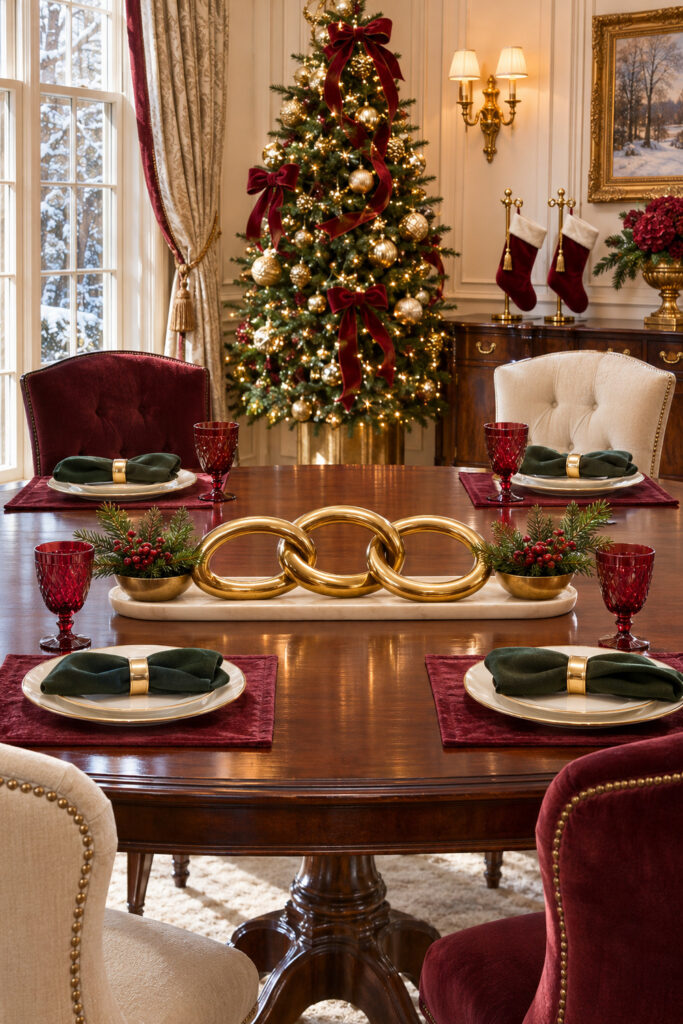
Three interlocking gold rings stretch across a low ivory tray at the center of this Christmas table. Small evergreen bowls sit at either end, leaving the open rings easy to see. Burgundy placemats, forest green napkins, and ruby glasses repeat the richer colors in the decorated tree behind the table.
The centerpiece has presence without becoming a tall barrier. Its open shape leaves the room visible through it, while the tray connects the separate parts into one group. You can adapt that idea with a stable linked-ring ornament or another low open sculpture, keeping enough room around it for the meal and the people sharing it.
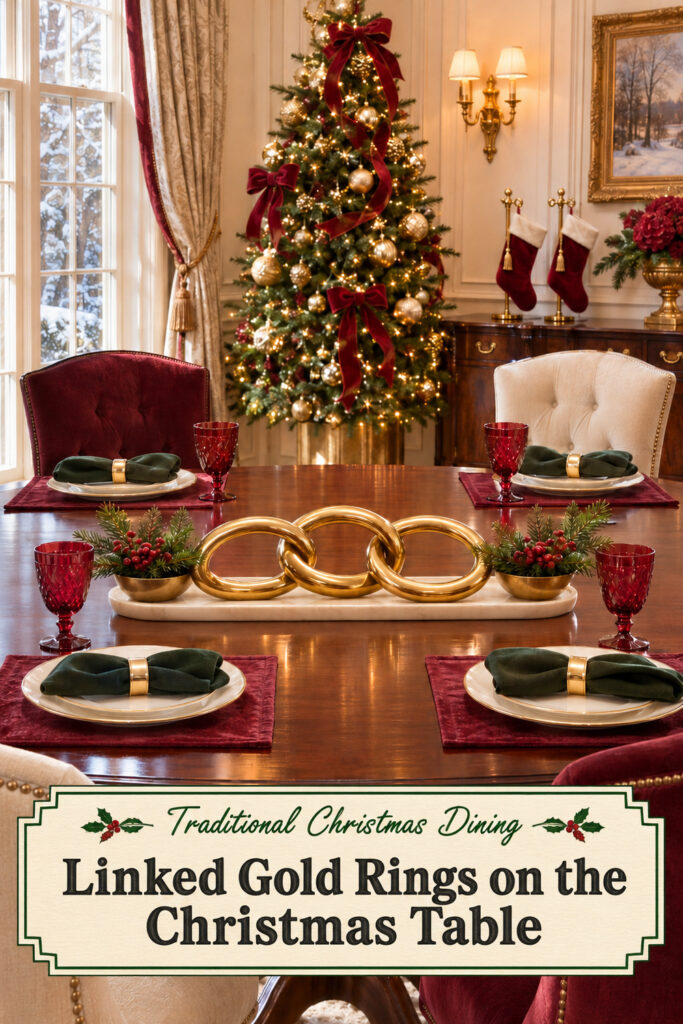
This image was generated with AI as decorating inspiration. Similar pieces can recreate the effect; pictured objects are not verified products.
Use open shapes to make a low centerpiece
The linked rings provide a strong outline against the dark wood. Their gold finish is bright, but the empty space inside each loop keeps them from reading as a solid block. That is useful at a dining table, where the view across the center matters.
The two greenery bowls soften the metal without hiding its links. They also give the tray a clear beginning and end. Their modest height allows the sculpture to remain the main shape instead of disappearing between large flower arrangements.
The tray is part of the composition, not just a carrier. Its pale base separates gold from wood and gathers the bowls into the same visual group. A darker tray would create a different effect, so test the contrast before deciding that the gold needs more shine.
Find a sculpture that stands by itself
Choose a decorative piece intended to rest securely on a surface. The linked form in the image is inspiration; it doesn’t establish the weight, joining method, or stability of a real object. Look for a complete product with sound contact points rather than balancing loose rings against one another.
Check the total height and width, including the angle at which the links naturally rest. Some sculptures look low in a listing photograph but stand much higher when placed in their stable position. Compare the actual footprint with the tray and the clear table area between the place settings.
A rounded or resin gold-colored piece may achieve a similar effect to metal. The material matters less visually than the linked outline, warm finish, and reliable base. Avoid assuming a heavy-looking gold object is solid metal or that a light piece will tolerate being moved by one ring.
If a suitable linked sculpture isn’t available, try one low open ornament that has a secure base. Preserve the clear center and broad horizontal arrangement. Don’t turn this into a construction project using jewelry rings or unsupported hoops merely to reproduce the exact picture.
Give every part a place on the tray
Start with the empty tray and set the sculpture in its natural stable position. Leave enough pale surface around it to show the outline. A piece that fits only when wedged against the tray rim is too large for that base.
Add one low greenery bowl at each end. Their rims need a level resting area rather than a position partly balanced on the sculpture. If the tray is narrow, use one smaller botanical group beside the linked form or keep both bowls outside the tray as a clearly proposed adjustment.
The pictured stems combine dark needles and red berries. Use materials appropriate for the dining setting and keep loose pieces away from plates and food service. If using fresh stems, contain their water fully and protect the tray according to its care needs.
Keep the greenery below the main ring outline where possible. Long stems woven through the openings would make the centerpiece harder to read and less convenient to move. The interest comes from the meeting of an open gold shape and two compact soft groups.
Repeat the colors at the places
Each place uses a burgundy fabric base, ivory plate, and deep green napkin. The dark textiles define individual positions against the polished table. Gold napkin rings repeat the centerpiece on a much smaller scale.
Choose placemats large enough for your real dishes without crowding the neighboring setting. The table in the inspiration has four places with generous gaps. Additional guests may require a smaller centerpiece or a different tray rather than narrower elbow room.
The ruby glasses add color above plate level. A plain clear glass can work if that is what you own; the napkin and placemat already carry the palette. Check the actual glassware’s suitability for the drinks and guests rather than choosing it only for its decorative appearance.
Complete each real setting with the utensils and serving pieces needed for your menu. The image concentrates on the decorative layers and doesn’t provide a complete cutlery plan. Lay out your actual fork, knife, spoon, and any additional dishes before deciding how much center space remains.
Let the room supply the taller Christmas layers
The background tree rises behind the low table centerpiece, with gold ornaments and burgundy ribbon tying the two levels together. That gives the room height without lifting a large floral display into the diners’ view.
Two stockings stand on the sideboard, adding another recognizable Christmas cue. Use appropriate secure holders for the actual display and keep the sideboard accessible if it will also serve the meal. The tree and stockings make the occasion clear without turning the rings into a novelty shape.
The shaded wall light and daylight provide different kinds of warmth. Check how the gold sculpture reflects both. If a lamp creates a bright spot in one person’s eyes, adjust the light or turn the whole stable arrangement slightly rather than changing the ring positions themselves.
Adjust the centerpiece to the table you have
For a round table, use a compact open sculpture on a round or oval tray, keeping the greenery close to its ends. Avoid letting a long tray divide the table into two narrow sides. Reach and plate space should determine the footprint.
On a smaller rectangular table, reduce the greenery first and check whether the sculpture still has enough room to stand securely. You can also display it on the sideboard during the meal. A centerpiece can help set the room before dinner and move away when serving space is needed.
Choose pieces around the open outline
The sculpture and tray are the important pair. Use existing linens and dishes where their scale and color work.
Look for interlocking gold ring sculptures
Check the complete dimensions and natural resting position. Choose a stable freestanding product rather than a hanging decoration adapted without a sound support.
Look for shallow ivory trays
A level base and enough interior width matter more than an ornate rim. Confirm that the sculpture and bowls all sit fully within the usable area.
Shop similar low greenery bowls
Keep the containers compact enough to leave the links visible. Select materials and water containment appropriate for the stems you plan to use.
Check the table from a seated view
Sit at each place and look through the centerpiece. Check the sight line to the person opposite, the reach to serving dishes, and the space around your own glass.
Try lifting the complete tray only if it is intended for that load. Otherwise move the pieces separately. Decide where they will go before the meal so clearing the table doesn’t become an improvised balancing act.
Final Styling Tip
Keep the greenery outside the ring openings. The clear spaces are what make this gold centerpiece feel light enough for a dining table.