*This post may contain affiliate links for which I earn commissions.*
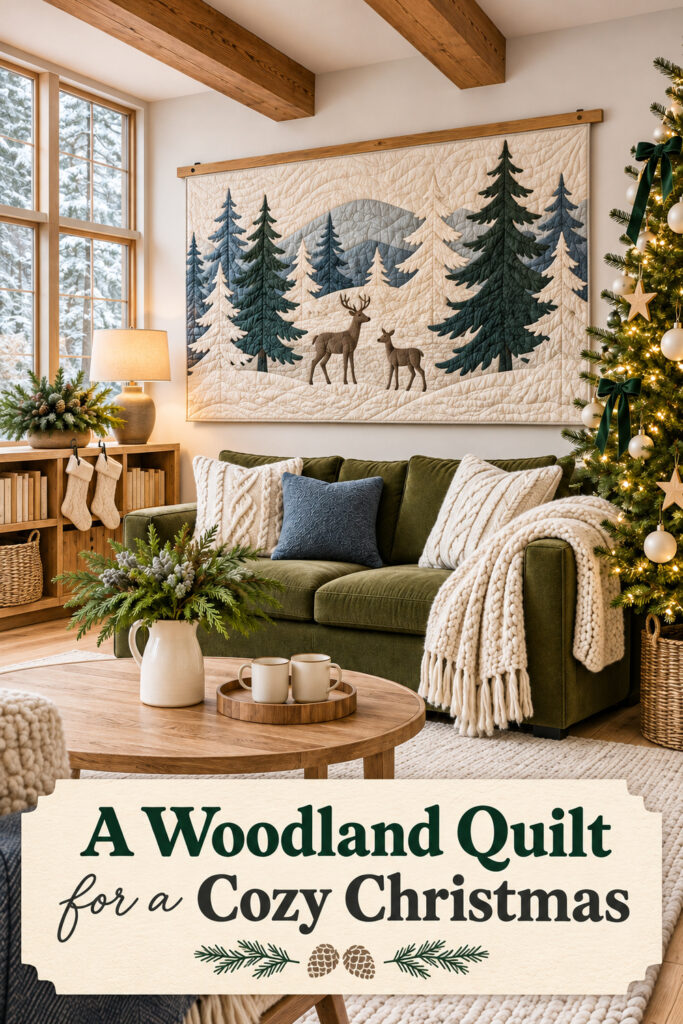
The forest scene above this sofa is stitched into a quilt, which gives the wall the same soft feeling as the room below it. Pale trees, blue-gray hills, and two deer create a clear woodland picture without a strong mix of colors. The oak hanger keeps the large textile flat enough to read from across the room.
A green sofa, cream knitted cushions, and a broad wool throw repeat the quilt’s colors at seat height. The Christmas tree and small stockings add the holiday details. You can use a similar landscape textile as the starting point, then connect the room through a few familiar fabrics and natural materials.
This image was generated with AI as decorating inspiration. Comparable textiles and furnishings can create a related setting.
Give the Quilt Enough Wall Space
The large rectangular shape sits over the sofa rather than disappearing into a collection of smaller wall pieces. Its pale background helps the dark trees show, while the wider scene relates to the width of the furniture. Choose a textile that can hold that place on the wall without crowding nearby windows or trim.
Measure the available wall and compare it with the sofa before choosing the quilt size. A small piece may work better as part of another arrangement, while an oversized one could press against the ceiling or neighboring furniture. Paper outlines can help you judge the proportions before installing a hanger.
The image suggests a stitched landscape with a few clear layers. A woodland quilt, a suitable fabric wall hanging, or another substantial textile could carry a similar idea. Don’t assume an exact copy of this generated forest scene is available as a retail product.
A proper textile hanger helps distribute support along the upper edge. Choose a method appropriate for the quilt’s size, weight, and construction. Avoid hanging a heavy fabric from a couple of small clips that pinch or distort the top corners.
If the quilt has value or delicate materials, use a display method suited to its condition. Follow appropriate care guidance and keep it away from damaging heat or strong direct light. A seasonal wall arrangement should be enjoyable without making the textile harder to care for afterward.
Bring the Landscape Colors Down to the Seating
Let Green Form the Quiet Background
The green sofa repeats the darker trees in the quilt. That connection makes the textile feel related to the furniture instead of like a separate picture added after the room was finished. The sofa’s simple outline also leaves the wall hanging as the most detailed large surface.
You can keep an existing neutral sofa and repeat green through cushions or a throw instead. Choose a shade that relates to the textile without needing an exact match. A little variation between moss, fir, and olive can add depth when the rest of the palette stays controlled.
If your sofa already has a strong pattern, choose a quieter woodland textile or reduce the number of patterned cushions. The forest scene needs room to be read. Several competing pictures across the wall and seat could make the room feel busier than its soft fabrics suggest.
Mix Knitted and Woven Cushions
The ivory cable-knit cushions echo the quilt’s pale trees, while a blue cushion picks up the hills and distant branches. Their textures vary, but their colors remain close to the wall scene. This gives the sofa layers without needing a different print on every pillow.
Start with the cushions you use comfortably, then add one texture that is missing. If the sofa already has a soft nubby fabric, a smoother woven cushion may provide enough contrast. The whole seating area doesn’t need to look as though it was knitted in one enormous sitting.
Keep enough of the sofa visible for the green to remain part of the picture. Cushions that fill every inch of the seat can hide that useful background. Arrange the larger ones first, then stop when the seat still looks easy to settle into.
Fold the Throw Where It Can Be Reached
The cream throw spreads over the arm with its thick fringe together. Its pale color links the sofa to the rug and quilt, while the broad fold keeps it from looking like a loose heap. A guest can pick it up without moving the entire cushion arrangement.
Choose a blanket with a weight and care routine that suit actual use. Keep fringe away from moving furniture parts and leave the floor route clear. If a heavy knit slips off your sofa arm, fold it over the back or keep it in a nearby basket instead.
The rug repeats the ivory at floor level. You can use a flatter woven rug if the cushions and throw already provide plenty of texture. Check that furniture legs sit securely and that the rug edges stay flat along the route through the room.
Make Christmas a Layer Around the Woodland Scene
The decorated tree stands to one side of the sofa, with warm lights, pale ornaments, wooden stars, and green ribbon. Its shape repeats the trees in the quilt without copying the wall picture exactly. The asymmetrical placement also leaves the quilt’s main scene visible.
A shorter tree or a small decorated branch arrangement can provide the same holiday connection in a compact room. Keep it clear of the sofa arm and any lamp or outlet that needs access. Choose the size around the available floor space rather than the empty height above it.
The small stockings on the low bookcase add another clear Christmas cue. Their knitted texture relates to the sofa cushions, while their modest scale keeps the wall hanging in charge. Use a few seasonal details like these instead of trying to make the quilt itself carry every holiday symbol.
The coffee table stays low, with a pitcher of greenery and two mugs on a tray. Keep the branches contained and leave room for a hand to reach a mug. The larger decorating story is already on the wall and beside the sofa, so the table can remain useful.
Build the Room Around the Textile
- Plan the quilt position and install an appropriate hanger. Check that the textile hangs level and isn’t touching nearby lights, trim, or furniture that could catch its edges.
- Repeat its main colors through the seat and cushions. Use the largest fabric areas first, then compare the smaller pillows before introducing another pattern.
- Place the tree and smaller Christmas details. Keep the quilt visible from the doorway, and adjust any branch or stocking that merges awkwardly with the forest scene behind it.
- Finish the table, lamp, and throw. Sit down and check that the room remains comfortable to use, with clear access to the mugs, lighting controls, and routes around the furniture.
Choose Textiles with Related Colors
Look for Woodland Landscape Quilts
Compare the scale of the stitched scene and the overall dimensions. A broad, readable landscape will make a clearer wall feature than a tiny detailed pattern viewed from across the room.
Shop Similar Quilt Wall Hangers
Choose a support method suited to the textile’s weight and construction. Check the mounting requirements and how the hanger distributes the load along the upper edge.
Look for Ivory Knitted Cushion Covers
Use their texture to repeat the pale shapes in the quilt. Keep a few smoother fabrics nearby so the different stitches remain easy to notice.
Final Styling Tip
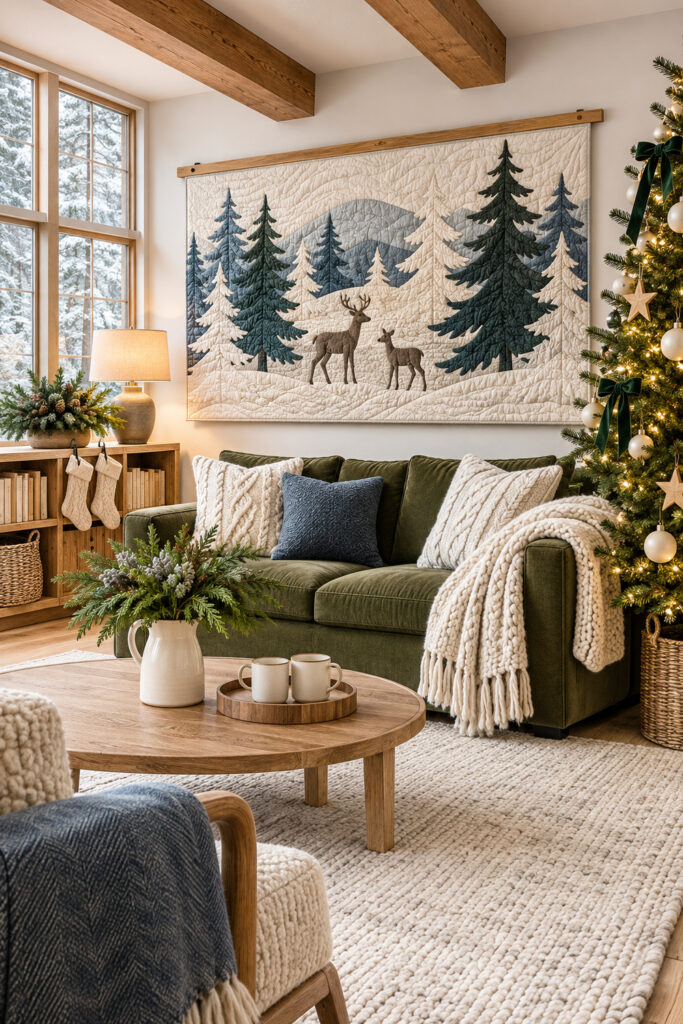
Look at the room from the doorway and find one quilt color repeated below it. If that connection is clear, you can stop adding accessories and let the textile tell the woodland story.