*This post may contain affiliate links for which I earn commissions.*
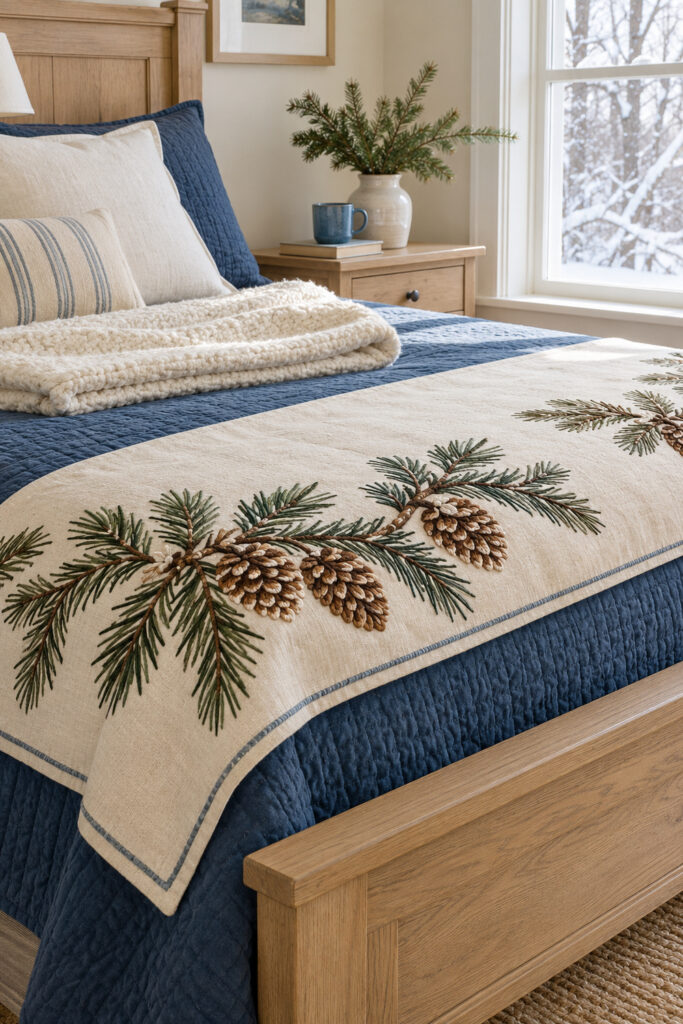
An embroidered runner changes the foot of this bed without covering up the blue quilt beneath it. Pine branches and brown cones spread across the ivory fabric, with a fine blue border linking the runner back to the bedding. A folded cream blanket gives the upper part of the bed a softer, deeper texture.
The result feels seasonal without Christmas ornaments or holiday lettering. You can borrow the idea with a woodland textile you already own or a similar decorative runner, using the bed as a quiet background for one detailed piece.
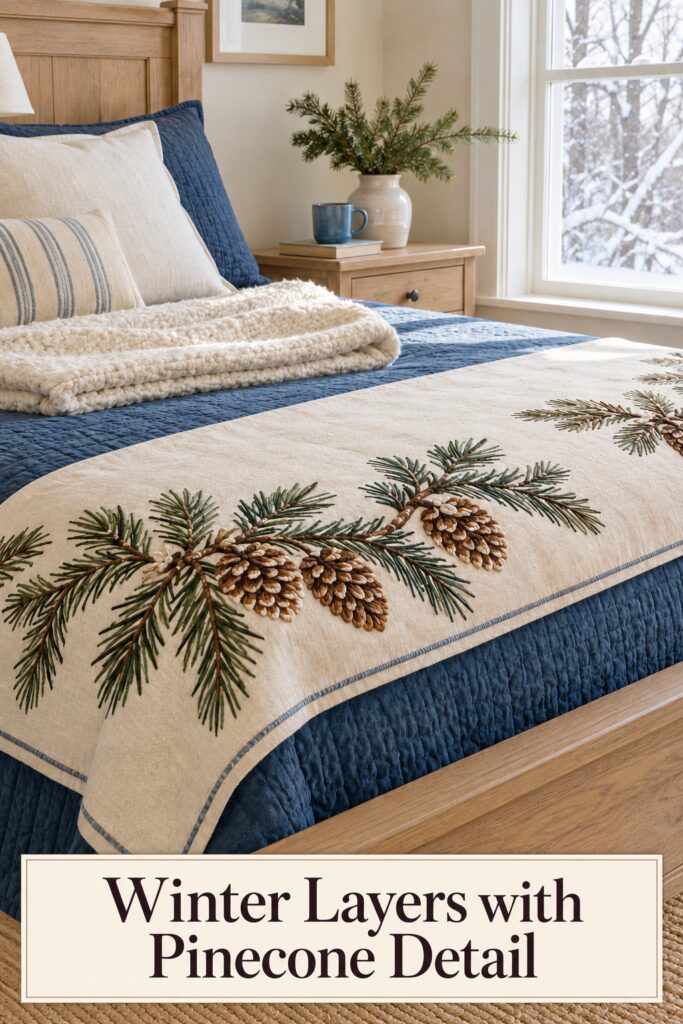
The inspiration image was created with AI and does not depict a verified textile or an actual decorated bedroom.
What Makes This Winter Bedroom Work
The runner introduces a clear change in color and texture across the lower bed. Ivory fabric makes the green needles and layered brown cone shapes visible, while the deep blue quilt gives the pale edges a strong outline. The narrow blue border is a small detail, but it helps the runner feel related to the bedding underneath.
The cream blanket adds bulk and softness behind the flatter runner. That contrast keeps the textiles from looking like several identical layers. One is there for its stitched design, one for its quilted surface, and one for its thick knit texture. Keeping the colors restrained allows those differences to show without making the bed feel busy.
Pale wood and simple bedside pieces support the same calm effect. A blue mug repeats the quilt, and unadorned evergreen stems echo the embroidery. The snowy view reinforces the season, but pinecone motifs and soft textiles can suggest winter in your own room too.
Find Pinecone bed runners
Browse current Amazon options that can help you recreate this look.
Browse Pinecone bed runners on Amazon →As an Amazon Associate I earn from qualifying purchases.
Key Pieces for the Winter Bed
An Ivory Woodland Runner
Look for a textile with a pinecone or evergreen design that can be read across the width of the bed. Embroidery gives a raised, stitched surface like the inspiration, while a printed woodland pattern can provide a similar color effect with a flatter finish. Choose based on the texture you want and the care routine that suits you.
Check the runner’s dimensions against the mattress before deciding it will work. A table runner may be too narrow or too short to drape like the broad textile shown here. If you use a smaller piece, lay it flat within the bed’s width rather than forcing an uneven overhang. The image suggests a substantial bed scarf, not a narrow strip stretched beyond its size.
A Deep Blue Quilt
The blue quilt supplies a plain field behind the embroidery. A subtle stitched texture adds interest without another competing design. If you already own blue bedding, begin there. The shade can be softer or darker than the pictured version as long as the ivory runner remains distinct.
Pull the quilt smooth enough that the runner has a level place to sit. Deep folds under the embroidered edge can break up the design and make the drape uneven. You don’t need a perfectly flat hotel bed, but a little preparation helps the most interesting textile look intentional rather than temporarily set down.
A Cream Textured Blanket
The folded blanket bridges the blue quilt and pale pillows. Its thick texture makes the bed feel prepared for cold weather without introducing another motif. Fold it broadly across the bed, leaving a visible gap of blue between it and the runner if the arrangement starts to look crowded.
Use a blanket you like to handle and care for. The material in an inspiration photo can’t tell you how warm, heavy, or washable a purchasable item will be. Pick for everyday comfort first, then use the fold to create the visual effect. A lighter blanket can still give a similar pale band across the bed.
Simple Cream and Blue Pillows
Plain light pillows keep the upper bed calm. A blue back pillow repeats the quilt, while a striped smaller cushion adds a little line without taking attention from the pinecones. You can omit the stripe if your runner has a busy border or your headboard already includes strong detail.
Arrange only the pillows you enjoy using. If the bed is narrow, one blue accent behind the usual sleeping pillows may be enough. The embroidery is the decorative focus, so there is no need to build another focal arrangement at the head of the bed. Give the two ends a clear relationship rather than equal amounts of detail.
A Small Evergreen Vase
The bedside vase repeats the stitched branch shapes in a loose natural form. Keep the arrangement modest so it doesn’t hide the window or occupy the whole nightstand. A cream vessel connects to the runner and blanket, and a blue mug supplies a small second color link.
Fresh stems need a suitable watertight vase and regular attention. Faux branches offer the same shape without water beside books or furniture. Whichever you choose, keep the vase back from the edge and leave room for the items you normally use at night. A bedside table can be seasonal and still have a job.
How to Style the Runner at Home
Begin by measuring the bed’s visible width and comparing it with your textile. Decide whether you want an overhang or an inset placement before folding anything. If the embroidered area sits along one edge, turn that edge toward the side most often seen from the doorway. Check that the design will remain visible rather than folding underneath.
Spread the blue quilt, set the runner across the lower bed, and adjust the ends together. A runner that’s centered on top can still appear uneven if one side catches on a footboard. Step around both sides and let the fabric settle naturally. Avoid pulling it so tightly that the embroidered surface distorts.
Add the cream blanket farther up the mattress and smooth its fold. Keep the runner separate enough that the pine branches are easy to see. If the bed feels overloaded, remove a pillow before removing the textile contrast that makes this arrangement interesting. The combination of flat embroidery, quilt stitching, and soft knit is the main lesson here.
Finish with one small bedside group, then check the room from the entrance. A blue mug and plain vase can be enough. When it’s time to sleep, give the decorative runner a clean storage spot if it isn’t intended as bedding. Folding it carefully will also protect raised stitching from being crushed under a stack of other accessories.
Shop Similar Winter Textiles
Shop Similar Pinecone Bed Runners
Check whether the design is embroidered, printed, or woven so the texture matches your expectations. Compare the full dimensions with the mattress, including any desired drop. A broad woodland bed scarf may reproduce the inspiration more closely than a narrow dining runner.
Look for Plain Blue Quilts
A quiet surface gives detailed embroidery room to stand out. Read the fabric, filling, and care information when choosing for everyday use. A related blue tone will connect with a fine runner border without needing to match it exactly.
Add a Cream Textured Blanket
Choose a practical size that folds across the bed without covering most of the quilt. Texture can provide interest even when the color is very simple. Check washing instructions before selecting a heavy or loosely knitted piece.
Shop Similar Cream Bedside Vases
Look for a stable base and an opening that will hold a small branch group. A plain vessel will repeat the runner’s light background without competing with its design. Confirm it is watertight if you plan to use fresh greenery.
Final Styling Tip
Stand at the bedroom doorway and check whether you can see both the pinecones and a clear band of blue quilt. If those two elements read easily, the runner is doing its job and the rest of the bed can stay simple.