*This post may contain affiliate links for which I earn commissions.*
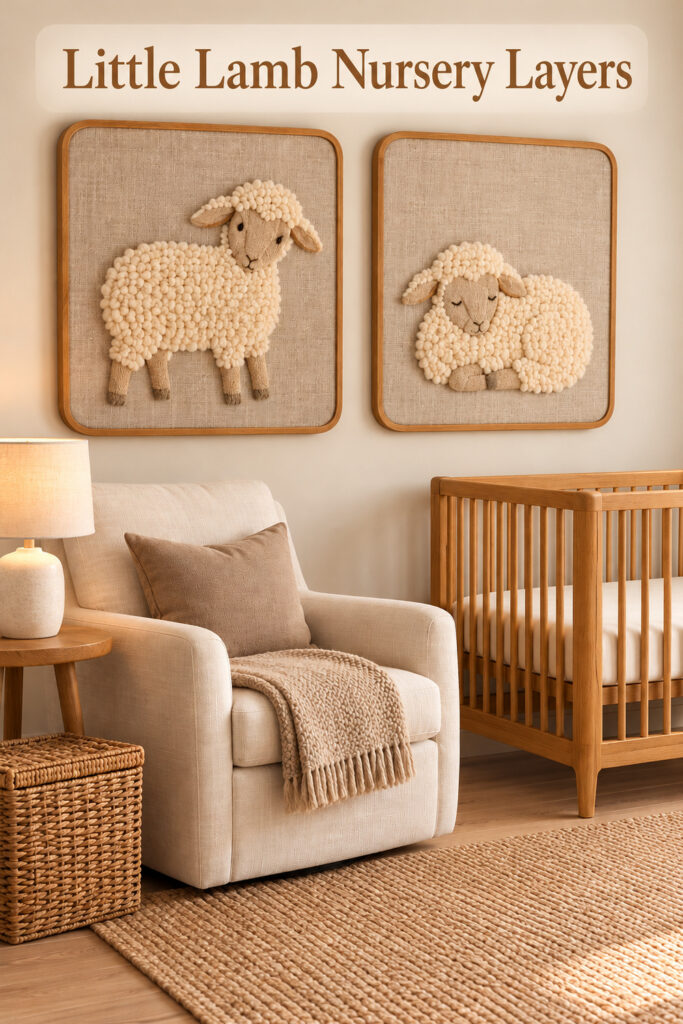
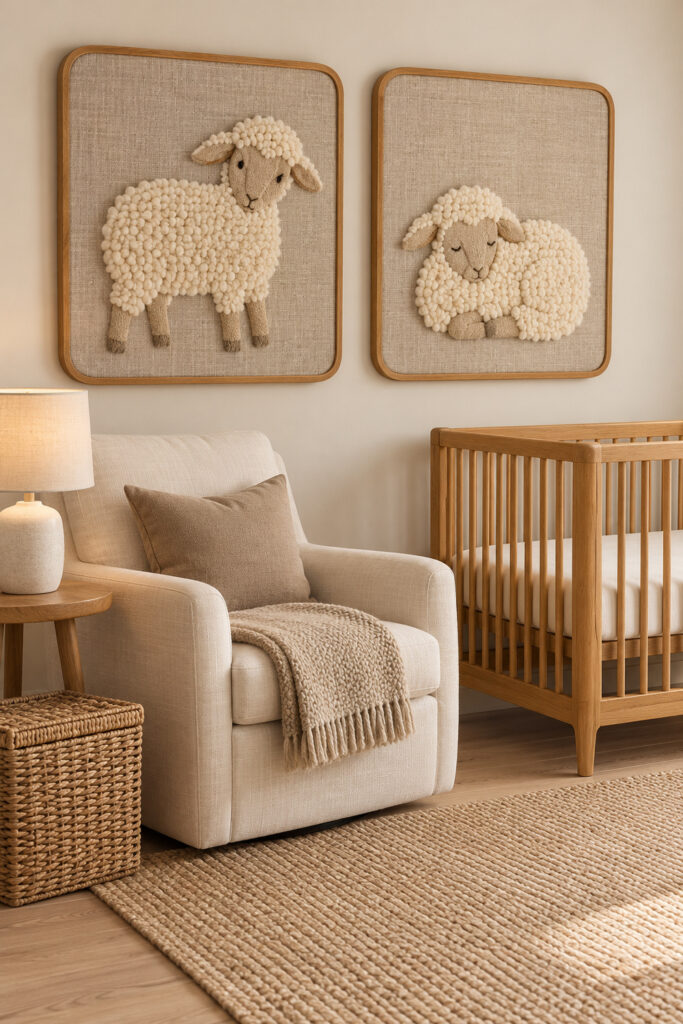
Two woolly lamb pictures give this neutral farmhouse nursery its main decorative feature. Cream loops form the bodies against oatmeal fabric, with tan faces and simple wooden frames. A pale nursing chair, warm wood crib, and woven storage repeat the same small group of colors around the room.
The different lamb poses keep the pair interesting without making the wall busy. One stands and the other rests, so they feel related rather than identical. You can borrow that approach with similar textile artwork or another coordinated pair, while arranging the real nursery around safe use and everyday care.
This inspiration image was created with AI and does not depict verified nursery products or a safety assessed room arrangement.
Why the Lamb Artwork Is the Focal Point
The raised wool has a very different surface from the flat fabric behind it. Light catches the small loops and makes the animals easy to recognize even though the colors stay close together. Tan faces and legs add definition without introducing a strong new accent shade.
The frames repeat the wood tone of the crib and side table. Their rounded corners also soften the rectangular pictures, which suits the curved forms of the lambs. You could achieve a related effect with simple rectangular frames if they are what you already own.
The room’s larger surfaces are quieter. Plain upholstery, a pale wall, and a simple rug allow the artwork to carry most of the detail. That balance is useful in a nursery, where storage and care supplies will add their own visual activity once the room is in daily use.
Find coordinated lamb wall art
Browse current Amazon options that can help you recreate this look.
Browse coordinated lamb wall art on Amazon →As an Amazon Associate I earn from qualifying purchases.
Key Pieces for the Room’s Decorating Effect
A Coordinated Pair of Lamb Pictures
Look for two images that share their palette and general scale, with different poses or compositions. Raised textile artwork is closest to the inspiration, but framed fabric prints or simple animal illustrations can create the same paired arrangement without reproducing the imagined objects.
Treat tufted pieces as adult decorative objects, not toys. Check how fibers, backing, and frames are finished, and whether anything can detach. A picture that looks soft can still contain a hard frame or loose parts that belong out of a child’s reach.
Choose the wall position according to the actual furniture layout. The inspiration does not establish safe distances: in a real nursery, keep wall decor and anything that could fall or be pulled down away from the crib and its reachable area. Move the pair to a separate wall if necessary.
Oatmeal Fabric and Warm Wood Frames
The backing gives the cream bodies enough contrast to show their outline. A nearly white lamb on a nearly white ground may be harder to see, especially from the doorway. Look for a small difference between the body and background rather than a strong dark border around every shape.
A warm frame can connect the pictures to existing furniture. It does not need to match the crib exactly. Compare the undertones together, then let modest differences in grain and finish remain; this room’s appeal comes partly from visible natural materials.
A Comfortable Adult Chair
The pale chair echoes the lamb wool on a much larger scale. Choose seating for your comfort and available floor space first. A decorative cushion or throw can add the taupe tone, but keep those adult textiles separate from the baby’s sleep space.
Try the chair’s movement and position before planning the side table. A rocker or glider needs clearance around its moving parts. Leave a convenient route between the chair, doorway, and care area instead of arranging everything only for a straight-on photograph.
Practical Woven Storage
A lidded basket introduces a coarse woven surface beside the finer fabric. Use it for suitable household storage if it fits the routine of the room. Check for rough edges or loose strands, and place it where it will not block walking or chair movement.
The basket need not be large. A smaller container on another surface can repeat the warm brown texture if floor space is limited. Choose storage around what you actually need to put away, then consider how its color relates to the artwork.
A Plain Lamp and Neutral Rug
The lamp in the image adds a smooth pottery surface beside the textured chair and wool pictures. In a real room, keep the lamp stable and its cord secured well out of reach. A decorative arrangement should never require a trailing cable across the route to the chair.
Choose a rug that lies securely and works with the room’s cleaning needs. A subtle texture is enough to support the textile theme. You do not need an elaborate pattern beneath the furniture when the wall art already provides the recognizable subject.
Separate the Decorating Area from the Sleep Area
Use the chair wall or another clear wall as the main place for artwork. Keep the actual crib area simple, with no hanging decorations or loose decorative items within reach. The photograph is an inspiration source, so furniture and art can be moved wherever your real layout requires.
For a baby’s sleep space, follow current safe sleep guidance and the crib manufacturer’s instructions. A firm flat mattress with its fitted sheet is the visual starting point here; do not move the chair’s cushion, throw, or other decorative textiles into the crib to repeat the palette.
Keep the crib away from reachable cords and objects that could be pulled down. As a child grows, their reach changes, so revisit the room rather than treating the original arrangement as permanently suitable. The artwork can keep its role even if it moves to another wall.
Hang the Pair as One Arrangement
Lay the pictures on the floor or use paper outlines to plan their relationship before hanging. Compare the distance between the frames with the width of each picture. You want the pair to read together without being so close that the edges appear to touch.
A shared top line is a useful starting point for similarly sized pieces. Stand at the doorway and see whether both lambs are easy to recognize. If one frame is much heavier or darker, balance the arrangement through spacing rather than adding another small picture just to fill a gap.
Use appropriate fixings for the wall, picture weight, and frame construction. Follow the hardware instructions and choose a position away from the sleep area. Do not rely on a decorative fabric loop or an unknown backing to carry a substantial framed panel.
Keep the side table quieter than the wall. A lamp and a practical place for adult essentials may be all it needs. Extra animal figures, little signs, and several small baskets would make the room busier without strengthening the paired artwork idea.
Shop Similar Pieces
Look for Coordinated Lamb Textile Wall Art
Compare scale, backing, finishing, and mounting provisions. A well-made flat illustration is a sensible substitute when raised wool pieces are unavailable or unsuitable for your room.
Shop Similar Oatmeal Frames and Neutral Chair Textiles
Use the pictures’ cream and tan colors to guide small accents. Keep cushions and throws in the adult seating area and select pieces that fit your care routine.
Add Useful Woven Storage and a Plain Lamp
Choose stable, practical items sized for the room. Let them support the wood and fabric palette rather than crowding the surfaces around the main pictures.
Final Styling Tip
Choose the artwork first, then repeat just two of its colors around the adult seating area. Keep the crib area clear and let the lamb pair supply the personality from an appropriate separate wall.