*This post may contain affiliate links for which I earn commissions.*
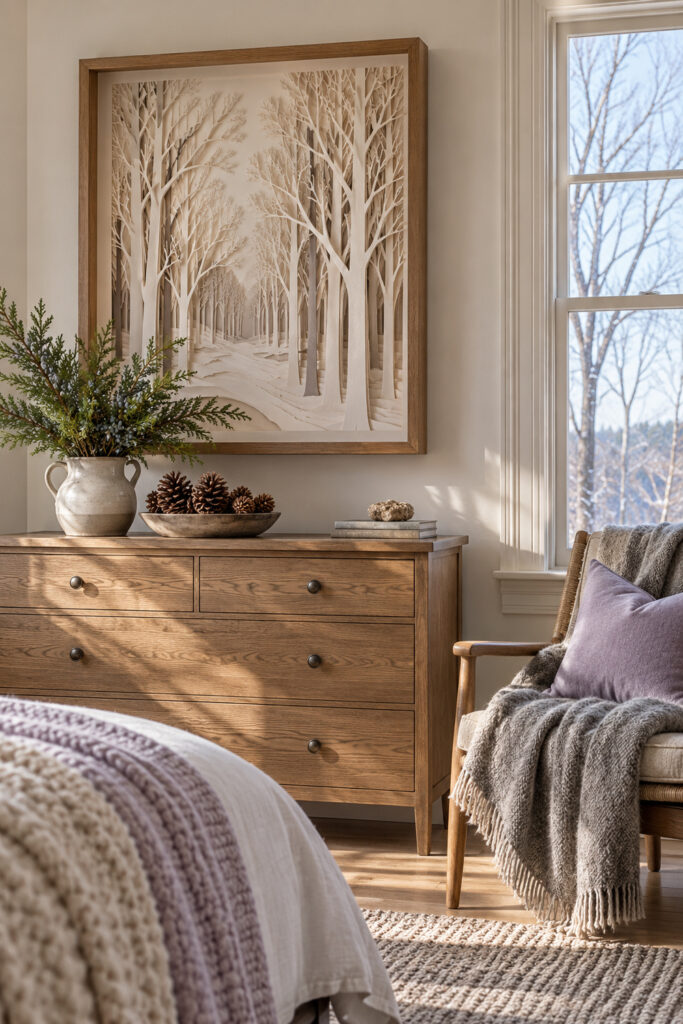
Bare trees become the main decoration in this quiet winter bedroom. A deep wooden frame holds an ivory woodland relief above an oak chest, and light from the window picks out the layers. A grey wool throw, a pale lilac cushion, and small natural accents make the paper feel part of the room.
This is a useful direction when you want winter decor that can stay after Christmas. The image suggests depth, soft texture, and a few cool colors rather than holiday symbols. You can create a related effect with dimensional tree art and furnishings you already use.
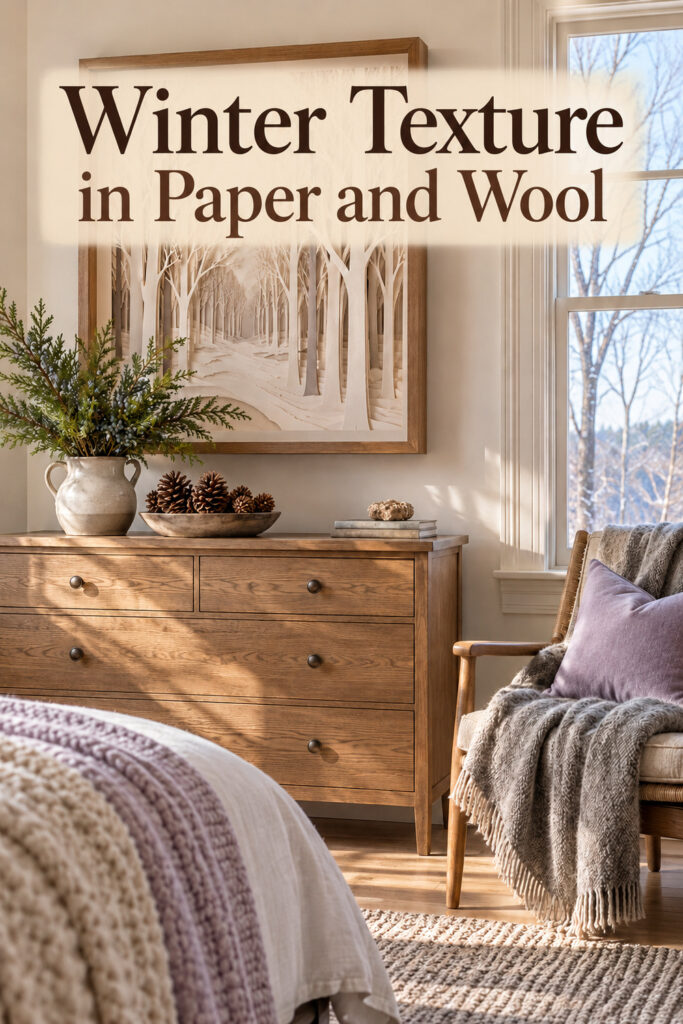
This inspiration image was created with AI and does not depict verified retail artwork or a documented paper craft project.
What Gives the Paper Woodland Its Depth
The largest tree trunks sit near the front of the frame, with smaller shapes receding toward the center. Pale layers overlap without becoming a flat white rectangle. Side light makes shadows between them, so the differences remain visible even though the colors are very close.
A medium brown frame gives all that ivory a clear boundary. It also connects the artwork to the chest below. The two wood finishes don’t need to match exactly; a similar warmth is enough. The chest’s broad drawers provide a plain, practical base beneath the more intricate branches.
The room repeats winter texture in several sizes. Fine paper branches contrast with thick knitted bedding and a softly rumpled throw. Pinecones add small dark shapes on the chest, while the bare trees outside repeat the subject without becoming another indoor decoration.
Find 3D Tree Art
Browse current Amazon options that can help you recreate this look.
Browse 3D tree art on Amazon →As an Amazon Associate I earn from qualifying purchases.
Key Pieces for This Winter Arrangement
Dimensional Bare Tree Artwork
Look for framed paper relief, layered woodland art, or another dimensional interpretation of bare branches. Depth is the feature that distinguishes this idea from an ordinary landscape print. A shallow shadow box can work if the subject and frame proportions suit the furniture below it.
The illustrated carving of branches shouldn’t be treated as proof of a particular construction method. If you’re choosing finished art, look at close views and the stated materials. A printed picture may offer a similar subject, but it won’t cast the same little shadows, so judge it on its own merits.
A Frame with Enough Presence
The frame in the image is substantial enough to balance the chest. Its simple outline keeps attention on the woodland scene. Ornate corners or a very dark finish would introduce another strong pattern, which could make the paper look more delicate by comparison.
Before hanging, mark out the proposed frame size with removable paper on the wall. Sit in the room and check its relationship to the chest and window. Use hardware suited to the artwork’s weight and your wall, rather than assuming an existing picture hook will be sufficient.
An Oak Chest and a Few Low Objects
The chest offers a long surface, but only a few groups occupy it. A pale pitcher with branching greenery sits to the left, a shallow bowl of pinecones rests nearby, and a small object sits on two closed books to the right. Open wood remains visible between the groups.
You can use a dresser or cabinet you already own. Keep the top practical by moving everyday items into a tray elsewhere, rather than hiding them behind the new display. If the furniture is narrow, choose either the pitcher or the bowl and leave the other out.
Grey Wool and a Little Lilac
The chair beside the window carries a grey throw and a pale lilac cushion. Those colors cool the warmer wood without making the room feel icy. The knitted layer at the foot of the bed repeats the lilac softly, connecting the two sides of the scene.
Choose textiles that are comfortable and suited to their actual use. You don’t need a matching set. A single lilac pillow can supply the color, while a grey blanket you already own provides the larger area of texture. Keep heavily patterned textiles away from the detailed artwork if you want its branches to stand out.
Style the Chest Without Crowding the Artwork
Start with the art and furniture relationship. Position the frame so it feels connected to the chest, leaving a comfortable strip of wall between them. There isn’t one perfect gap for every room. The frame’s height, the chest’s depth, and your ceiling all affect what looks balanced.
Arrange the pitcher next, checking the branches against the artwork. In the inspiration, greenery overlaps part of the lower left area but doesn’t hide the central path through the trees. Keep the tallest stems toward the outside, where they can soften the frame without cutting across its most interesting detail.
Use a watertight inner container for fresh stems if your pitcher isn’t suitable for water, and protect the wood beneath. Faux branches offer another option. Choose fine sprays that spread loosely rather than a dense ball that would block the relief’s lower half.
Set the pinecones in a low bowl, with a few of their darker scales facing the room. Their purpose is to repeat the natural subject and add a little contrast. You don’t need to scatter more across the chest. Loose pieces can make dusting awkward and weaken the tidy outline of the bowl.
At the other end, keep the book stack low. Two neutral covers support a small textured object without competing with the pitcher. If you use books you want to read, make them easy to lift out. A display works better when it doesn’t turn familiar furniture into something inconvenient.
Finally, look at the wall at different times of day. The image’s window light reveals the paper layers beautifully, but direct sun may be unsuitable for some materials. Follow the artwork’s care advice and consider nearby soft lighting if the frame sits in a dimmer part of your home.
Shop Similar Pieces for Winter Texture
Look for Layered Woodland Wall Art
Compare the depth of the frame and the visibility of the front and back layers. Bare branches, pale paper, and a plain wood surround are the main visual ingredients. You can choose a smaller composition if it leaves appropriate space above your own chest.
Shop Similar Pale Ceramic Pitchers
A rounded, softly textured vessel sits comfortably with the oak and wool. Check that its base is stable when filled with spreading branches. An existing cream jug may provide exactly the right shape, even if its handles and glaze differ from the illustration.
Add Wool Look Throws and Lilac Cushions
Focus on texture before trying to match the exact shade. A soft grey throw with visible weave or fringe can connect the chair to the relief’s delicate branches. Keep the lilac muted enough to sit quietly beside the ivory, then repeat it once if the room needs a little more connection.
Final Styling Tip
Leave the central part of the woodland scene unobstructed. If a stem or tall accessory interrupts the path between the trees, move it outward so the artwork keeps the depth that makes this winter idea special.