*This post may contain affiliate links for which I earn commissions.*
A polished silver samovar gives this winter tea table a clear center. Plum fabric crosses an ivory tablecloth, teal napkins sit beneath gold rimmed cups, and a tiered stand lifts the little cakes above the table. Behind it, jewel colored cushions continue the palette around the seating.
The idea works because the tea service has room to be seen. The linens provide broad areas of color, while flowers and serving pieces add shape. You can borrow that balance with a teapot and tray if a samovar isn’t something you already use.
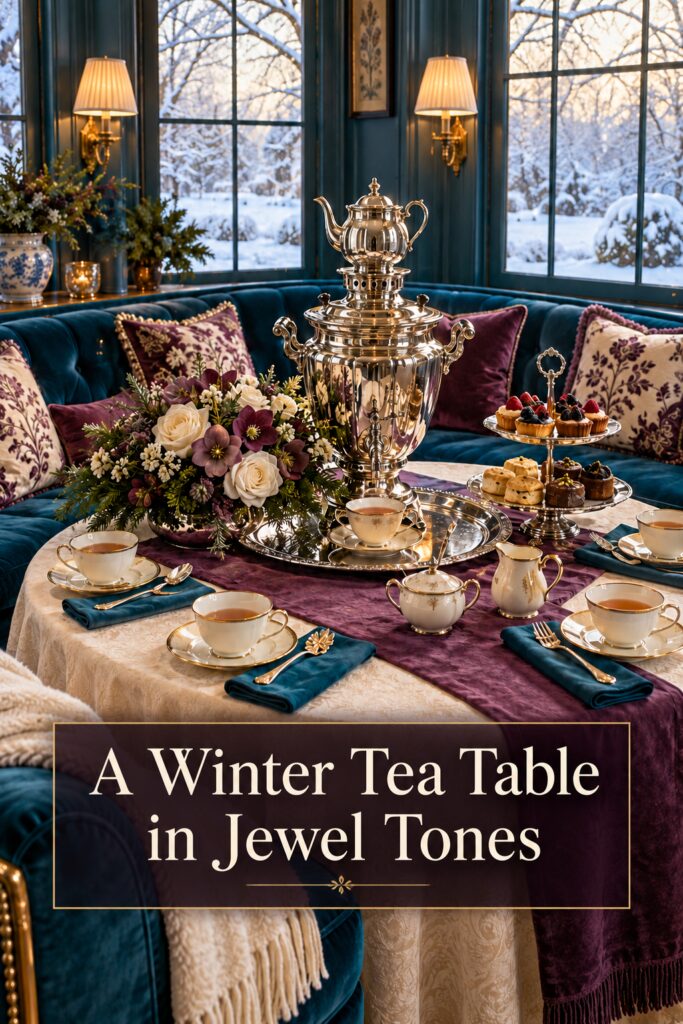
The inspiration image was created with AI and shows a decorating concept rather than a photographed tea gathering.
What Gives This Tea Table Its Shape
The tall central vessel contrasts with the low flowers and cups around it. Its reflective surface picks up the lighter tablecloth and nearby window, so it remains distinct against the teal seating. The tiered cake stand provides a second raised shape without duplicating the samovar’s bulk.
Plum and teal appear in both the linens and the cushions. Those repeated colors link the table to the seats, making the arrangement feel like part of the room. Ivory keeps the table bright, while small gold details connect the cups, cutlery, and warm lighting behind them.
The napkins also give each place setting a defined patch of color. Notice that the cups don’t need elaborate decoration to show against them. If you use patterned china, quieter napkins will let the pattern stand out without making the table look busy.
Find Silver Serving Trays
Browse current Amazon options that can help you recreate this look.
Browse Silver Serving Trays on Amazon →As an Amazon Associate I earn from qualifying purchases.
Key Pieces for a Jewel Colored Tea Table
A Silver Samovar or a Teapot on a Tray
The samovar is the focal object in the inspiration, with a visible tap and a small pot above it. Treat it as a shape and finish reference unless you already own a working vessel suited to serving tea. An ornamental or vintage example of unknown condition can be displayed empty.
For serving, use equipment whose food contact suitability and operating instructions you can confirm. A silver toned teapot on a broad tray can recreate the central shine with fewer practical demands. Keep the handle, lid, and pouring area accessible rather than surrounding the pot tightly with flowers.
An Ivory Tablecloth
The pale cloth separates the dark seating from the table’s colored layers. A subtle woven pattern adds texture without competing with the plum runner. Use a cloth that fits the table, checking the drop beside each chair so guests can sit down without catching it.
If your table has a finish you enjoy, you can leave part of it visible and use a broad pale runner instead. Preserve the contrast between the light base and jewel colored fabric. That contrast does more for this arrangement than an exact damask pattern.
A Plum Runner and Teal Napkins
The runner gives the central silver pieces a dark background, making their edges easier to see. Choose fabric that lies flat under trays and dishes, with no bulky folds beneath serving vessels. The inspiration’s plush texture can be suggested by a soft woven runner if velvet would be difficult to clean.
Fold the teal napkins into simple rectangles and repeat the position at every setting. Their color relates to the seating but still stands apart from the plum center. Place cups and saucers on a flat, stable surface; if thick napkins make them wobble, move the fabric alongside instead.
Cream Cups with Warm Metal Details
Pale cups and saucers keep the table service readable against the darker napkins. Gold toned rims are a useful link to the spoons and room lighting, but plain white china will also sit comfortably in this palette. Mix pieces with a similar scale if you don’t own a matching service.
Arrange the handles for comfortable lifting and give each saucer enough space beside the next setting. Leave the sugar bowl and milk jug where they can be passed without reaching over a tall hot vessel. Their practical position should decide the final arrangement.
A Tiered Cake Stand
The stand introduces height while keeping several small treats in one area. Choose a stable stand intended for food use, and place it fully on the table rather than close to an edge. Load the lower tier first and keep the portions balanced so it feels secure.
You can use two ordinary plates at different places on the table instead. The visual effect will be lower, but the arrangement can still work if the central tea vessel supplies the height. Avoid improvised stacks that aren’t designed to support serving dishes.
White and Plum Flowers
The low bouquet repeats both the pale china and the dark runner. Greenery loosens its outline without covering the whole table. Keep stems contained within the arrangement so they don’t trail across saucers or into the food.
Choose a stable vase with a waterproof interior and check its height from the seats. The flowers should let guests see one another and reach the tea service. A smaller arrangement at one side of the tray often leaves more usable space than a large bowl placed directly in front of the tap.
How to Set Up the Tea Table for Use
Lay the cloth and runner first, then put the empty serving tray in place. Work with the actual tray and tea vessel rather than guessing how much room they need. Check that the furniture can support the full weight of a filled vessel and that everything sits level.
Decide who will pour. In a compact seating nook, one host serving from an accessible side can be easier than asking everyone to reach toward the center. Put the cups within comfortable passing distance and leave a clear landing space for a filled cup before it goes to a guest.
If using a working samovar, follow its instructions for heat, filling, and clearance. Don’t operate a fuel burning or electrically heated vessel on decorative velvet unless the manufacturer explicitly permits that setup and the required heat protection is in place. You can keep the samovar as an unheated display and serve from a separate suitable pot.
Add the cake stand where it won’t hide the pouring area. Then set the sugar and milk beside a clear section of the table, followed by the flowers. If the center becomes crowded, reduce the bouquet or move the stand to an adjacent serving surface. The tea ritual needs some breathing room.
Finish the seating with a few plum or cream patterned cushions. Keep them far enough back that they don’t push guests forward into the table. A folded throw at one end can suggest the winter softness in the image without leaving loose fabric near hot drinks.
For the background glow, use existing suitable lighting and battery votives rather than crowding the table with flames. Look at the arrangement from the entrance and from each seat. Both views should show the central vessel clearly while preserving comfortable reach and a clear route around the table.
Shop Similar Pieces for Winter Tea
Look for a Suitable Tea Vessel and Serving Tray
The urn in this inspo image has a spigot which can be easier than pouring individual cups but go for a style that you like.
Shop Similar Plum Linens and Teal Napkins
For me, it’s the rich color combination with the snowy background that pulls me in. Look for elegant napkins and a table runner in coordinating jewel tones but also pay attention to the fabric. If both items are made from the same kind of material, they’ll look like a set even if they are different colors.
Add a Stable Cake Stand and Low Flower Bowl
Select their sizes together so each has a clear place. One raised serving piece and one lower floral group can reproduce the inspiration’s balance on a much smaller table.
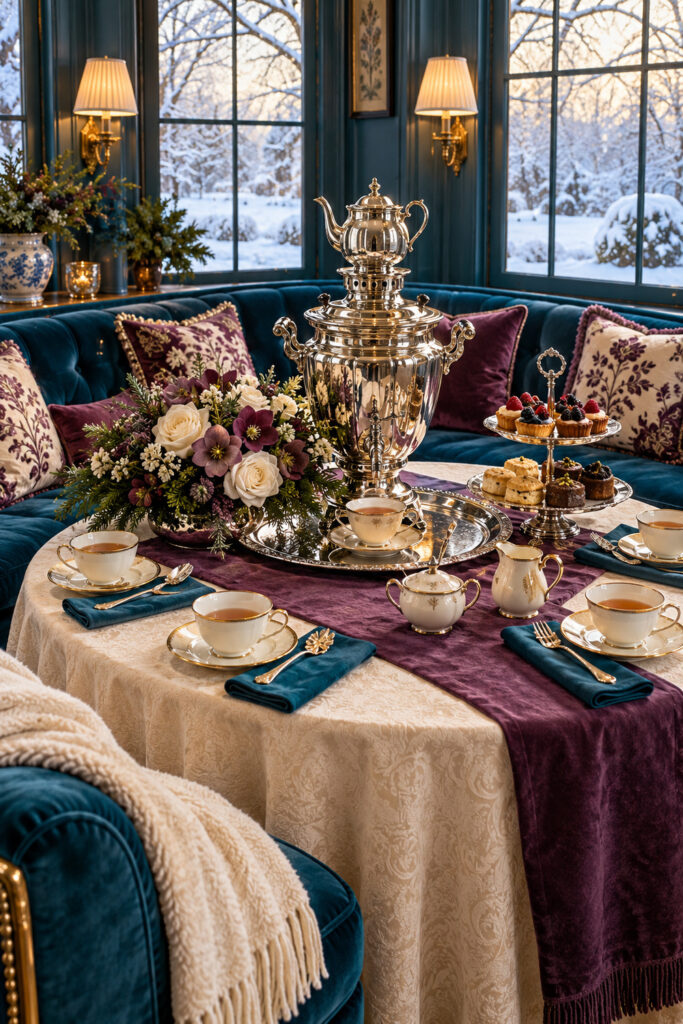
Final Styling Tip
Set one complete place and practice pouring before filling every space. That small trial will show where a cup needs to land and which decorative piece should move a little farther away.