*This post may contain affiliate links for which I earn commissions.*
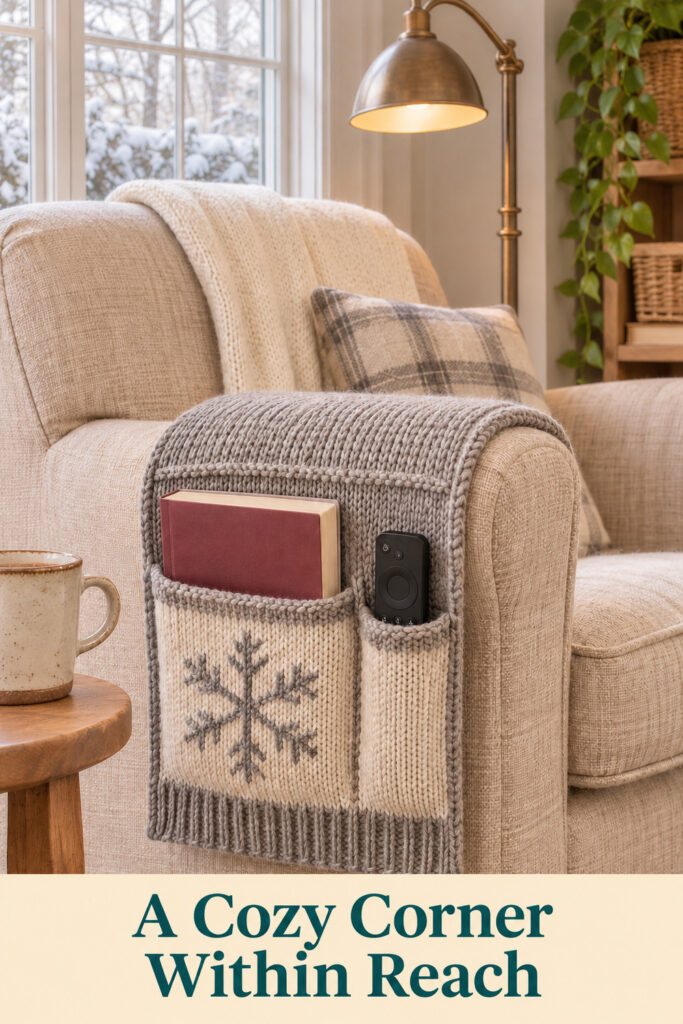
A knitted caddy drapes over the arm of this upholstered reading chair, keeping a book and remote within reach. Cream pockets, gray edging, and a snowflake motif make it part of the winter styling. A throw, shaded lamp, and warm wooden table complete the corner.
The useful idea is small. Instead of adding another storage piece beside the chair, the organizer uses the outside of an existing arm. To borrow the effect, fit matters more than a perfect color match. The caddy needs to stay in place while leaving the seat and your normal arm position comfortable.
This image was created with AI as decorating inspiration.
What Makes This Winter Corner Work
The chair’s oatmeal upholstery provides a quiet base for the two-tone knit. Cream pockets show clearly against the darker panel, while gray edging defines the shape. The snowflake is a specific winter detail without turning the corner into Christmas decor.
Different textile scales create the cozy layers. The chair has a fine woven texture, the caddy has visible knitted stitches, and the throw adds a softer pale area over the back. A restrained plaid cushion repeats the gray without adding another seasonal symbol.
The book and remote explain the organizer’s purpose. You can see their tops above the pocket openings, with the pocket fabric carrying them below. That practical relationship is part of the appeal, not an incidental prop added to a decorative textile.
Find Knitted chair arm organizers
Browse current Amazon options that can help you recreate this look.
Browse Knitted chair arm organizers on Amazon →As an Amazon Associate I earn from qualifying purchases.
Yes, you can buy something like this but as soon as I saw this inspo idea, I added it to my crochet/knit project list! I am always on the hunt for things I can make and actually use around my home or gift to others and this is one of those things. It’s cute, charming, and you can keep all kinds of little things handy in the winter months.
Key Pieces for a Knitted Chair-Arm Arrangement
A Caddy That Fits the Actual Arm
Measure the arm’s width and shape before choosing an organizer. Rounded, square, narrow, and padded arms affect how a fabric panel sits. Check the product’s intended fitting method and dimensions rather than assuming any long rectangle will stay in place on any chair.
Pockets Suited to Light Everyday Items
Think about what you actually want beside the seat. A small paperback and a remote need different pocket proportions than a large hardback or tablet. Follow the caddy’s intended use and load guidance. Overfilling the pockets can change its fit and pull the fabric out of position.
A Restrained Winter Motif
The snowflake supplies seasonal identity within an otherwise neutral corner. A clear stitched motif can remain visible even when part of the pocket holds a book. Keep the pattern positioned where it won’t disappear entirely behind the contents.
A Comfortable Existing Chair
The organizer should adapt to the seat, rather than forcing you to sit differently. Keep the cushion area free and check where your elbow normally rests. You can use the idea on a suitable sofa arm as well, provided the caddy is intended to fit that shape.
Soft Supporting Textiles
A plain cream throw repeats the light pocket color in another part of the chair. A small plaid cushion adds structure beside the knit. Use only the layers that improve comfort in your room; the organizer doesn’t require a newly decorated chair behind it.
Proper Reading Light and a Clear Table
The lamp and small table give the corner useful support. Position lighting for the way you read, and keep the table available for a mug or other ordinary item. The caddy should reduce crowding rather than become an excuse to fill the remaining surface with decorations.
Check the Fit Before Filling the Pockets
Place the empty caddy according to its instructions and smooth the panel over the arm. Look at how the knit follows the upholstery. It should conform without bunching beneath your elbow or leaving a loose section where it can catch as you move.
Check the outside drop. The lower edge should stay clear of the floor and any moving furniture parts. If the chair reclines or has other mechanisms, use only accessories compatible with that furniture and keep the organizer out of their path.
Sit down and rest your arm normally. If the caddy makes the position uncomfortable, revise the fit or choose another model. A cozy photograph doesn’t tell you how a particular fabric edge will feel against your own arm.
Add one light item at a time and watch whether the panel shifts. The contents should sit inside the pocket, with enough support below them to avoid a precarious perch. Keep the most frequently used item in an opening you can reach without twisting around the chair.
Try getting up and sitting down again. If the organizer slides or needs constant adjustment, don’t solve it by adding more weight to the pockets. Check the intended attachment or fitting arrangement and choose something better suited to the arm if needed.
Make the Winter Layers Feel Connected
Choose a caddy color that contrasts enough with the chair to show the texture. Gray edging on oatmeal creates a visible outline, while cream pockets connect with the throw. On a darker chair, a lighter overall knit may provide the same relationship.
Keep the nearby cushion pattern simpler than the snowflake motif. A restrained plaid works because its lines are regular and its colors stay close to the chair. A large competing winter print could make the small organizer harder to notice.
Drape the throw so it remains separate from the caddy’s top panel. Piling both textiles over the same arm may make the fit less secure and obscure the pockets. One layer over the chair back and one on the arm gives each a clear job.
The small table needs only a limited number of items. In the inspiration, a mug has room to sit without sharing the surface with a stack of books. Keep drinks on a stable suitable table rather than treating a soft caddy pocket as a cup holder unless the actual product is designed for that use.
For a particularly tight room, check the organizer’s loaded depth beside the chair. Pockets project farther once filled. Keep the surrounding passage clear and avoid placing the caddy on the side that brushes against a doorway or frequently used route.
Consider how the knitted fabric is cleaned. Reading corners see regular use, and removable accessories should fit your care routine. Check the material instructions before washing, stretching, or trying to reshape the panel around a different chair.
Shop Similar Pieces
Look for Knitted Chair-Arm Organizers
Compare the full panel dimensions, fitting method, pocket layout, and intended contents. Close photographs can hide how much fabric needs to tuck or drape elsewhere. Choose compatibility with the actual chair before selecting the snowflake pattern.
Shop Similar Small Winter Textile Accents
If a suitable caddy has a plain finish, another restrained snowflake detail nearby can establish winter. Keep the organizer’s function intact rather than attaching heavy embellishments to its pockets. A simple neutral caddy can still belong in a seasonal corner.
Add a Plain Cream Throw
Choose a weight and texture you enjoy using. A soft knit can connect with the caddy without matching its stitch pattern. Check its dimensions so the folded or draped layer doesn’t reach into a walkway.
Look for a Compact Reading Table
Use an existing table when it already works beside the chair. If adding one, compare height, stability, and usable top area. The table should fit outside the chair’s movement and leave enough space for ordinary sitting and standing.
Final Styling Tip
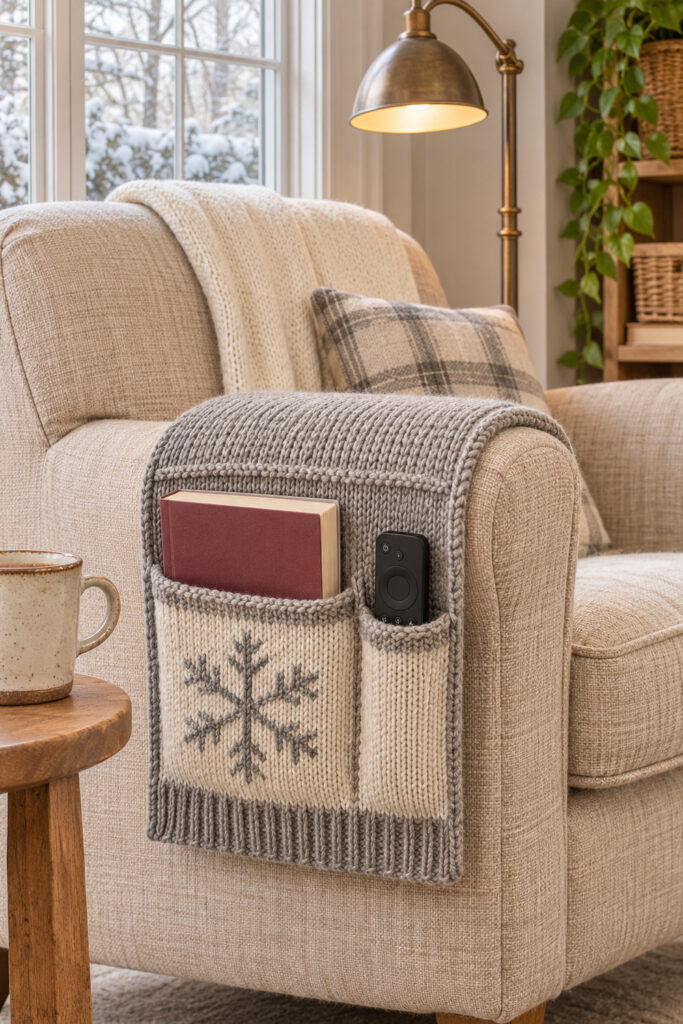
Keep only the items you reach for regularly in the pockets. When the book and remote stay supported, the arm remains comfortable, and the table stays clear, the cozy winter styling has also earned its space.