*This post may contain affiliate links for which I earn commissions.*
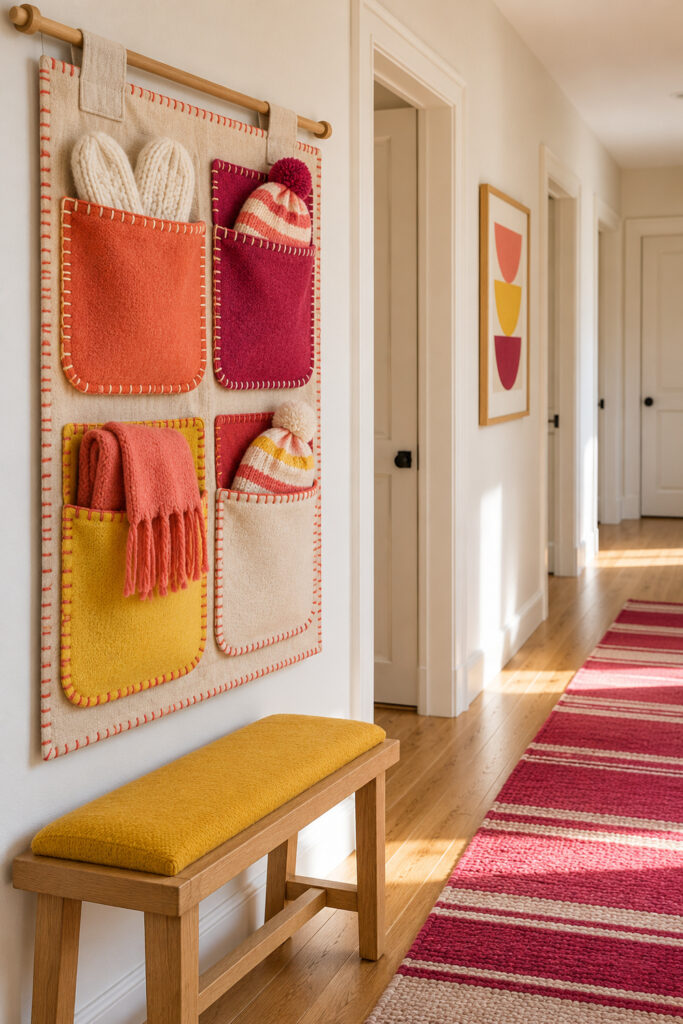
A scarf and a pair of mittens can turn into a small pile surprisingly quickly. This winter hallway gives them a much more cheerful landing place: four large fabric pockets on a pale hanging panel. Coral, raspberry, yellow, and ivory keep the storage visible, while the blanket-style stitching makes the edges part of the decoration.
The panel sits above a narrow wooden bench in a corridor with room to walk past. That’s the useful idea to borrow. A winter accessory station can bring color to an ordinary stretch of wall, provided you plan around the hallway’s daily traffic rather than treating the whole space as a display shelf.
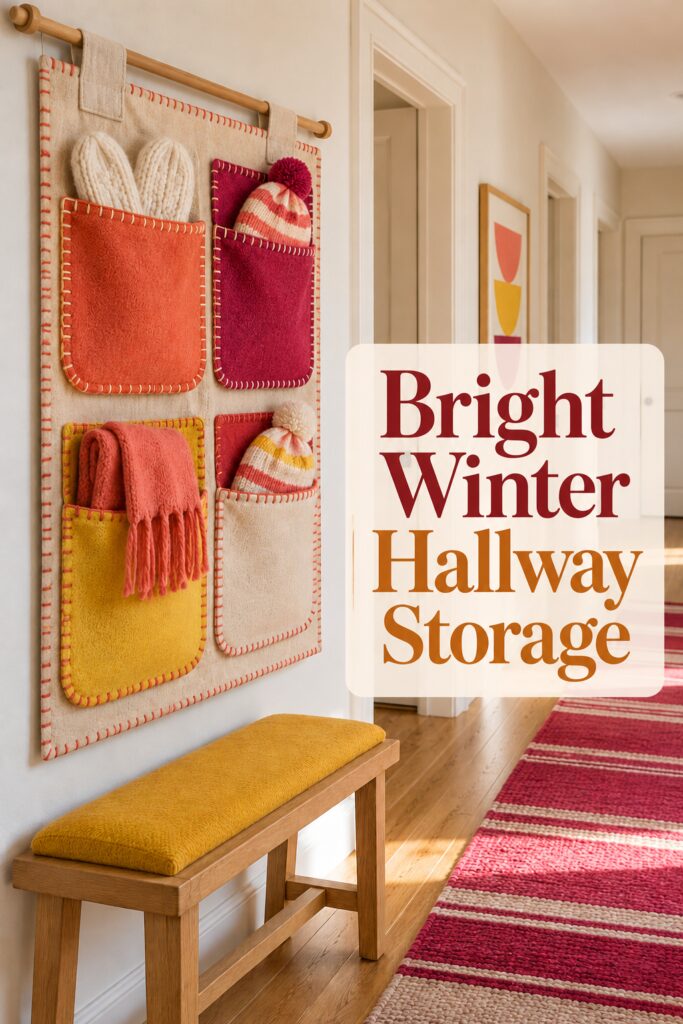
This AI-generated scene is decorating inspiration and similar storage pieces can recreate the overall look.
Make the Pocket Panel the Main Feature
Four pockets in two columns give the wall a simple structure. The colors differ, but the repeated rounded corners and contrasting stitches keep them related. Cream backing separates the pockets from the wall just enough to make the whole piece read as one hanging, rather than four unrelated bags.
Look first at a real organizer’s pocket openings and depth. A decorative hanging with small flat pockets may hold mail but won’t work well for a rolled hat. Choose storage for the objects you actually bring through the door. Try folding your scarf and mittens to their everyday size before deciding what capacity you need. A pocket that only works with an elaborate fold won’t be much help on a busy morning.
The pale backing is an important part of the color balance. It stops the bright pockets from becoming one large solid block. If your hallway is narrow or already has patterned wallpaper, keep that light border generous. A smaller organizer with two useful pockets can work better than a larger one that presses against door trim or crowds the bench.
The inspiration suggests woolly fabric and prominent hand stitching, but appearance alone doesn’t prove composition or load capacity. Check the real organizer’s fabric, hanging loops, and weight limit. Store soft accessories rather than heavy tools or shoes unless the item is specifically built for them. The dowel and wall fixings must support the filled panel, not just the empty fabric.
Find Hanging Fabric Pocket Organizers
Browse current Amazon options that can help you recreate this look.
Browse Hanging Fabric Pocket Organizers on Amazon →As an Amazon Associate I earn from qualifying purchases.
Repeat Warm Color Below and Across the Hall
The mustard bench cushion brings yellow down from the hanging to sitting height. That connection gives the storage a place in the room rather than leaving it isolated on the wall. If you already own a plain bench, a removable cushion can make the same link. Measure the seat and check that the pad stays put when someone sits to change shoes.
A raspberry striped runner extends the palette along the corridor. Its long stripes and the panel’s square arrangement are different enough to coexist. In a busy hallway, choose a runner for safe use first: its backing, edges, and position matter more than matching every shade. Keep it clear of doors, transitions, and areas where it would bunch beneath the bench.
The artwork across the hall repeats simple colored shapes. It offers a quieter echo because it’s flat and contained in a pale frame. You can use existing geometric art or leave that wall plain. The pocket panel is already a substantial feature, and a second large textile hanging could make a narrow corridor feel enclosed.
The cream walls and wood floor do some of the work as well. They’re calm surfaces around a very colorful object. If your hallway has dark doors or a patterned floor, reduce the organizer’s palette to two bright colors and a pale base. You can keep the visible stitches and the useful pocket arrangement without reproducing every color in the inspiration.
Set Up a Station You Will Actually Use
- Gather the accessories that need a home. Separate dry scarves, hats, and mittens from damp outerwear. A fabric pocket panel is better used for dry items; let wet pieces dry in a suitable ventilated spot before putting them away.
- Measure the proposed wall area with the nearby doors open. Check the projection of filled pockets, not just the flat backing. A roomy pocket can extend farther into a narrow passage than you expect.
- Choose the hanging height around the people using it. Keep openings reachable without leaning over furniture, and leave enough space below for the bench. If children use the station, avoid loose cords and choose a mounting arrangement they can’t easily pull down.
- Mount the filled-weight support properly, then test with a few light accessories. Watch for sagging at the top loops and excessive stretching at pocket corners. Reduce the load or choose stronger storage if the panel distorts.
- Add the bench cushion and runner last. Walk through with a bag or laundry basket to check the route. In a tighter corridor, use the wall organizer alone and put shoe-changing seating somewhere with more space.
Give each pocket a simple purpose. One might hold mittens, another hats, and another a folded scarf. You don’t need a label on every opening, but the arrangement should be obvious to the people using it. Leave some room rather than filling each pocket to the brim on the first day.
Shop for Capacity Before Decorative Stitching
A canvas organizer can substitute for the woolly panel if it has useful pockets and secure supports. You can repeat the warm palette in the accessories stored inside. That will create a lighter version of the scene, with less textile bulk and possibly simpler cleaning. Check the item’s care information rather than assuming a fabric hanging can be machine washed.
If you’re commissioning or making a custom panel, ask for pocket dimensions based on actual accessories. Decorative edging can come later. A lovely blanket stitch won’t compensate for openings that are too narrow or a backing that folds under the load. Practical storage is what gives this winter accent a reason to stay on the wall.
Look for Hanging Fabric Pocket Organizers
Choose deep enough openings for rolled winter accessories and a backing that holds its shape. Check whether the supplied hanging system supports the filled weight or requires separate wall hardware.
Shop Similar Narrow Wood Benches
Measure both the seat and the walkway before choosing a bench. A shallow profile may suit a hall, but it still needs to provide stable seating without blocking nearby doors.
Look for Mustard Seat Cushions
A plain yellow cushion can connect the organizer to the bench without adding another pattern. Compare its dimensions with the usable seat area and check how it stays in place during normal use.
Shop Similar Striped Runners
Warm stripes can echo the pocket colors along the floor. Select a runner with suitable grip and a profile that clears doors, then check its placement after several days of ordinary traffic.
Final Styling Tip
Let one or two accessories peek above their pockets, but keep the openings visible. The repeated pocket shapes should remain clearer than the collection stored inside them.