*This post may contain affiliate links for which I earn commissions.*
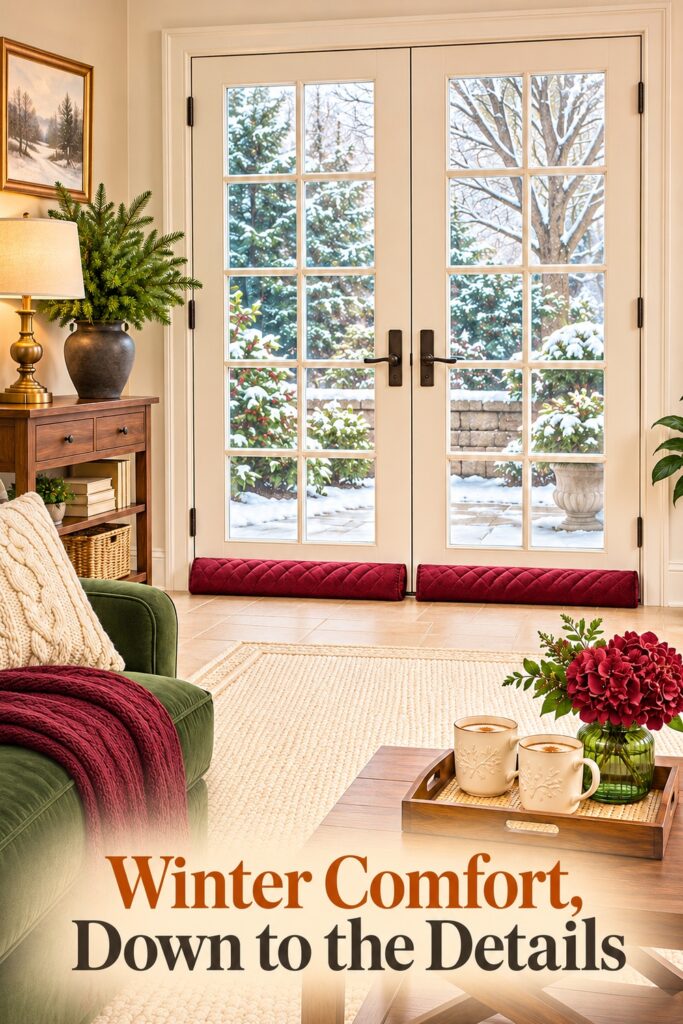
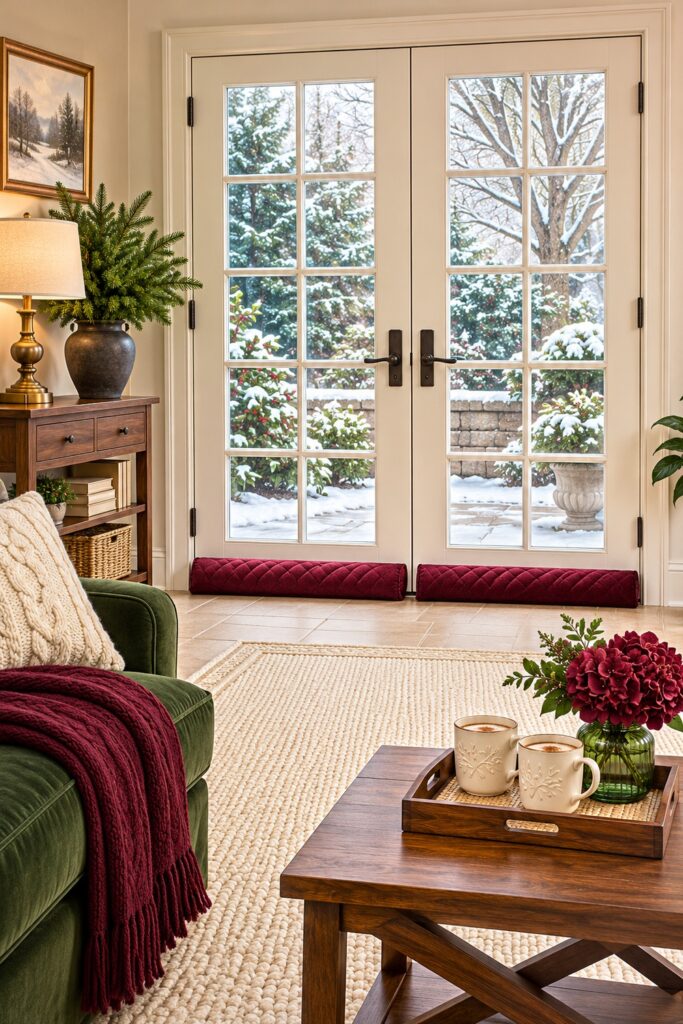
Two burgundy quilted draft stoppers rest along the bottoms of these closed family room doors. Their long, soft shapes repeat the folded blanket on the green velvet seating, while a cream rug and knit cushion fill the foreground with texture. Snow outside the glass and warm drinks nearby make the winter story clear. It is a small practical detail worked into a full, comfortable room rather than a separate holiday display.
The image was created with AI. It offers styling inspiration, not a tested draft-control solution, and the pictured materials and performance cannot be verified from appearance.
Start with the Door Width and Daily Use
Each fabric stopper follows the lower edge of one door. The pair looks intentional because their lengths relate to the panels above, and the quilting gives the dark color visible texture. They lie on the floor rather than hanging from handles, so their placement needs to suit how these doors are used.
Measure the actual opening and compare product dimensions before selecting a pair. Check the maker’s intended placement and use guidance. These soft pieces are not door-holding hardware, and their appearance alone cannot tell you how well they will reduce a draft or whether they suit every threshold.
Keep the Fabric Straight and Contained
The cylinders sit close to the door bases, with their ends contained within the opening. Align them after closing the doors, leaving the handles and locks accessible. A piece that is far too long can bunch at the jamb, while a short one may leave a large gap that also looks visually unfinished.
Choose the fit for the product’s real purpose rather than stretching or compressing it to copy the picture. Some products have different attachment systems or are designed for a single door. Read those details before buying, especially when selecting two matching pieces for a pair of French doors.
Plan Where They Go When the Doors Open
Loose floor stoppers need to be moved before normal door use. Choose a nearby storage spot outside the walking route, such as a suitable basket beside the console. Put them there when the doors are in frequent use rather than repeatedly stepping over them.
Do not use loose floor accessories where they interfere with an exit or required access. The arrangement works best in a room where the doors can remain clear for ordinary movement. A different window or door treatment may be more practical if this is your household’s busiest entrance.
Repeat Burgundy in the Seating Area
The blanket gives the draft stoppers a connection to the rest of the room. Its soft folds and fringe contrast with the tighter diamond quilting at the doors. The green velvet seat supplies another rich surface, while the cream cushion separates the two dark colors.
Use a blanket in a similar color family rather than searching for an exact fabric match. A wine-colored wool-look throw and a deeper red quilted stopper can still belong together. Compare them in the room’s daylight so one does not unexpectedly read orange or purple against the other.
Keep the Blanket Useful on the Seat
Fold the throw over the arm or back with its ends contained. It should be easy to take down when sitting, without pulling a cushion or table accessory along with it. The room feels generous because the textiles are full and well placed, not because several unused blankets cover every seat.
If your furniture is already patterned, keep the throw and cushion simpler. The quilted cylinders add a small repeated pattern at floor level, so the room can support them without another large check or floral print. Let the fabric textures provide most of the variation.
Use Cream to Open the Foreground
The large woven rug brightens the space between the seating and doors. Its pale texture helps the burgundy stoppers remain visible at the far edge. A cream knit cushion repeats that light surface at a more useful height, connecting the foreground to the rest of the room.
Work with a rug suited to the actual floor and door clearance. Check its backing and edges, and keep it from catching beneath a moving door. The pictured rug stops short of the threshold, leaving the tiled section visible around the draft stoppers.
Give the Room a Winter Comfort Story
A full fir arrangement sits in a dark vase on the side console. It adds greenery without using Christmas ornaments or a holiday message. The nearby lamp and ordinary winter landscape picture keep the room seasonal while allowing the textiles and useful seating to lead.
Choose a stable vessel sized for the branches and the console depth. Keep the arrangement away from the lamp shade and operating switch. If using fresh material, contain any moisture and follow its care needs; a faux arrangement may suit a surface where water would be inconvenient.
Put the Drinks Within Reach
Two cream mugs sit together on a tray on the low table. The tray creates a separate, practical group and keeps the cups from looking scattered. Their pale surfaces repeat the rug and cushion, while a compact burgundy flower arrangement adds one more link to the door textiles.
Keep the table useful from the seat you normally choose. There should be room to set a mug down without reaching across the flowers. You can leave out the floral accent if it reduces serving space; the fir on the console already supplies a full botanical layer.
Arrange the Room in Five Checks
- Measure the door opening and read the chosen stoppers’ use directions. Confirm that their placement suits the door’s normal role and does not compromise access.
- Close the doors and position the pair as directed. Check their lengths and keep loose fabric out of the hinge area and everyday walking route.
- Choose an easy storage location for use whenever the doors need to open. Test moving and replacing the pieces before treating them as part of the room’s regular setup.
- Repeat burgundy in one useful throw, then balance it with a cream cushion or existing pale rug. Keep folds and fringe contained on the furniture.
- Finish with a small drinks tray and one green arrangement. View the room from the seating area and adjust anything that crowds the door or the table.
Choose Comparable Pieces for Your Room
The door accessories are a practical choice to make first. After their fit and use are settled, the surrounding textiles can be adapted to your existing furniture. Green, burgundy, and cream create this room’s rich winter palette, but the relationship between dark quilted fabric and light knits matters more than an exact shade.
Look for Quilted Fabric Draft Stoppers
Check full length, thickness, care directions, and intended door type. A removable washable cover may be useful, but it is a product feature to verify rather than assume. Choose a pair only where the door arrangement actually calls for two.
Shop Similar Burgundy Throws
Look for a useful size and a texture that differs from the quilting. A plain woven or knitted finish can connect the floor detail to the seat. Choose care requirements that fit how often the room is used.
Look for Broad Drinks Trays
A flat tray with enough room for your actual mugs keeps the low table organized. Check handle access and the base’s stability. Use appropriate protection for the table surface, especially with hot or damp serving pieces.
Final Styling Tip
Check the room from your usual chair. Keep the burgundy line at the doors neat, and make sure its temporary storage spot is easier to use than leaving loose pieces in the route.