*This post may contain affiliate links for which I earn commissions.*
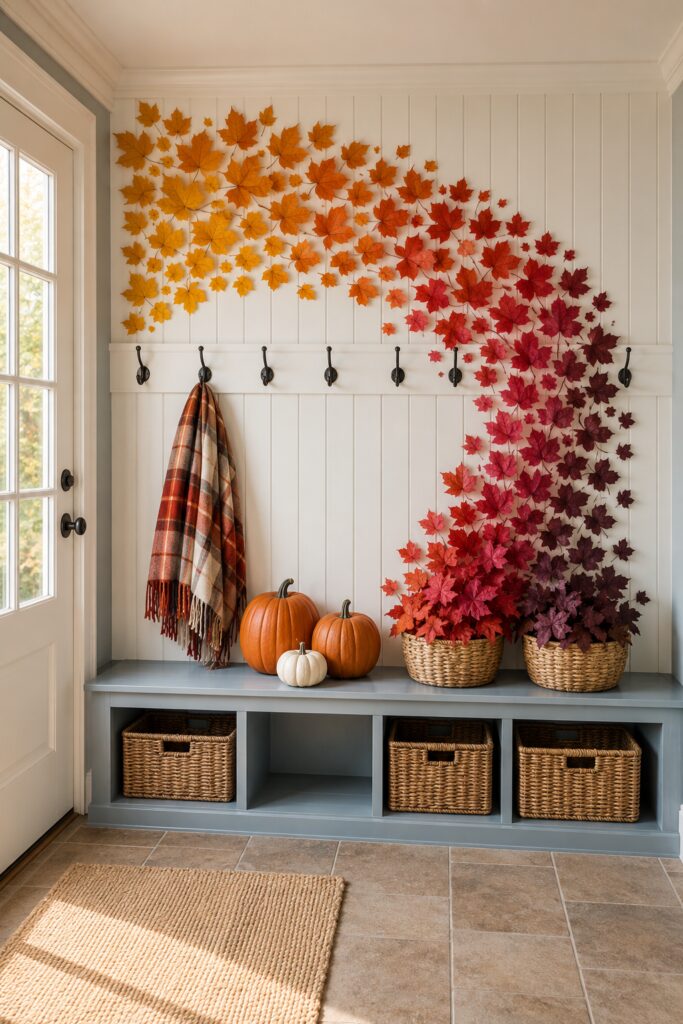
A practical mudroom becomes an unforgettable fall entry in this scene, thanks to hundreds of maple leaves arranged in a sweeping color gradient. Golden yellow leaves begin near the door, transition through orange and scarlet, and finish in deep burgundy above two woven baskets.
The installation appears to tumble across the paneled wall and gather on the bench below. Pumpkins, natural wicker, black hooks, and a plaid throw support the seasonal palette without competing with the leaves.
This is an especially appealing decorating idea for an entryway because it supplies plenty of fall atmosphere without taking away the storage and seating that make the room useful.
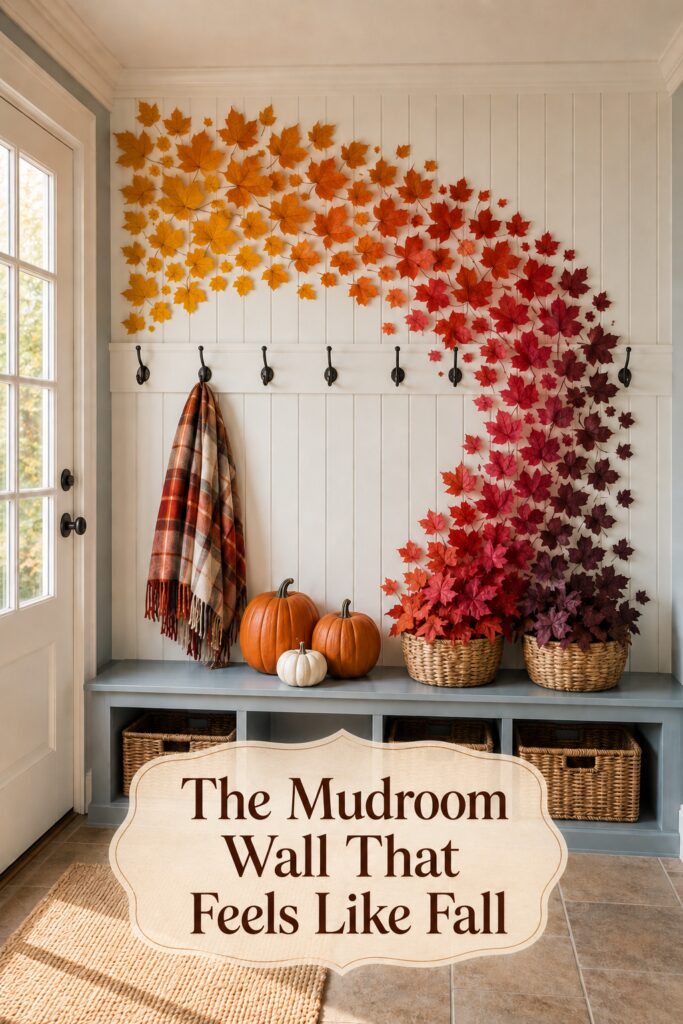
This inspiration image was created with AI. It is intended to help you imagine a similar arrangement using artificial leaves, removable mounting supplies, and other readily available seasonal pieces.
Why the Sweeping Leaf Display Works
The defining feature is not simply the number of leaves. It is the way their colors and positions create movement.
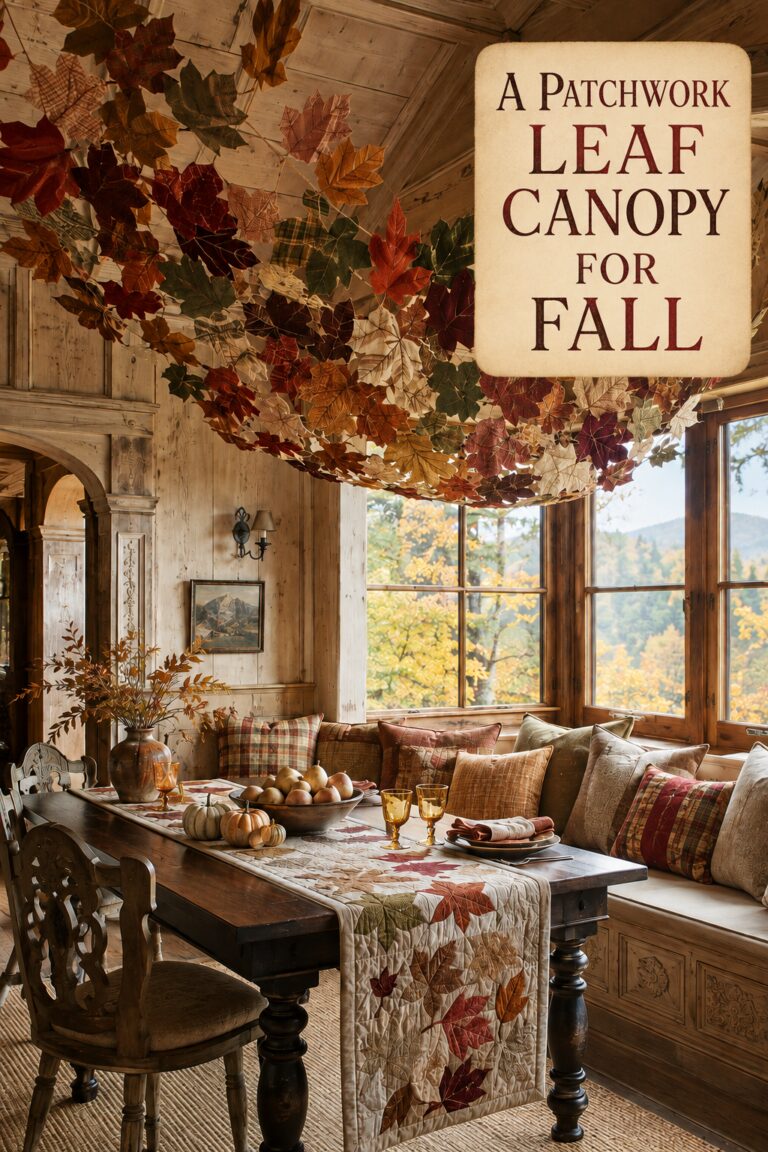
The display begins as a broad canopy of yellow and orange leaves across the upper-left portion of the wall. It narrows as it crosses toward the center, then turns downward in a loose cascade of red, burgundy, and plum.
That change in direction makes the installation look as though an autumn breeze has carried the leaves into the mudroom. The curving composition feels more organic than a symmetrical wreath or a straight garland.
The gradient is also carefully controlled. Yellow does not abruptly turn red. Golden, rust, coral, scarlet, cranberry, and wine tones help one section blend into the next.
Let the Wall Remain Part of the Design
The creamy white board-and-batten wall is important because it provides a quiet background for the leaves. The individual shapes and colors remain easy to distinguish instead of blending into patterned wallpaper or dark paint.
Open spaces between the leaves prevent the installation from becoming one heavy block of color. Those little pockets of white allow the original paneling to show and give the arrangement a lighter, more natural quality.
When recreating the idea, resist the temptation to fill every gap. Begin with a generous amount of space between the leaves. You can always add more after viewing the arrangement from across the room.
Build a Yellow-to-Burgundy Color Gradient
Before mounting anything, divide the leaves into color families. Create separate piles for yellow, golden orange, burnt orange, red, burgundy, and plum.
Sketch the general curve with painter-friendly removable tape or small paper markers. You do not need to outline every leaf. A few markers indicating where each color should begin and where the display should turn downward will be enough.
Place the largest leaves first. These will establish the shape and direction of the installation. Use medium leaves to build fullness around them, then scatter smaller leaves along the edges.
Allow neighboring color groups to overlap. Several orange leaves should appear within the yellow section, while a few red leaves can begin before the orange section ends. This produces a gradual transition rather than separate stripes.
Rotate the stems and points in different directions. A few leaves can point upward, but most should follow the implied path of the breeze.
Make the Leaves Appear to Gather in Baskets
One of the most distinctive details is the way the cascading leaves seem to collect inside two woven baskets on the bench.
You could reproduce this effect by arranging artificial branches or flexible leaf stems inside weighted containers. Add loose leaves around the upper portion so the wall display appears to continue directly into the baskets.
The baskets do not need to match exactly. Two similar woven containers with slightly different dimensions can make the arrangement feel less formal. Natural seagrass, water hyacinth, or wicker will provide the same organic texture.
Place the deepest burgundy and plum leaves in the basket farthest from the yellow end of the gradient. The neighboring basket can contain red, coral, and cranberry leaves to preserve the progression.
Keep the Bench Decor Simple
Because the wall already contains so much detail, the remaining fall decorations are restrained. Three pumpkins sit on the bench, including two traditional orange pumpkins and one small white pumpkin.
The white pumpkin creates a pause between the larger orange shapes. It also connects them to the creamy wall and keeps the grouping from looking too heavily saturated.
A group of three works naturally here, but the pumpkins should vary in height and width. Place the smallest one slightly forward to create depth.
Avoid adding signs, figurines, candles, or additional garland to the bench. A quieter surface gives the leaf installation room to remain the focal point.
Repeat the Natural Texture Below
The woven planters at the top of the bench connect to the rectangular storage baskets in the cubbies below. That repetition makes the seasonal display feel integrated with the existing mudroom rather than temporarily placed on top of it.
You do not have to replace functional storage to achieve this effect. If the room already has neutral bins or baskets, allow them to remain part of the arrangement.
Natural wicker works particularly well with this palette because its honey-brown tone sits between the golden leaves and the gray-blue bench. It softens the painted surfaces and adds texture without introducing another strong color.
Add One Plaid Textile
The rust, cream, charcoal, and brown plaid throw hanging from a black hook is the final layer of pattern. Its colors echo several sections of the leaf gradient, but the textile remains separate from the main wall installation.
A throw also makes the mudroom feel welcoming and lived in. You could use a scarf, lightweight blanket, or oversized wrap depending on what fits the space.
Limit the display to one noticeable plaid. Multiple competing patterns could distract from the individual leaf shapes.
Preserve the Mudroom’s Practical Features
The long row of black hooks provides a strong horizontal line beneath the leaves. It visually separates the large wall installation from the bench and storage area.
Leave most of the hooks empty. This keeps the scene from becoming busy and allows the plaid throw to look intentional.
If your mudroom is used daily, reserve several hooks for coats and bags. The leaf arrangement can curve above and around the functional area rather than preventing it from being used.
The natural entry rug reinforces the texture of the baskets while protecting the floor. Choose a relatively low-profile rug so doors can open safely over it.
Key Pieces for Recreating the Display
The most useful components for a similar mudroom arrangement are:
- Artificial maple leaves in several sizes and color groups
- Removable adhesive dots or mounting putty
- Woven planter baskets for the cascading leaves
- Orange and white faux pumpkins
- A rust and cream plaid throw
- Black wall-mounted coat hooks
- Woven storage baskets for open cubbies
The leaf installation can be scaled for a smaller wall. Preserve the curved gradient and the transition into a basket even if you use fewer leaves.
How to Style the Installation at Home
Start by measuring the available wall and deciding where the display will begin and end. Make sure it does not interfere with doors, light switches, or frequently used hooks.
Lay the leaves on the floor first. This gives you an opportunity to test the gradient and estimate whether you have enough of each shade.
Mount the largest leaves along the intended curve. Step back every few minutes to check the direction and overall balance. Add medium leaves around the large ones, then finish with smaller pieces extending beyond the edges.
Test any removable adhesive on a hidden portion of the wall before beginning. Painted wood, textured walls, and delicate finishes can react differently to mounting products.
Complete the scene with two baskets of leaves, a small pumpkin grouping, and one plaid textile. Keeping those supporting details simple will make the handcrafted wall the unmistakable star.
Shop Artificial Maple Leaves in Graduated Colors
Look for bulk packages with golden yellow, orange, red, burgundy, and brown leaves. Using separate color collections may give you more control than relying on one mixed package.
Find Removable Supplies for Mounting the Leaves
Choose transparent adhesive dots or removable mounting putty designed for lightweight decorations. Confirm that the product is appropriate for your particular wall finish.
Add Woven Baskets Beneath the Cascade
Look for round seagrass planter baskets with enough depth to hold artificial leaf branches. Weighted inserts can help keep tall arrangements stable.
Style the Bench With Faux Pumpkins
Select two medium orange pumpkins and one smaller cream or white pumpkin. Slightly irregular shapes will make the grouping feel more natural.
Bring In a Rust-Colored Plaid Throw
A woven throw with rust, cream, brown, or charcoal can repeat the wall palette without adding more permanent decor.
Complete the Mudroom With Black Hooks
Simple black metal hooks provide structure beneath the organic leaf arrangement. A double-hook design is useful for coats, bags, scarves, and hats.
Final Styling Tip
Design the path of the leaves before concentrating on quantity. A clearly defined sweep from gold to burgundy will have more impact than covering the wall without a sense of direction.