*This post may contain affiliate links for which I earn commissions.*
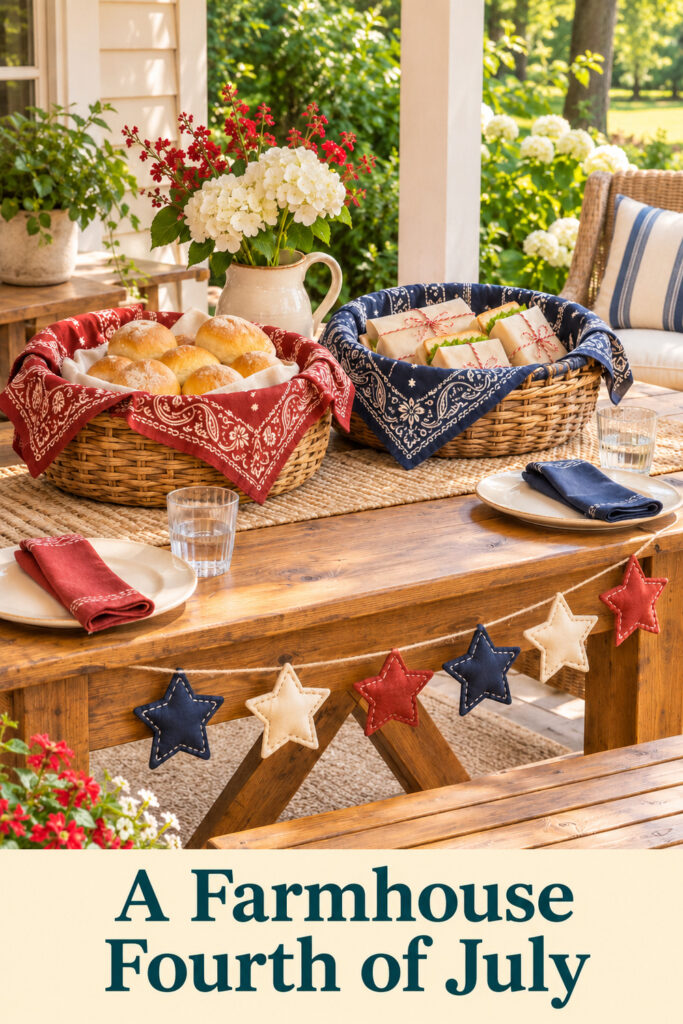
Red and navy bandana fabrics line woven baskets on this Fourth of July picnic table. Bread rolls and wrapped picnic food give the baskets a useful role, while cream plates, clear tumblers, and a star garland carry the patriotic colors through the setting.
The scene feels layered because the materials repeat in different forms. Basket weave, patterned cloth, a textured runner, and warm wood all have room to show. You can borrow that combination for a small gathering without turning the table into a large buffet or buying a full collection of themed dishes.
This image was created with AI as decorating inspiration.
What Makes the Bandana Basket Layers Work
The two baskets have a related scale and shape, which connects them before you notice the different fabric colors. Red and navy then create a clear contrast. Their cream pattern details link with the plain dishes and lighter textiles around them.
The cloth folds over the rims, leaving a generous amount of wicker visible below. That balance matters. If the fabric covered the whole basket, you would lose one of the textures that gives this arrangement its farmhouse character.
Stars along the table front make the occasion more explicit. They repeat the same red, cream, and navy without occupying serving space. Flowers and garden greenery soften the edges, but the baskets remain the practical center of the display.
Find Woven serving baskets
Browse current Amazon options that can help you recreate this look.
Browse Woven serving baskets on Amazon →As an Amazon Associate I earn from qualifying purchases.
Key Pieces for a Patriotic Picnic Table
Broad Low Serving Baskets
Choose baskets with enough room for what you plan to serve and a stable base on the table. Lower sides can make the contents easier to see and reach. Check whether each basket is intended for food use or needs a suitable inner liner rather than assuming all decorative wicker is a serving surface.
Red and Navy Bandana-Patterned Cloth
The repeated small motifs provide more detail than plain napkins while keeping the palette narrow. Check the actual fabric material and care instructions. If the cloth is decorative rather than intended for food contact, keep it separate from food with an appropriate inner lining or wrapping.
A Quiet Textured Runner
The woven-looking runner gathers the baskets into one area. It adds another natural texture without introducing a third strong print. You can use a plain runner if your baskets or tabletop already have a busy weave or grain.
Everyday Cream Plates
Simple dishes give the patterned cloth a place to settle. They also make the setting feel approachable. A few cream pieces you already use can connect the red and navy more comfortably than adding a different patriotic pattern to every plate.
Clear Drinking Glasses
Transparent tumblers keep the place settings visually light. Their plain shape lets the baskets and bandana fabric remain more noticeable. Choose glasses appropriate to the gathering and surface rather than treating a particular profile as part of the theme.
A Short Star Garland
Fabric stars repeat the patriotic palette along the table front. Keep their fixing secure and their lowest points clear of feet and knees. This is decorative star bunting, not an actual flag used as a table covering or liner.
Fit the Arrangement to Your Menu
Begin by deciding what belongs in the baskets. Bread, wrapped food, or organized serving items create different space needs. The inspiration shows one possible presentation, but the actual food and gathering should determine the practical setup.
Put the baskets on the table empty and test their positions. Leave a useful gap between them and enough room for place settings. A pair that looks generous in a photograph may be too large for the table where everyone needs to eat.
Add suitable inner liners before arranging decorative fabric around the rims. Keep the cloth from bunching into the serving area or covering the contents. A few natural folds are enough to show the pattern. You don’t need a large spill of fabric between every basket and plate.
Position the red and navy so both remain visible from the main approach. If the navy basket sits far behind the other, bring it slightly forward or separate them more. The two colors should work together rather than one disappearing behind the taller food.
Place plates, napkins, and glasses according to where people will sit or serve themselves. If the table is a buffet rather than a dining table, allow room for the serving sequence instead. Styling should follow how guests use the surface, not make them work around it.
Add the Surrounding Layers Last
Attach the star garland after the tablecloth and runner are settled. Check that it doesn’t pull on a cloth edge or get trapped beneath a moving bench. Keep the shape readable without making the strand so low that it catches against legs.
A flower pitcher can provide a softer background at one end. Choose a position away from the food and outside the main reach area. The flowers should not drip into baskets or scatter material across serving surfaces. You can omit them if the table is already full enough.
Keep floor planters out of the approach. Their colors can connect the table with the garden, but they shouldn’t create a narrow path between the bench and other furniture. A small home gathering benefits from room to move as much as a carefully repeated palette.
Use the sheltered setting as context, while following appropriate care for the actual food and serving equipment. Bring food out at a suitable time and handle it according to its requirements. The decorative arrangement doesn’t determine how long a particular menu can remain outside.
For a smaller table, use one patterned basket and repeat the second color through folded napkins. You can keep the same farmhouse feeling with fewer pieces. A low wooden bowl or plain platter may serve the rest of the menu without another basket purchase.
When the gathering is over, check how the basket liners are cleaned and stored. Separate decorative cloth from items that need washing, and keep wicker dry according to its care guidance. The easier the pieces are to maintain, the more likely you’ll enjoy using the combination again.
Shop Similar Pieces
Look for Woven Serving Baskets
Compare usable interior measurements, base stability, and the intended food use. Handles and flared rims can make a basket wider than its base suggests. Choose a shape that leaves room for place settings on your actual table.
Shop Similar Bandana-Patterned Table Linens
Look for red and navy fabrics with related cream details. Confirm the material, size, and care instructions rather than relying on a pattern name. A smaller cloth may provide enough visible folds without excess fabric inside the basket.
Add Appropriate Food Liners or Wrapping
Match the material to the food you plan to serve. The decorative fabric can remain a separate outer layer where needed. Check the actual intended use and avoid assuming a craft or display material is a food-contact product.
Look for Fabric Star Bunting
Choose a length that fits the table front without long loose ends. Clear five-point shapes provide the holiday detail even with a simple palette. Check how the strand can be secured without interfering with seating or the tablecloth.
Final Styling Tip
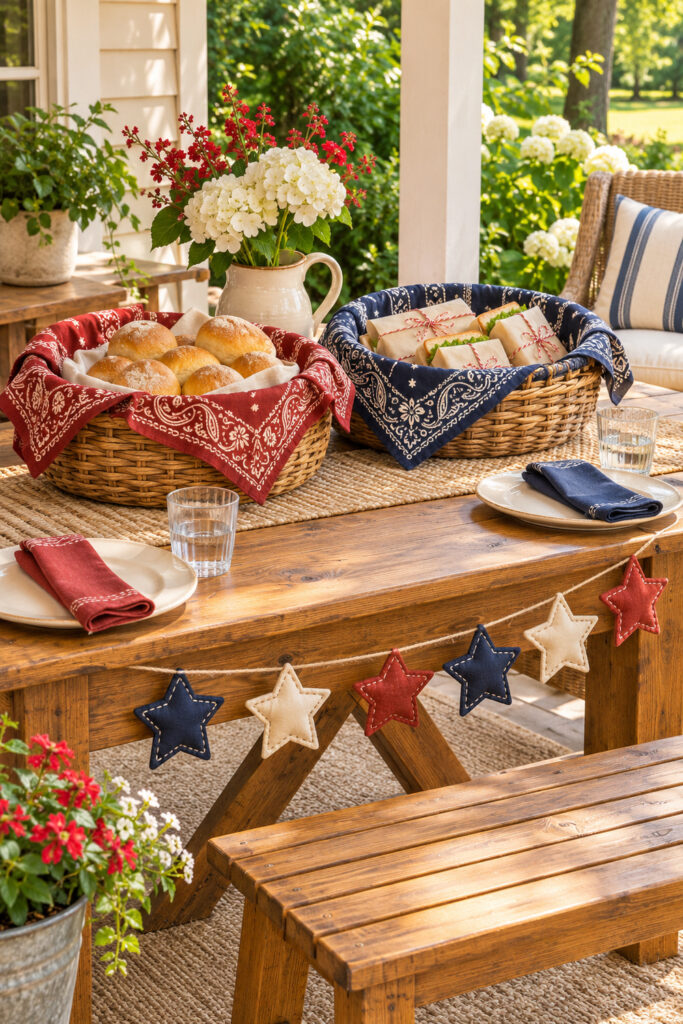
Walk up to the table carrying a plate. If you can reach the baskets easily and still see both fabric colors, the layout is doing its job. Keep the inviting layers and remove anything that gets between guests and their picnic.