*This post may contain affiliate links for which I earn commissions.*
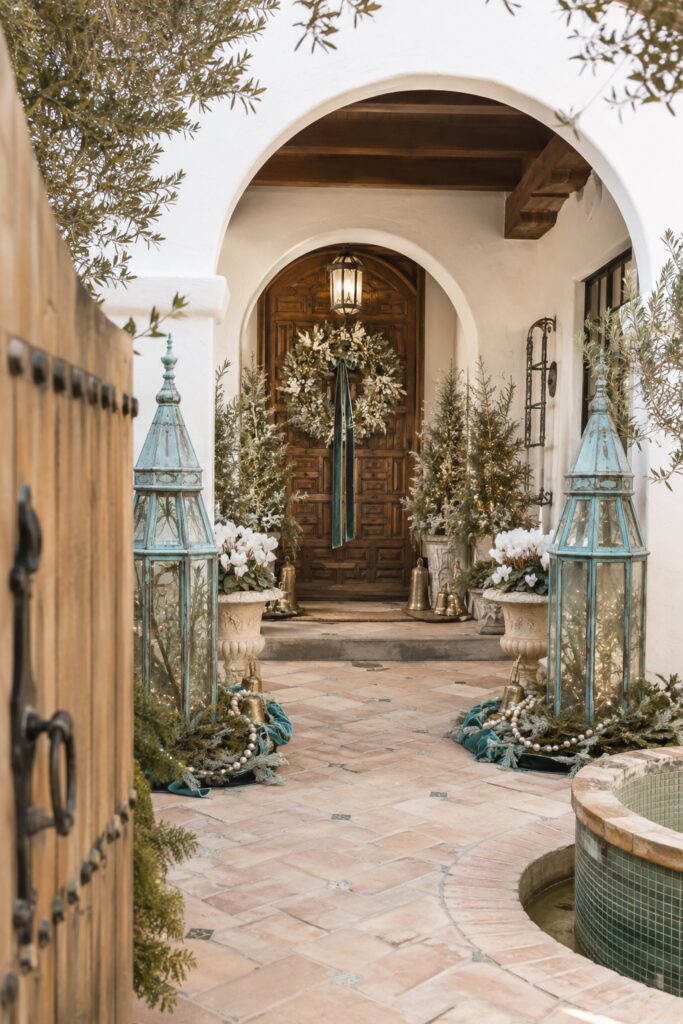
Weathered turquoise lanterns frame the approach to this Christmas doorway like a pair of miniature towers. Inside their glass panels, tiny lights glow among slender branches. Around their bases, frosted greenery, creamy pearl strands, and brass bells soften the terracotta paving.
Beyond them, a carved wood door sits beneath a white stucco arch. A full winter wreath and long teal ribbon draw attention toward the entrance, while small evergreen trees and white flowers carry the decorations back toward the threshold.
The result feels festive without hiding the courtyard’s character. You can recreate that welcome on a covered porch or sheltered entry using lanterns, coordinated greenery, and a few carefully repeated accents.

This inspiration image is AI generated and shows a decorating concept. Similar pieces can recreate the overall effect without matching the imagined objects exactly.
Let the Lanterns Frame the Welcome
The tall turquoise lanterns are the distinctive feature, but their placement matters as much as their color. They stand forward of the doorway, creating an outer frame around the smaller trees and wreath behind them.
That arrangement gives the entrance depth. Your eye moves from the lanterns to the white flowers, then toward the decorated door.
Their pointed tops also complement the architecture. Against the broad stucco arch, the narrow lantern silhouettes introduce a more delicate shape.
At home, choose lanterns that feel substantial beside your entrance without crowding it. A simpler pair with pitched roofs can suggest the same effect. You do not need the image’s unusually elaborate proportions.
Balance Turquoise with Warm Architecture
The lantern finish is a faded blue-green with darker weathered details. It contrasts with the warm paving and carved wood while connecting to the small turquoise tiles visible around the fountain.
Deep teal ribbon repeats the color at the door. Fabric gathered around the lantern bases provides another darker note, linking the two sides of the courtyard.
Keep the rest of the palette restrained: evergreen, soft white, aged gold, and natural stone. This allows turquoise to remain noticeable without covering every decoration.
Find the Perfect Lanterns
Browse current Amazon options that can help you recreate this look.
Browse Turquoise Lanterns on Amazon →As an Amazon Associate I earn from qualifying purchases.
If your home has brick, cream siding, or a wood door, those existing finishes can provide the warm backdrop. Start with them rather than trying to reproduce the courtyard itself.
Choose the Pieces That Establish the Look
Weathered Turquoise Lanterns
Look for glass-paneled lanterns with an aged aqua or blue-green frame. The windows are important because they reveal the light inside and prevent the large shapes from feeling solid and heavy.
If the right color is difficult to find, a paintable metal lantern offers another route. Use a coating appropriate for its material and intended location, following the product instructions and keeping glass and moving parts clear.
You can also leave an existing lantern in its original finish and introduce turquoise through ribbon. The arrangement will still carry the palette, even if the color appears in a different place.
Small Warm Lights
The lanterns contain scattered points of light rather than one prominent pillar candle. This creates a delicate glow that suits their tall glass chambers.
Use warm white micro lights suitable for the location. Arrange them loosely inside so individual points remain visible, and position the battery pack where you can reach it easily.
For this greenery-filled treatment, use electric lights instead of an open flame. Check that the lights, lanterns, and any decorative filling are appropriate for the conditions where they will stand.
Frosted Greenery and a Full Door Wreath
The greenery connects every part of the entrance. It appears around the lantern bases, on the small trees, and in the wreath.
Choose branches with a light frosted effect rather than a thick white coating. Some green should remain visible so the display relates to the surrounding plants.
For the door, a mixed evergreen wreath with pale berry-like accents can suggest the image’s soft texture. Add one long teal ribbon, allowing the tails to emphasize the height of the door without interfering with its hardware.
Brass Bells and Cream Bead Strands
Muted brass bells add weight and warmth near the ground. Their rounded forms contrast with the lanterns’ straight frames and pointed tops.
Cream pearl-like strands curve through the greenery, making the bases feel dressed for Christmas. Use a short length in each arrangement rather than winding beads around every branch.
Secure both details so they remain within the display. A few visible bells and gentle bead loops will read more clearly than a dense pile of accessories.
Build Each Lantern Base as a Small Arrangement
Set the lantern directly on a firm, level surface first. Then place short evergreen branches around its base, keeping the door or access panel usable.
Add one bell toward the front and drape a bead strand across the greenery. Let the foliage extend farther on one side for a relaxed outline.
The image includes generous folds of teal fabric on the paving. For a practical porch version, use a compact ribbon bow tucked into the greenery instead. It repeats the color while keeping loose fabric away from the walking route.
Stand back before decorating the second lantern. Repeat the ingredients, but allow the branches and bells to sit slightly differently so the pair feels coordinated rather than rigid.
Use White Flowers to Separate the Layers
White flowering plants in pale urns sit between the lanterns and the doorway trees. They create a useful visual break between the darker evergreens.
A pair of existing planters can serve the same purpose. For a consistent decorative result, use outdoor-suitable faux white flowers with dark green leaves. Keep the planting compact enough that it does not obscure the lanterns.
If space is limited, retain the flowers and omit the extra trees, or use the trees alone. The important idea is to create a smaller supporting layer behind the lanterns.
Adapt the Courtyard to a Covered Porch
On a generous porch, place the lantern pair outside the door’s swing and keep the center approach open. Set smaller planters closer to the wall, then finish with the wreath.
For a compact entry, use one lantern beside a planter and repeat its teal accent in the door ribbon. That single connection can make the display feel intentional.
Choose decorations suited to your porch’s exposure. Even beneath a roof, wind-driven rain can reach fabric, beads, and electrical components.
Leave the surrounding architecture visible. The carved door, stucco, timber beams, and terracotta are part of this image’s appeal, and your own entry has details worth allowing into the composition.
Shop Similar Pieces for a Turquoise Christmas Entry
Look for Tall Glass-Paneled Lanterns
Prioritize a stable base, visible interior, and a shape that suits your doorway.
Add Warm White Micro Lights
Choose lighting rated for the conditions in your entryway.
Shop Similar Frosted Evergreen Greenery
Use related foliage for the wreath and lantern bases to connect the display.
Look for Deep Teal Ribbon
Repeat it at the door and in small accents beside the lanterns.
Add Antique Gold Bells and Cream Bead Garland
Use these finishing details sparingly where visitors can appreciate their texture.
Make the Doorway the Destination
The lanterns should draw visitors toward the entrance. If their decorations begin to overwhelm the path or hide the planters behind them, simplify the bases. A clear approach and a visible wreath will preserve the welcoming depth that makes this courtyard so appealing.